


Training in using earplugs or using earplugs with a higher than necessary noise reduction rating? A randomized clinical trial
- PMID: 25270008
- PMCID: PMC7767610
Training in using earplugs or using earplugs with a higher than necessary noise reduction rating? A randomized clinical trial
Abstract
Background: Noise-induced hearing loss (NIHL) is one of the most common occupational diseases and the second most common cause of workers' claims for occupational injuries.
Objective: Due to high prevalence of NIHL and several reports of improper use of hearing protective devices (HPDs), we conducted this study to compare the effect of face-to-face training in effective use of earplugs with appropriate NRR to overprotection of workers by using earplugs with higher than necessary noise reduction rating (NRR).
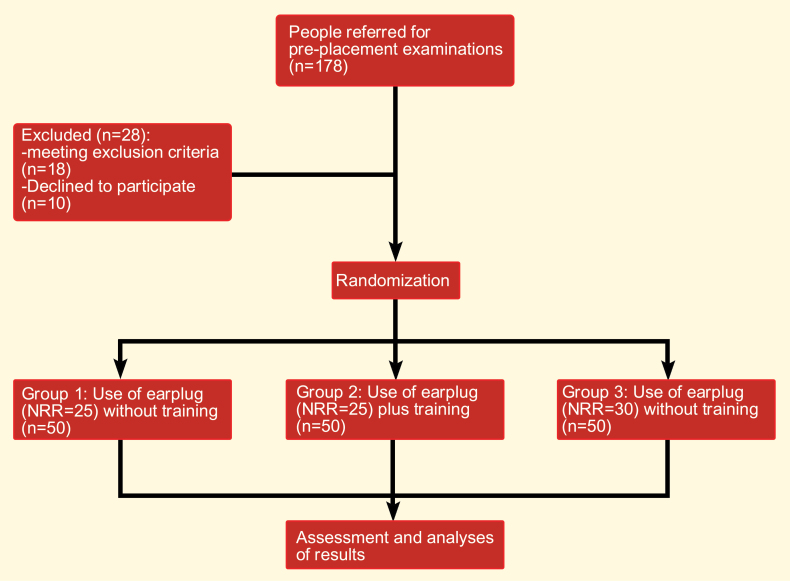
Methods: In a randomized clinical trial, 150 workers referred to occupational medicine clinic were randomly allocated to three arms---a group wearing earplugs with an NRR of 25 with no training in appropriate use of the device; a group wearing earplugs with an NRR of 25 with training; another group wearing earplugs with an NRR of 30, with no training. Hearing threshold was measured in the study groups by real ear attenuation at threshold (REAT) method. This trial is registered with Australian New Zealand clinical trials Registry, number ACTRN00363175.
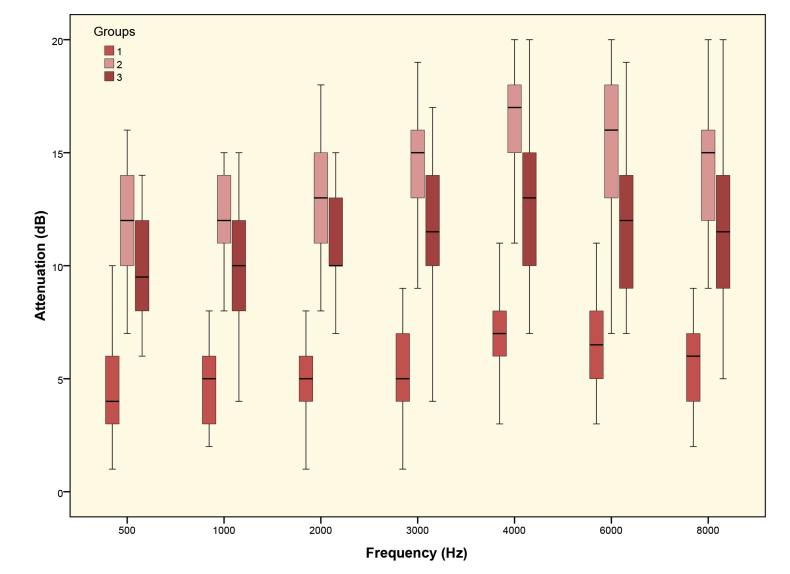
Results: The mean ± SD age of the participants was 28 ± 5 (range: 19-39) years. 42% of participants were female. The mean noise attenuation in the group with training was 13.88 dB, significantly higher than those observed in other groups. The highest attenuation was observed in high frequencies (4, 6, and 8 kHz) in the group with training.
Conclusion: Training in appropriate use of earplugs significantly affects the efficacy of earplugs---even more than using an earplug with higher NRR.
Conflict of interest statement
None declared.
References
-
- Hager L. BLS occupational hearing loss report for 2007. CAOHC Update. 2009;27:1.
-
- Centers for Disease Control and Prevention [Internet]. Washington, DC: DHHS, CDC. [update at 2001; cited 2014]. DHHS (NIOSH) Publication Number 2001- 103; [about 2 screens]. Available from www.cdc.gov/niosh/docs/2001-103/ (Accessed June 11, 2014).
-
- Centers for Disease Control and Prevention [Internet]. Washington, DC: DHHS, CDC. [updated 2012; cited 2014]. Noise and hearing loss prevention; [about 1 screen]. Available from www.cdc.gov/niosh/topics/noise/about.html (Accessed June 14, 2014).
-
- Mirmohammadi J, Baba Haji Meibodi F, Nourani F. [Investigating the hearing tolerance in the workers of the tile factory complex of Meybod] J Shahid Sadoughi Uni Med Sci. 2008;16:8–13. [in Persian].
-
- Frost and Sullivan. U.S. Markets for Industrial Hearing Protection Products. 2009, Available from http://www.frost.com/sublib/subscription-index.do?pageSize=50&subscripti... (Accessed June 12, 2014).
Publication types
MeSH terms
Associated data
LinkOut - more resources
Full Text Sources
Medical
Miscellaneous