. 2014 Oct 1;9(10):e108889.
doi: 10.1371/journal.pone.0108889. eCollection 2014.

Tempol, a superoxide dismutase mimetic agent, ameliorates cisplatin-induced nephrotoxicity through alleviation of mitochondrial dysfunction in mice

Affiliations

Tempol, a superoxide dismutase mimetic agent, ameliorates cisplatin-induced nephrotoxicity through alleviation of mitochondrial dysfunction in mice

Lamiaa A Ahmed et al. PLoS One. .

Erratum in

  • PLoS One. 2014;9(12):e115983

Abstract

Background: Mitochondrial dysfunction is a crucial mechanism by which cisplatin, a potent chemotherapeutic agent, causes nephrotoxicity where mitochondrial electron transport complexes are shifted mostly toward imbalanced reactive oxygen species versus energy production. In the present study, the protective role of tempol, a membrane-permeable superoxide dismutase mimetic agent, was evaluated on mitochondrial dysfunction and the subsequent damage induced by cisplatin nephrotoxicity in mice.

Methods and findings: Nephrotoxicity was assessed 72 h after a single i.p. injection of cisplatin (25 mg/kg) with or without oral administration of tempol (100 mg/kg/day). Serum creatinine and urea as well as glucosuria and proteinuria were evaluated. Both kidneys were isolated for estimation of oxidative stress markers, adenosine triphosphate (ATP) content and caspase-3 activity. Moreover, mitochondrial oxidative phosphorylation capacity, complexes I-IV activities and mitochondrial nitric oxide synthase (mNOS) protein expression were measured along with histological examinations of renal tubular damage and mitochondrial ultrastructural changes. Tempol was effective against cisplatin-induced elevation of serum creatinine and urea as well as glucosuria and proteinuria. Moreover, pretreatment with tempol notably inhibited cisplatin-induced oxidative stress and disruption of mitochondrial function by restoring mitochondrial oxidative phosphorylation, complexes I and III activities, mNOS protein expression and ATP content. Tempol also provided significant protection against apoptosis, tubular damage and mitochondrial ultrastructural changes. Interestingly, tempol did not interfere with the cytotoxic effect of cisplatin against the growth of solid Ehrlich carcinoma.

Conclusion: This study highlights the potential role of tempol in inhibiting cisplatin-induced nephrotoxicity without affecting its antitumor activity via amelioration of oxidative stress and mitochondrial dysfunction.


Conflict of interest statement

Competing Interests: The authors declare that there are no conflicts of interest.

Figures

Figure 1
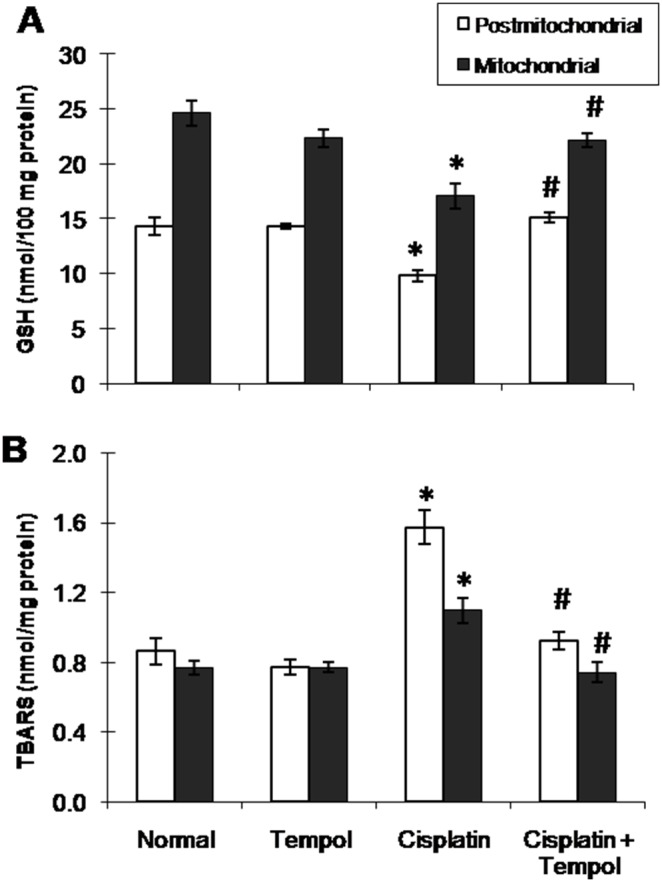
Figure 1. Effect of tempol on cisplatin-induced changes in oxidative stress markers in postmitochondrial and mitochondrial fractions in renal tissues of mice.
(A) Reduced glutathione (GSH). (B) Thiobarbituric acid reactive substances (TBARS). Mice were studied 72 h after a single i.p. injection of cisplatin (25 mg/kg). Tempol (100 mg/kg/day) was given orally for 4 days starting one day before cisplatin injection. Each value represents the mean of 6–8 mice ± S.E.M. *p<0.05 vs. normal, # p<0.05 vs. cisplatin.
Figure 2
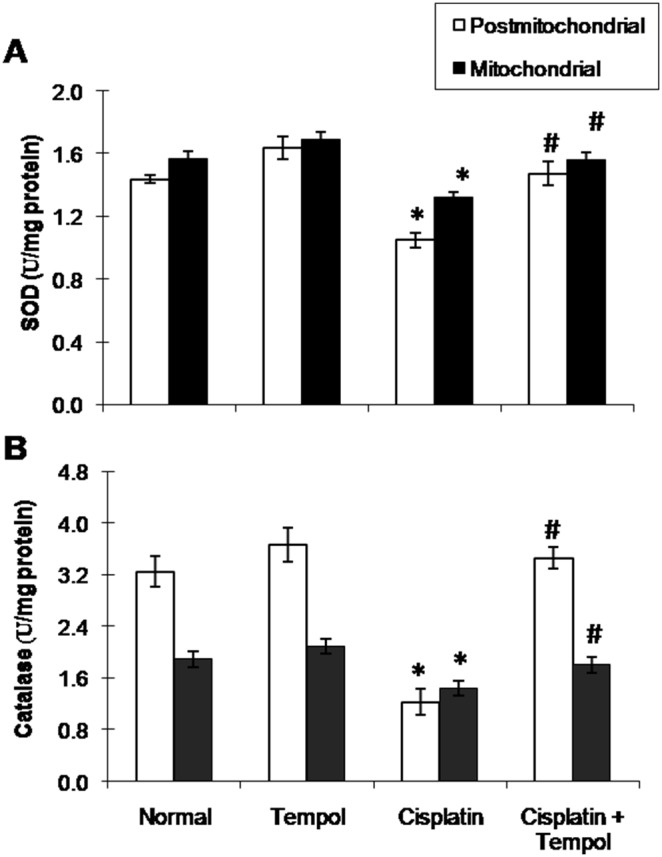
Figure 2. Effect of tempol on cisplatin-induced changes in antioxidant enzymes activities in postmitochondrial and mitochondrial fractions in renal tissues of mice.
(A) Superoxide dismutase (SOD). (B) Catalase. Mice were studied 72 h after a single i.p. injection of cisplatin (25 mg/kg). Tempol (100 mg/kg/day) was given orally for 4 days starting one day before cisplatin injection. Each value represents the mean of 6–8 mice ± S.E.M. *p<0.05 vs. normal, # p<0.05 vs. cisplatin.
Figure 3
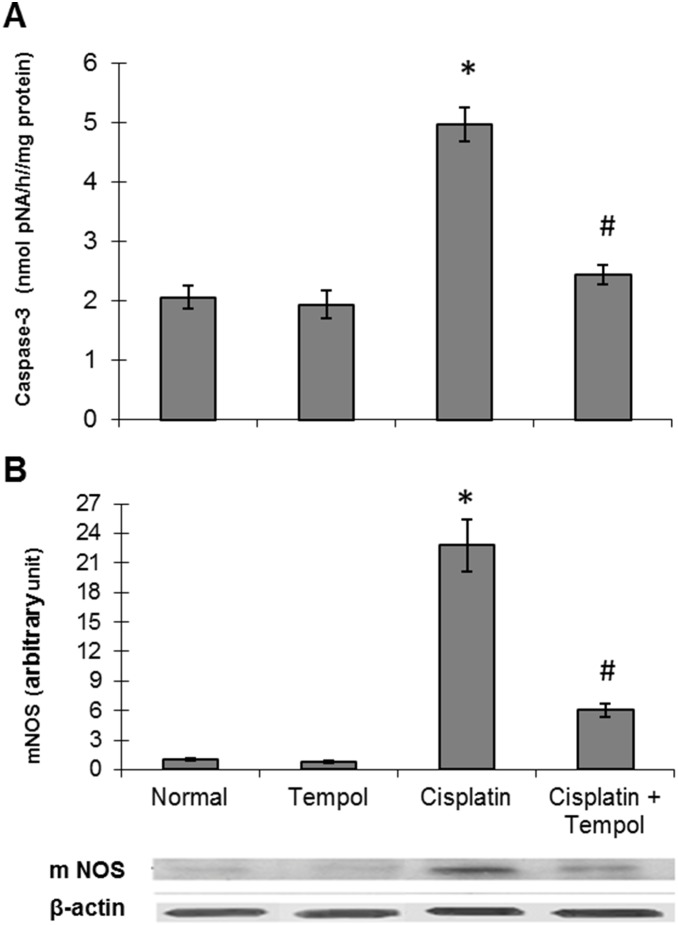
Figure 3. Effect of tempol on cisplatin-induced changes in caspase-3 activity and mitochondrial nitric oxide synthase (mNOS) protein expression in renal tissues of mice.
(A) Caspase-3 activity. (B) mNOS protein expression. Mice were studied 72 h after a single i.p. injection of cisplatin (25 mg/kg). Tempol (100 mg/kg/day) was given orally for 4 days starting one day before cisplatin injection. Each value represents the mean of 6–8 mice ± S.E.M. *p<0.05 vs. normal, # p<0.05 vs. cisplatin.
Figure 4
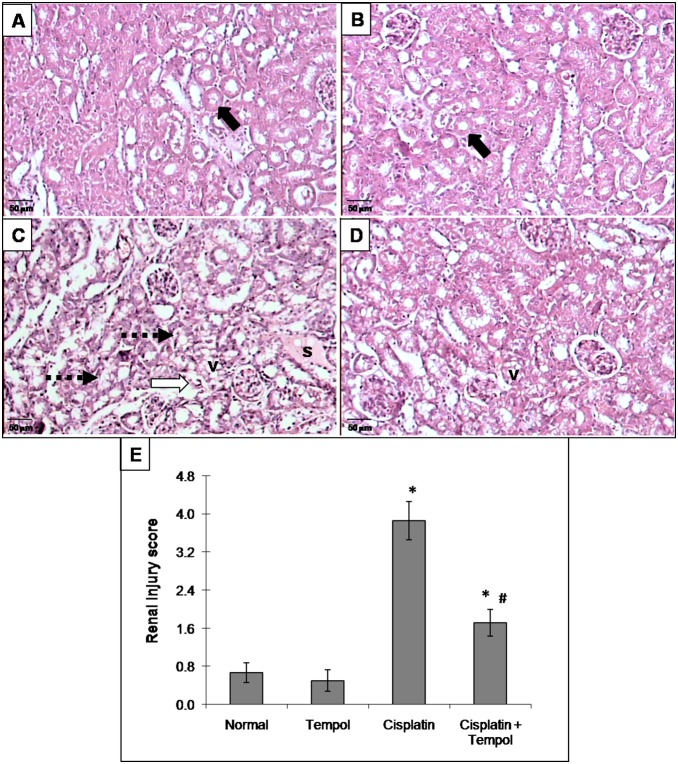
Figure 4. Effect of tempol on cisplatin-induced changes in light microscopic examination (H&E x200) in renal tissues of mice.
(A) normal group and (B) tempol-treated group show normal non-affected tubular epithelium (thick dark arrow). (C) cisplatin-treated group shows severe tubular damage as revealed by acute tubular necrosis (dashed thick arrow), wide tubular epithelial vacuolation (v), apoptotic tubular epithelium (thick white arrow) and cast formation (s). (D) tempol and cisplatin-treated group shows more or less normal renal tubules with minimal focal vacuolation of the tubular epithelium (v). (E) renal injury score. Mice were studied 72 h after a single i.p. injection of cisplatin (25 mg/kg). Tempol (100 mg/kg/day) was given orally for 4 days starting one day before cisplatin injection. Each renal injury score value represents the mean of 4 mice ± S.E.M. *p<0.05 vs. normal, # p<0.05 vs. cisplatin.
Figure 5
Figure 5. Effect of tempol on cisplatin-induced changes in mitochondrial ultrastructural examination of renal tissues in mice.
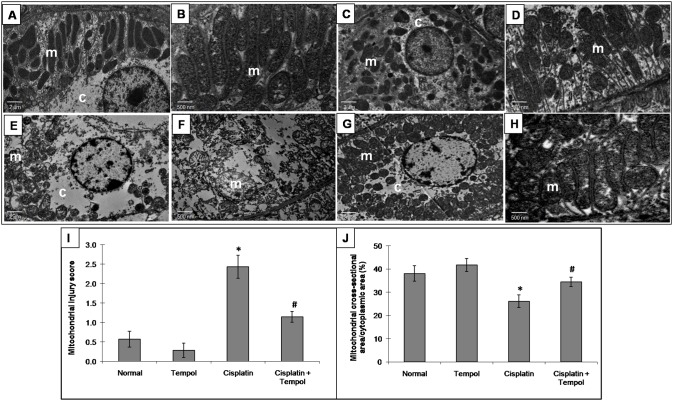
Photomicrographs are representative specimens which show mitochondria (m) and cytoplasm (c) from normal group (A x2,000 magnification; B x10,000 magnification), tempol-treated group (C x2,000 magnification; D x10,000 magnification), cisplatin-treated group (E x2,000 magnification; F x10,000 magnification), tempol and cisplatin-treated group (G x2,000 magnification; H x10,000 magnification), mitochondrial overall injury score (I) and percentage of mitochondrial cross-sectional area/cytoplasmic area (J). Mice were studied 72 h after a single i.p. injection of cisplatin (25 mg/kg). Tempol (100 mg/kg/day) was given orally for 4 days starting one day before cisplatin injection. Each value represents the mean of 4 mice ± S.E.M. *p<0.05 vs. normal, # p<0.05 vs. cisplatin.

References

    1. Langerak AD, Dreisbach LP (2001) Chemotherapy regimens and cancer care. Texas: Landes Bioscience; Georgetown.
    1. Sahni V, Choudhury D, Ahmed Z (2009) Chemotherapy-associated renal dysfunction. Nat Rev Nephrol 8: 450–462. - PubMed
    1. Yao X, Panichpisal K, Kurtzman N, Nugent K (2007) Cisplatin nephrotoxicity: a review. Am J Med Sci 334: 115–124. - PubMed
    1. Pabla N, Dong Z (2008) Cisplatin nephrotoxicity: mechanisms and renoprotective strategies. Kidney Int 73: 994–1007. - PubMed
    1. Kilic U, Kilic E, Tuzcu Z, Tuzcu M, Ozercan IH, et al. (2013) Melatonin suppresses cisplatin-induced nephrotoxicity via activation of Nrf-2/HO-1 pathway. Nutr Metab 10: 7. - PMC - PubMed

MeSH terms