


Ten-year experience of remote medical education in Asia
- PMID: 25272006
- PMCID: PMC4229692
- DOI: 10.1089/tmj.2014.0018
Ten-year experience of remote medical education in Asia
Abstract
Background: Moving images are often essential in medical education, to learn new procedures and advanced skills, but, in the past, high-quality movie transmission was technically much more challenging than transmitting still pictures because of technological limitations and cost.
Materials and methods: We established a new system, taking advantage of two advanced technologies, the digital video transport system (DVTS) and the research and education network (REN), which enabled satisfactory telemedicine on a routine basis.
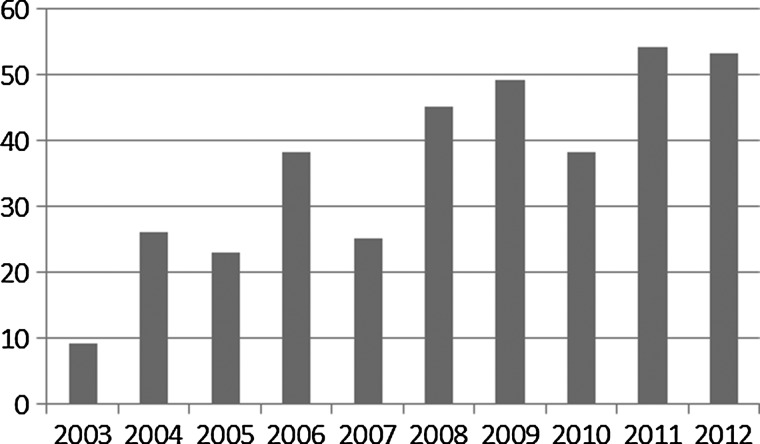
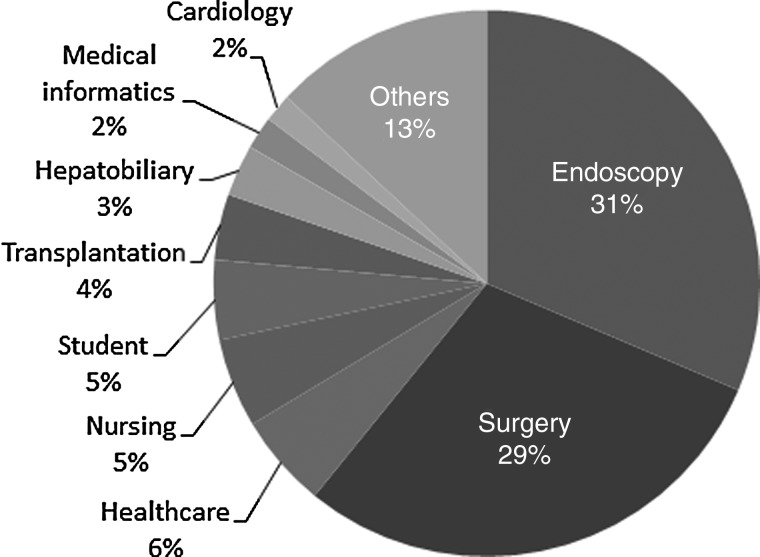
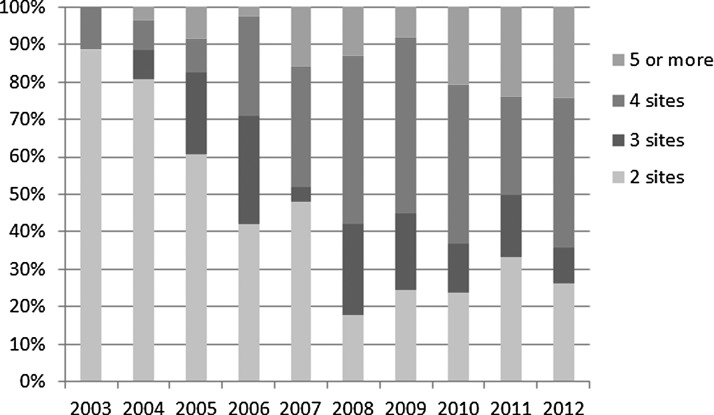
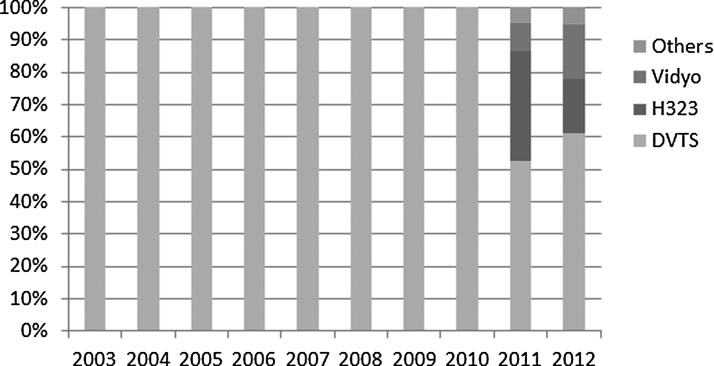
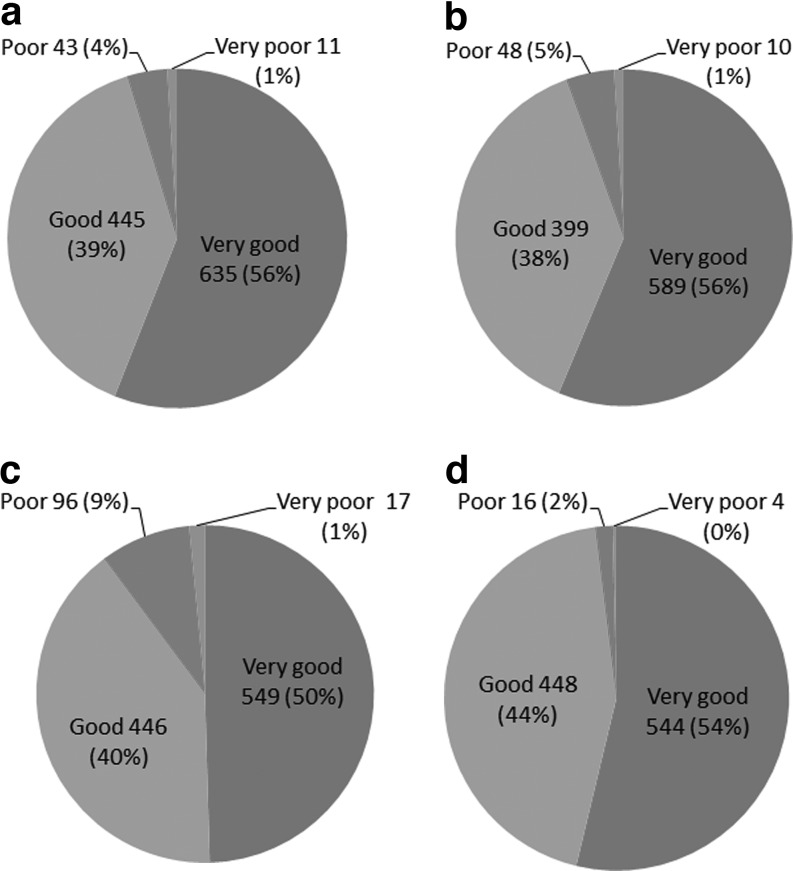
Results: Between 2003 and 2013, we organized 360 programs connecting 221 hospitals or facilities in 34 countries in Asia and beyond. The two main areas were endoscopy and surgery, with 113 (31%) and 106 (29%) events, respectively. Teleconferences made up 76% of the total events, with the remaining 24% being live demonstrations. Multiple connections were more popular (63%) than one-to-one connections (37%). With continuous technological development, new high-definition H.323 and Vidyo(®) (Hackensack, NJ) systems were used in 47% and 39% of events in 2011 and 2012, respectively. The evaluation by questionnaires was favorable on image and sound quality as well as programs.
Conclusions: Remote medical education with moving images was well accepted in Asia with changing needs and developing technologies.
Keywords: Internet; digital video transport system; remote education; research and education network; telemedicine.
Figures
References
-
- Saliba V, Legido-Quigley H, Hallik R, Aaviksoo A, Car J, McKee M. Telemedicine across borders: A systematic review of factors that hinder or support implementation. Int J Med Informa 2012;81:793–809 - PubMed
-
- Weinstein RS, Graham AR, Lian F, Braunhut BL, Barker GR, Krupinski EA, Bhattacharyya AK. Reconciliation of diverse telepathology system designs. Historic issues and implications for emerging markets and new applications. APMIS 2012;120:256–275 - PubMed
-
- Rabenstein T, Maiss J, Naegele-Jackson S, Liebl K, Hengstenberg T, Radespiel-Troger M, Holleczek P, Hahn EG, Sackmann M. Tele-endoscopy: Influence of data compression, bandwidth and simulated impairments on the usability of real-time digital video endoscopy transmissions for medical diagnoses. Endoscopy 2002;34:703–710 - PubMed
Publication types
MeSH terms
LinkOut - more resources
Full Text Sources
Other Literature Sources
Medical
Miscellaneous
