


The psychosis spectrum in a young U.S. community sample: findings from the Philadelphia Neurodevelopmental Cohort
- PMID: 25273303
- PMCID: PMC4219071
- DOI: 10.1002/wps.20152
The psychosis spectrum in a young U.S. community sample: findings from the Philadelphia Neurodevelopmental Cohort
Abstract
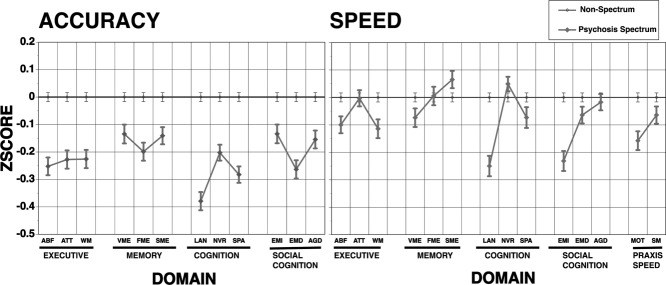
Little is known about the occurrence and predictors of the psychosis spectrum in large non-clinical community samples of U.S. youths. We aimed to bridge this gap through assessment of psychosis spectrum symptoms in the Philadelphia Neurodevelopmental Cohort, a collaborative investigation of clinical and neurobehavioral phenotypes in a prospectively accrued cohort of youths, funded by the National Institute of Mental Health. Youths (age 11-21; N=7,054) and collateral informants (caregiver/legal guardian) were recruited through the Children's Hospital of Philadelphia and administered structured screens of psychosis spectrum symptoms, other major psychopathology domains, and substance use. Youths were also administered a computerized neurocognitive battery assessing five neurobehavioral domains. Predictors of psychosis spectrum status in physically healthy participants (N=4,848) were examined using logistic regression. Among medically healthy youths, 3.7% reported threshold psychotic symptoms (delusions and/or hallucinations). An additional 12.3% reported significant sub-psychotic positive symptoms, with odd/unusual thoughts and auditory perceptions, followed by reality confusion, being the most discriminating and widely endorsed attenuated symptoms. A minority of youths (2.3%) endorsed subclinical negative/disorganized symptoms in the absence of positive symptoms. Caregivers reported lower symptom levels than their children. Male gender, younger age, and non-European American ethnicity were significant predictors of spectrum status. Youths with spectrum symptoms had reduced accuracy across neurocognitive domains, reduced global functioning, and increased odds of depression, anxiety, behavioral disorders, substance use and suicidal ideation. These findings have public health relevance for prevention and early intervention.
Keywords: Psychosis spectrum; U.S. youths; functional impairment; neurocognition; sub-psychotic positive symptoms.
Copyright © 2014 World Psychiatric Association.
Figures
References
-
- van Os J, Linscott RJ, Myin-Germeys I, et al. A systematic review and meta-analysis of the psychosis continuum: evidence for a psychosis proneness-persistence-impairment model of psychotic disorder. Psychol Med. 2009;39:179–95. - PubMed
-
- Dominguez MD, Saka MC, Lieb R, et al. Early expression of negative/disorganized symptoms predicting psychotic experiences and subsequent clinical psychosis: a 10-year study. Am J Psychiatry. 2010;167:1075–82. - PubMed
-
- Kaymaz N, Drukker M, Lieb R, et al. Do subthreshold psychotic experiences predict clinical outcomes in unselected non-help-seeking population-based samples? A systematic review and meta-analysis, enriched with new results. Psychol Med. 2012;42:2239–53. - PubMed
-
- Fusar-Poli P, Yung AR, McGorry P, et al. Lessons learned from the psychosis high-risk state: towards a general staging model of prodromal intervention. Psychol Med. 2014;44:17–24. - PubMed
Grants and funding
LinkOut - more resources
Full Text Sources
Other Literature Sources
Molecular Biology Databases
Miscellaneous
