. 2014 Dec 18;516(7531):414-7.
doi: 10.1038/nature13818. Epub 2014 Sep 28.

Mitochondrial UPR-regulated innate immunity provides resistance to pathogen infection

Affiliations

Mitochondrial UPR-regulated innate immunity provides resistance to pathogen infection

Mark W Pellegrino et al. Nature. .

Abstract

Metazoans identify and eliminate bacterial pathogens in microbe-rich environments such as the intestinal lumen; however, the mechanisms are unclear. Host cells could potentially use intracellular surveillance or stress response programs to detect pathogens that target monitored cellular activities and then initiate innate immune responses. Mitochondrial function is evaluated by monitoring mitochondrial protein import efficiency of the transcription factor ATFS-1, which mediates the mitochondrial unfolded protein response (UPR(mt)). During mitochondrial stress, mitochondrial import is impaired, allowing ATFS-1 to traffic to the nucleus where it mediates a transcriptional response to re-establish mitochondrial homeostasis. Here we examined the role of ATFS-1 in Caenorhabditis elegans during pathogen exposure, because during mitochondrial stress ATFS-1 induced not only mitochondrial protective genes but also innate immune genes that included a secreted lysozyme and anti-microbial peptides. Exposure to the pathogen Pseudomonas aeruginosa caused mitochondrial dysfunction and activation of the UPR(mt). C. elegans lacking atfs-1 were susceptible to P. aeruginosa, whereas hyper-activation of ATFS-1 and the UPR(mt) improved clearance of P. aeruginosa from the intestine and prolonged C. elegans survival in a manner mainly independent of known innate immune pathways. We propose that ATFS-1 import efficiency and the UPR(mt) is a means to detect pathogens that target mitochondria and initiate a protective innate immune response.


Figures
Extended Data Figure 1
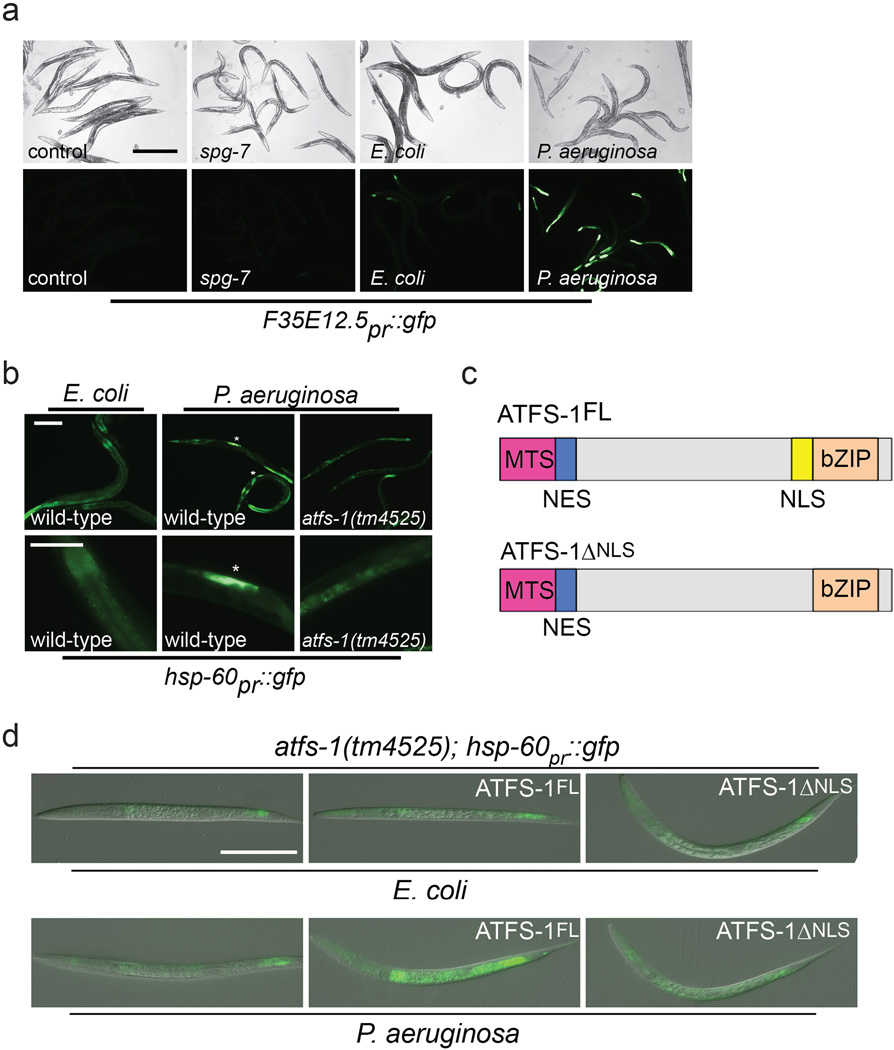
Extended Data Figure 1. Nuclear accumulation of ATFS-1 is required for UPRmt activation during P. aeruginosa exposure
a, Representative photomicrographs of F35E12.5pr::gfp transgenic worms raised on control or spg-7(RNAi). No detectable increase in expression was observed following spg-7(RNAi) treatment. In contrast, strong expression of F35E12.5pr::gfp was observed following exposure to P. aeruginosa compared to E. coli controls. Scale bar, 0.5 mm. b, Wild-type or atfs-1(tm4525);hsp-60pr::gfp worms on E. coli or P. aeruginosa. Lower panels are magnified views of the intestine showing enhanced expression of hsp-60pr::gfp (asterisks). Scale bars, 0.05 mm. c, Diagrams of wild-type ATFS-1 (ATFS-1FL) and ATFS-1 with a mutated nuclear localization signal (ATFS-1ΔNLS). d, Photomicrographs of atfs-1(tm4525);hsp-60pr::gfp worms expressing ATFS-1FL or ATFS-1ΔNLS via the hsp-16 promoter exposed to E. coli or P. aeruginosa. Scale bar, 0.1 mm.
Extended Data Figure 2
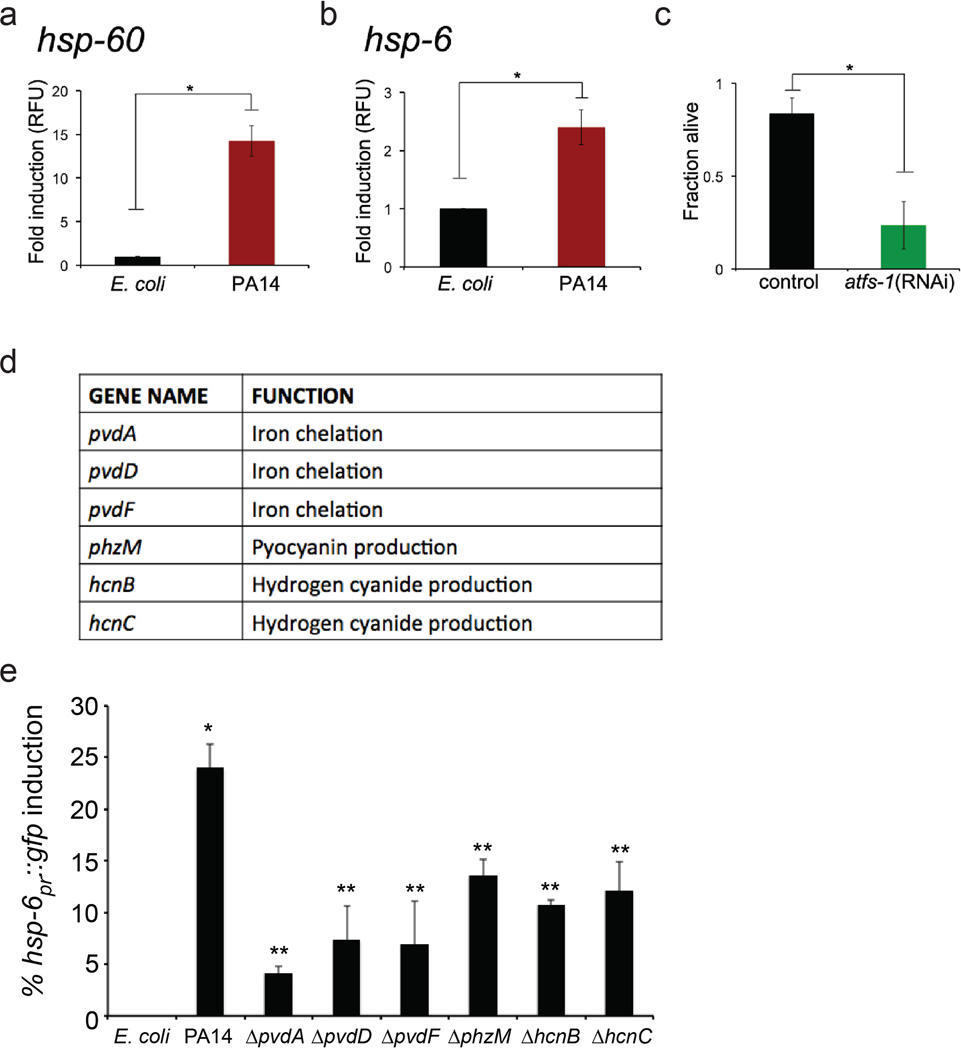
Extended Data Figure 2. Multiple P. aeruginosa virulence genes contribute to UPRmt activation
a–b, Expression of hsp-60 and hsp-6 mRNA for glp-4(bn2) worms exposed to E. coli or P. aeruginosa liquid-killing using qRT-PCR (N=3, ± SD). Fold inductions are normalized to wild-type E. coli test group, * p<0.05 (Student t-test). c, Quantitation of survival for glp-4(bn2) worms raised on control or atfs-1(RNAi) and exposed to P. aeruginosa liquid-killing, *p<0.0001 (Student t-test). d, List of P. aeruginosa toxin mutants. e, Quantitation of the proportion of worms showing increased hsp-6pr::gfp expression in the intestine under slow-killing conditions. Exposure to P. aeruginosa caused hsp-6pr::gfp induction (N=3, ± SE), *p<0.05 (Student t-test). However, exposure to P. aeruginosa with mutations in the pvdA, pvdD, pvdF, phzM, hcnB, or hcnC toxin genes resulted in relatively less UPRmt activation (N=3, ± SE), **p<0.05 (Student t-test).
Extended Data Figure 3
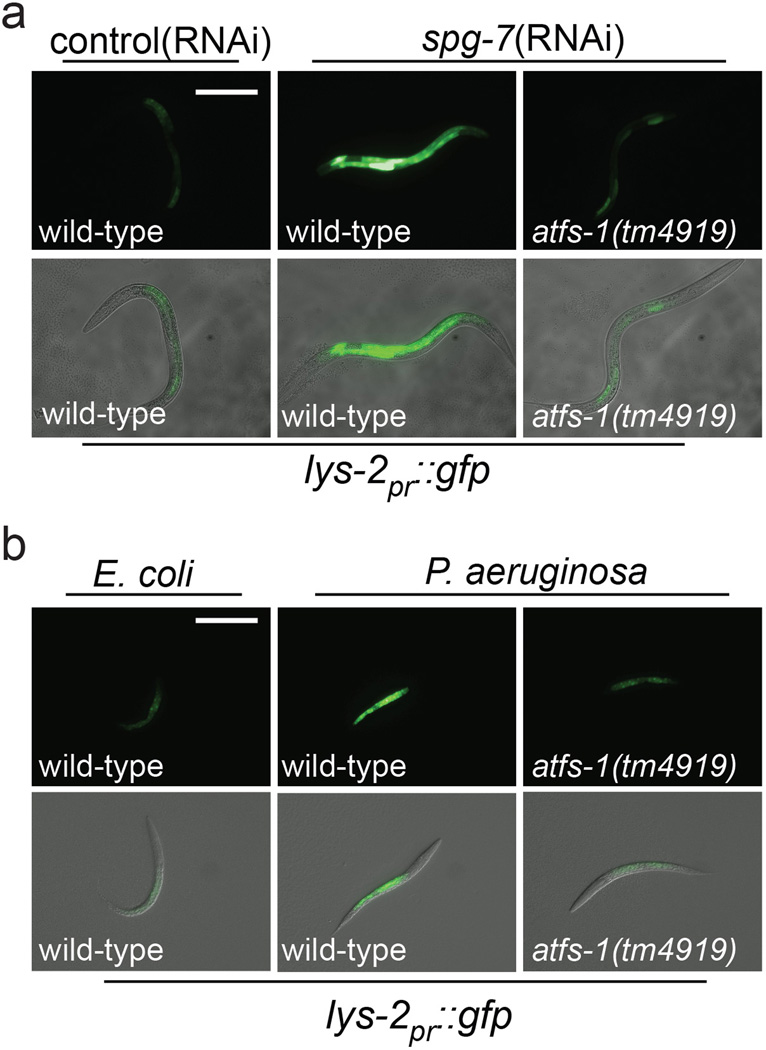
Extended Data Figure 3. Intestinal accumulation of lys-2 during mitochondrial stress and P. aeruginosa exposure requires ATFS-1
a, Representative photomicrographs of wild-type and atfs-1(tm4919) worms carrying the lys-2pr::gfp transgene raised on control or spg-7(RNAi). Scale bar, 0.1 mm. b, Representative photomicrographs of wild-type and atfs-1(tm4919) worms carrying the lys-2pr::gfp transgene exposed to E. coli or P. aeruginosa. Scale bar, 0.1 mm.
Extended Data Figure 4
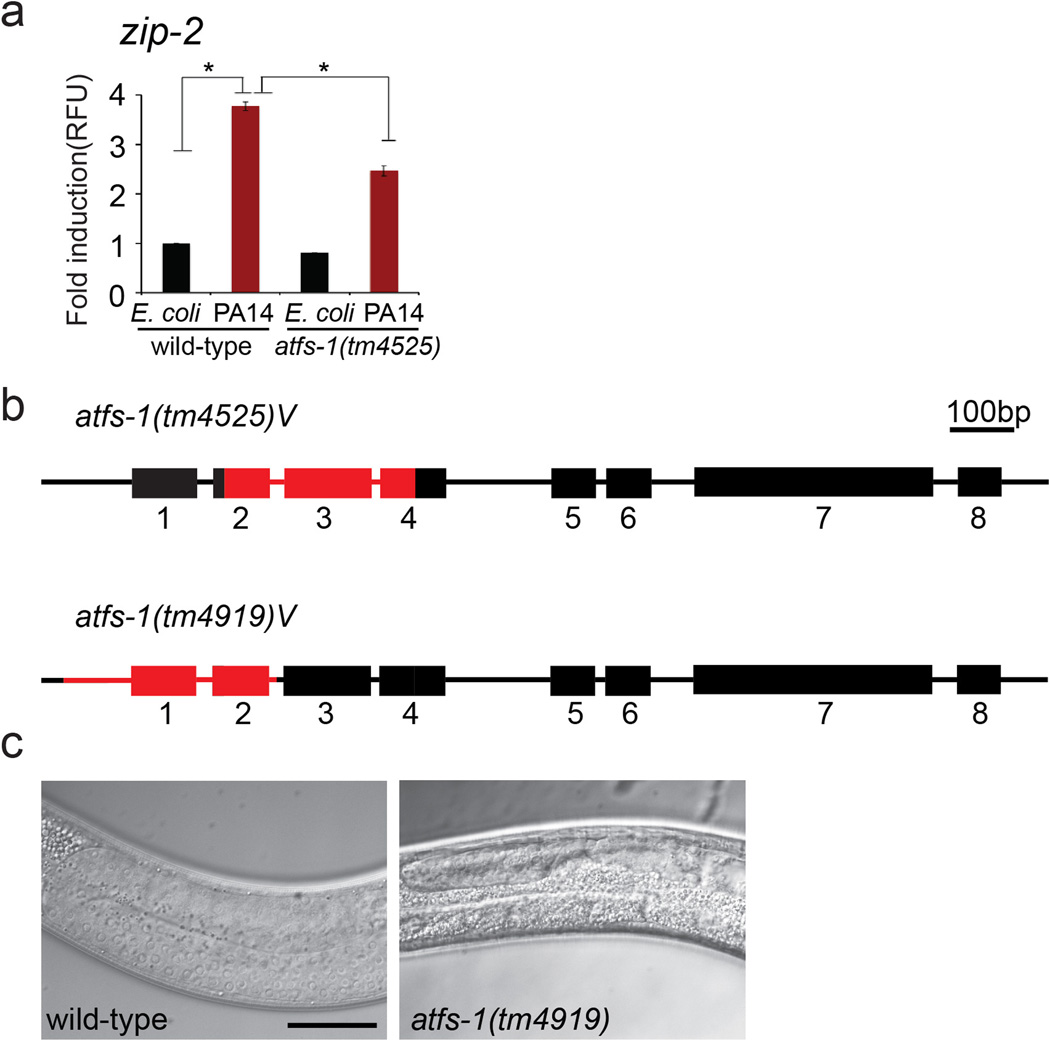
Extended Data Figure 4. ATFS-1 partially regulates zip-2 expression during P. aeruginosa exposure
a, Expression levels of zip-2 mRNA in wild-type or atfs-1(tm4525) worms raised on E. coli or P. aeruginosa using qRT-PCR (N=3, ± SD), * p<0.05 (Student’s t test). b, Schematic diagram of the atfs-1 genomic open reading frame showing positions of exons 1–8 (boxes) and locations of the tm4525 and tm4919 deletions in red. The tm4919 allele is a 334 base pair deletion beginning 107 base pairs upstream of the atfs-1 start codon and ends within the second intron of the atfs-1 genomic open reading frame. c, Representative photomicrographs of a germline in wild-type and atfs-1(tm4919) worms. Scale bar, 0.02 mm.
Extended Data Figure 5
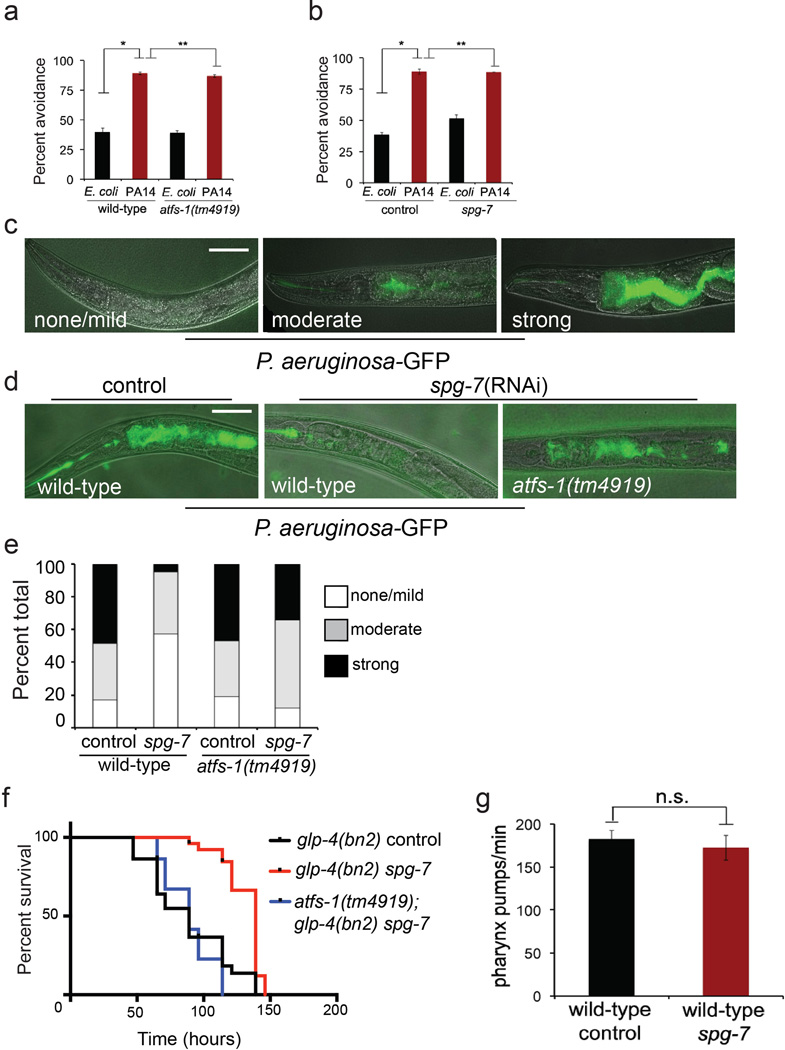
Extended Data Figure 5. ATFS-1 is not required for pathogen avoidance during P. aeruginosa exposure
a, Quantitation of avoidance behavior for wild-type and atfs-1(tm4919) worms raised on E. coli or P. aeruginosa expressed as a percentage of the number of animals off the bacterial lawn relative to the total number worms (N=4, ± SD). *p<0.0001, **p=0.1914 (Student t-test). b, Quantitation of avoidance behavior for wild-type worms raised on control or spg-7(RNAi) and exposed to E. coli or P. aeruginosa expressed as a percentage of the number of animals off the bacterial lawn relative to the total number worms (N=3, ± SD). *p<0.0001, **p=0.8706 (Student t-test). c, Representative photomicrographs illustrating the scored level of infection for P. aeruginosa colonization assay using P. aeruginosa-GFP. Three categories of P. aeruginosa-GFP infection were used: none/mild, moderate and strong. Scale bar, 0.1 mm. d, Representative photomicrographs of wild-type and atfs-1(tm4919) worms raised on spg-7(RNAi) and exposed to a lawn of P. aeruginosa-GFP that completely covered the surface of the slow-killing plate for 24 hours. Images are overlays of DIC and GFP. Scale bar, 0.1 mm. e, Quantitation of P. aeruginosa intestinal colonization as shown in Extended Data Fig. 5d. White, grey and black bars denote no/mild infection, moderate infection and strong infection, respectively. Forty worms were analyzed per treatment. f, Survival analysis of glp-4(bn2) and atfs-1(tm4919); glp-4(bn2) worms raised on control or spg-7(RNAi) and exposed to P. aeruginosa. Statistics for each survival analysis are presented in Extended Data Table 3. g, Quantitation of pharyngeal pumping rate per minute for wild-type worms raised on control or spg-7(RNAi) (N=10, + SD). n.s., no significant difference (p=0.10; Student t-test).
Extended Data Figure 6
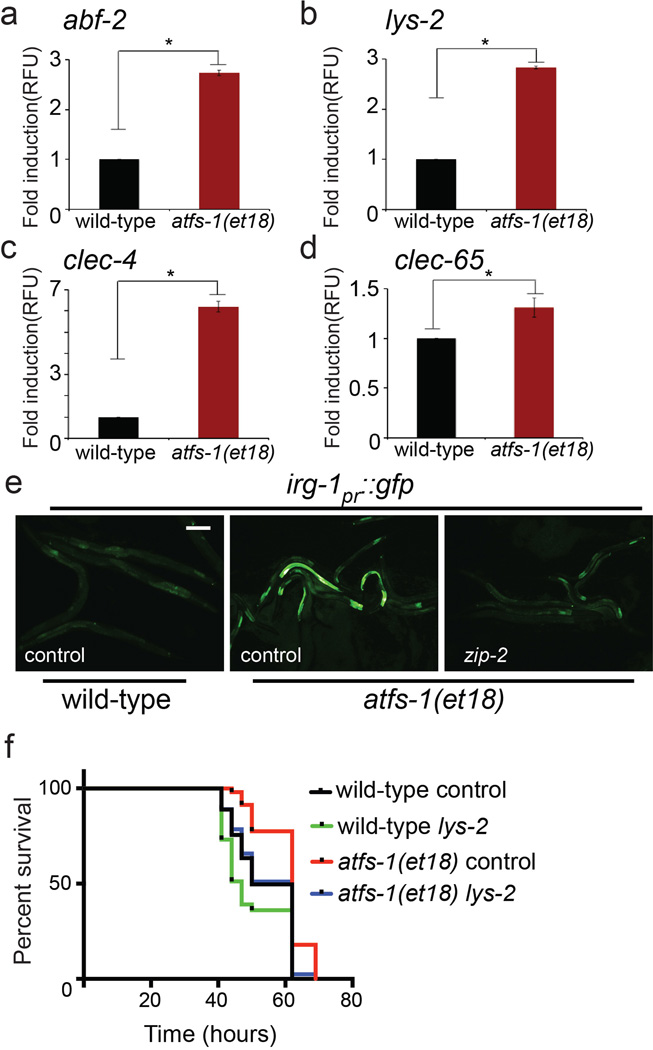
Extended Data Figure 6. atfs-1(et18) gain of function mutant worms induce innate immune gene expression in the absence of mitochondrial stress
a–d, Expression levels of abf-2, lys-2, clec-4 and clec-65 mRNA in wild-type or atfs-1(et18) worms using qRT-PCR (N=3, ± SD), * p<0.05 (Student’s t test). e, Representative photomicrographs of wild-type and atfs-1(et18) worms carrying the irg-1pr::gfp transgene raised on control or zip-2(RNAi). Scale bar, 0.10 mm. f, Survival analysis of wild-type and atfs-1(et18) worms raised on control or lys-2(RNAi) and exposed to P. aeruginosa. Statistics for each survival analysis are presented in Extended Data Table 3.
Extended Data Figure 7
Extended Data Figure 7. Mitochondrial protective and innate immune gene induction contributes to ATFS-1-mediated resistance to P. aeruginosa infection
a, Representative photomicrographs of wild-type hsp-60pr::gfp worms raised on control, atp-2(RNAi), spg-7(RNAi), eft-2(RNAi), sca-1(RNAi), T25B9.9(RNAi) or T08A11.2(RNAi). Scale bar is 0.1 mm. b, Representative photomicrographs of wild-type irg-1pr::gfp worms raised on control, atp-2(RNAi), eft-2(RNAi), sca-1(RNAi), T25B9.9(RNAi) or T08A11.2(RNAi). Scale bar is 0.1 mm. c, Survival analysis of wild-type worms raised on control, atp-2(RNAi), eft-2(RNAi), sca-1(RNAi), T25B9.9(RNAi) or T08A11.2(RNAi) and exposed to P. aeruginosa. Statistics for each survival analysis are presented in Extended Data Table 3. d, Survival analysis of wild-type worms raised on control, atp-2(RNAi), eft-2(RNAi), sca-1(RNAi), T25B9.9(RNAi) or T08A11.2(RNAi) and exposed to E. coli. Statistics for each survival analysis are presented in Extended Data Table 3. e, Representative photomicrographs of wild-type or kgb-1(km21);hsp-60pr::gfp worms raised on E. coli plates with or without 30 µg/ml ethidium bromide suggesting the KGB-1 Jun kinase pathway negatively regulates the UPRmt during mitochondrial stress. Scale bar is 0.5 mm.
Figure 1
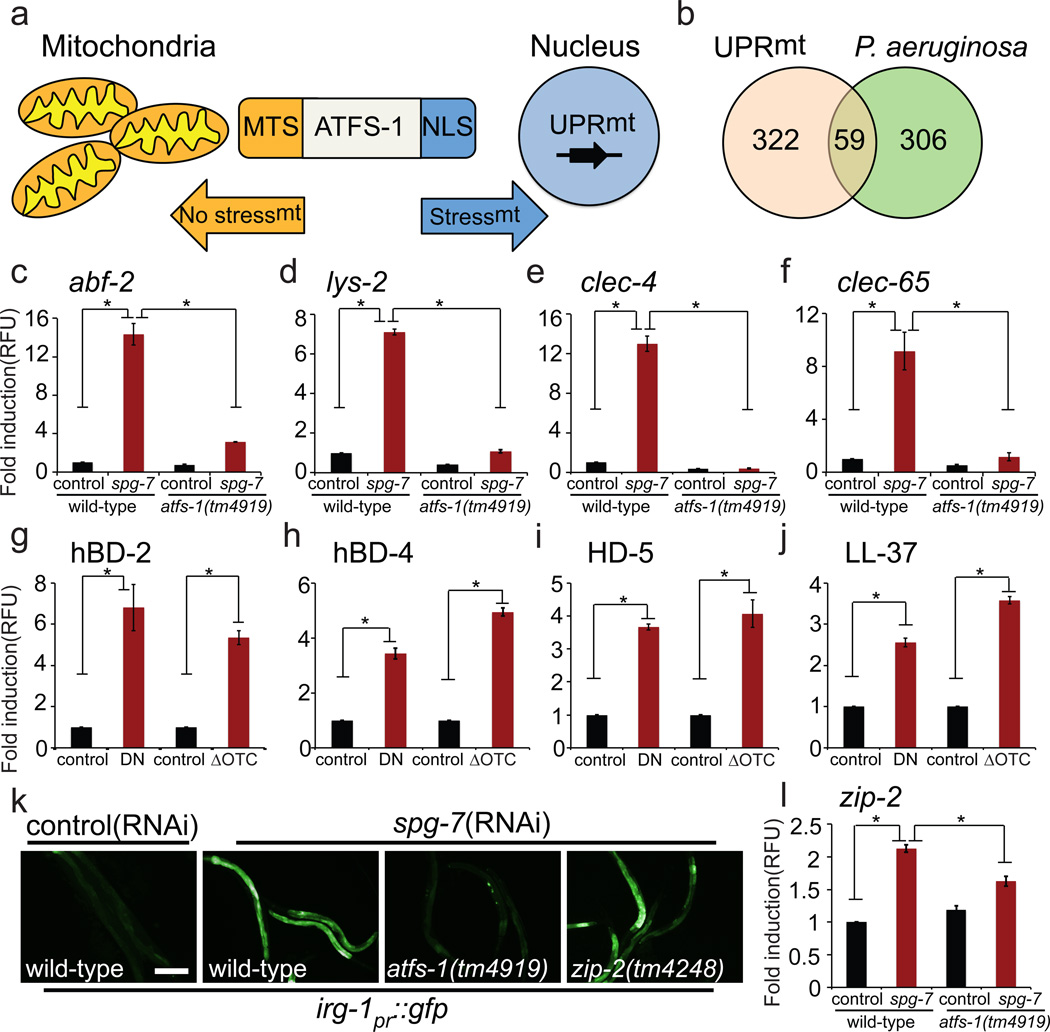
Figure 1. ATFS-1 induces innate immunity genes during mitochondrial dysfunction
a, UPRmt regulation. b, ATFS-1-dependent UPRmt genes in common with genes induced by P. aeruginosa. c–f, abf-2, lys-2, clec-4 and clec-65 transcripts in wild-type or atfs-1(tm4919) worms on control versus spg-7(RNAi) (N=3, ± SD), * p<0.05 (Student’s t test). g–j, Antimicrobial peptide transcripts in mammalian cells during mitochondrial stress caused by expression of dominant-negative AFG3L2 (DN), or misfolded ornithine transcarbamylase (ΔOTC) (N=3, ± SD), * p<0.05 (Student’s t test). k, irg-1pr::gfp in wild-type, atfs-1(tm4919) or zip-2(tm4248) worms on control versus spg-7(RNAi). Scale bar, 0.15 mm. l, zip-2 transcripts in wild-type or atfs-1(tm4919) worms on control or spg-7(RNAi) (N=3, ± SD), * p<0.05 (Student’s t test).
Figure 2
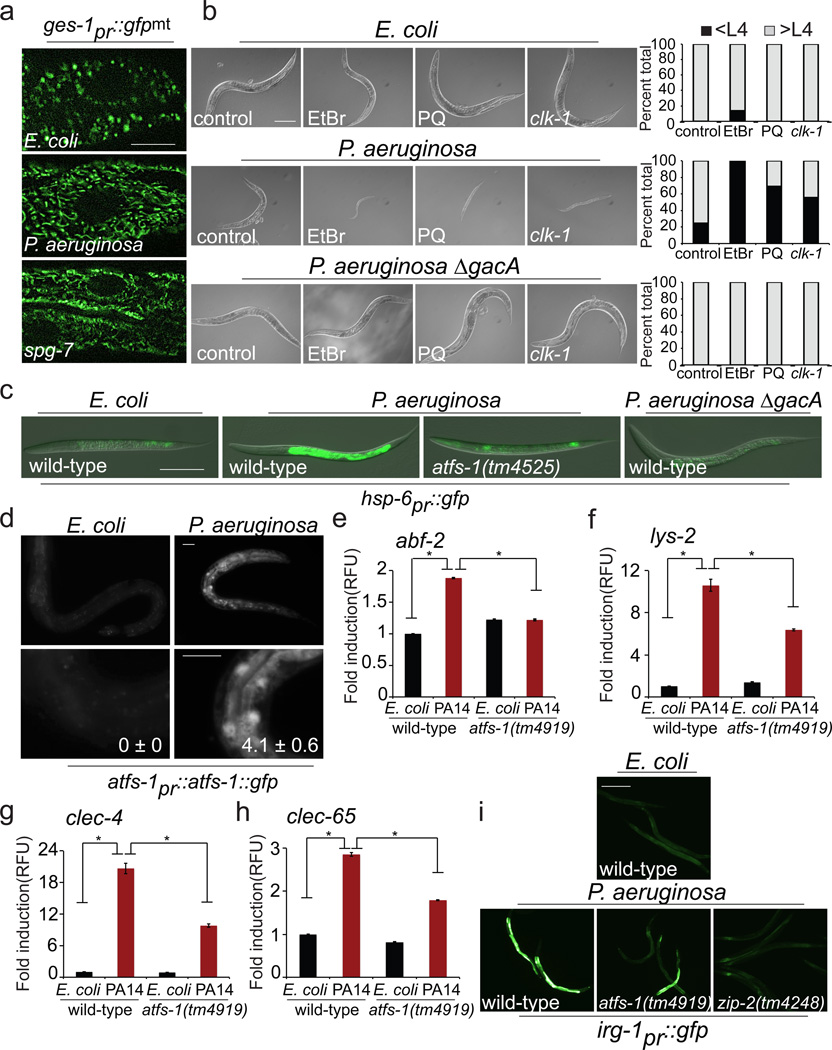
Figure 2. Mitochondrial stress and UPRmt activation by P. aeruginosa
a, ges-1pr::gfpmt intestinal cell mitochondria on E. coli, P. aeruginosa or spg-7(RNAi). Scale bar, 0.05 mm. b, Worms treated with ethidium bromide (EtBr), paraquat (PQ), and clk-1(qm30) worms raised on E. coli, P. aeruginosa or P. aeruginosa ΔgacA. Quantitation of the developmental stage for each treatment shown next to the corresponding panel (N=35 each treatment). Scale bar, 0.1 mm. c, Wild-type or atfs-1(tm4525);hsp-6pr::gfp worms on E. coli, P. aeruginosa or P. aeruginosa ΔgacA. Scale bar, 0.1 mm. d, atfs-1pr::atfs-1::gfp on E. coli or P. aeruginosa. Lower panels are magnified. (N=3). Mean percentages of ATFS-1::GFP nuclear accumulation are indicated (± SEM). Scale bars, 0.1 mm. e–h, abf-2, lys-2, clec-4 and clec-65 transcripts in wild-type or atfs-1(tm4919) worms on E. coli or P. aeruginosa (N=3, ± SD), * p<0.05 (Student’s t test). i, Wild-type, atfs-1(tm4919) and zip-2(tm4248) irg-1pr::gfp worms on E. coli or P. aeruginosa. Scale bar, 0.05 mm.
Figure 3
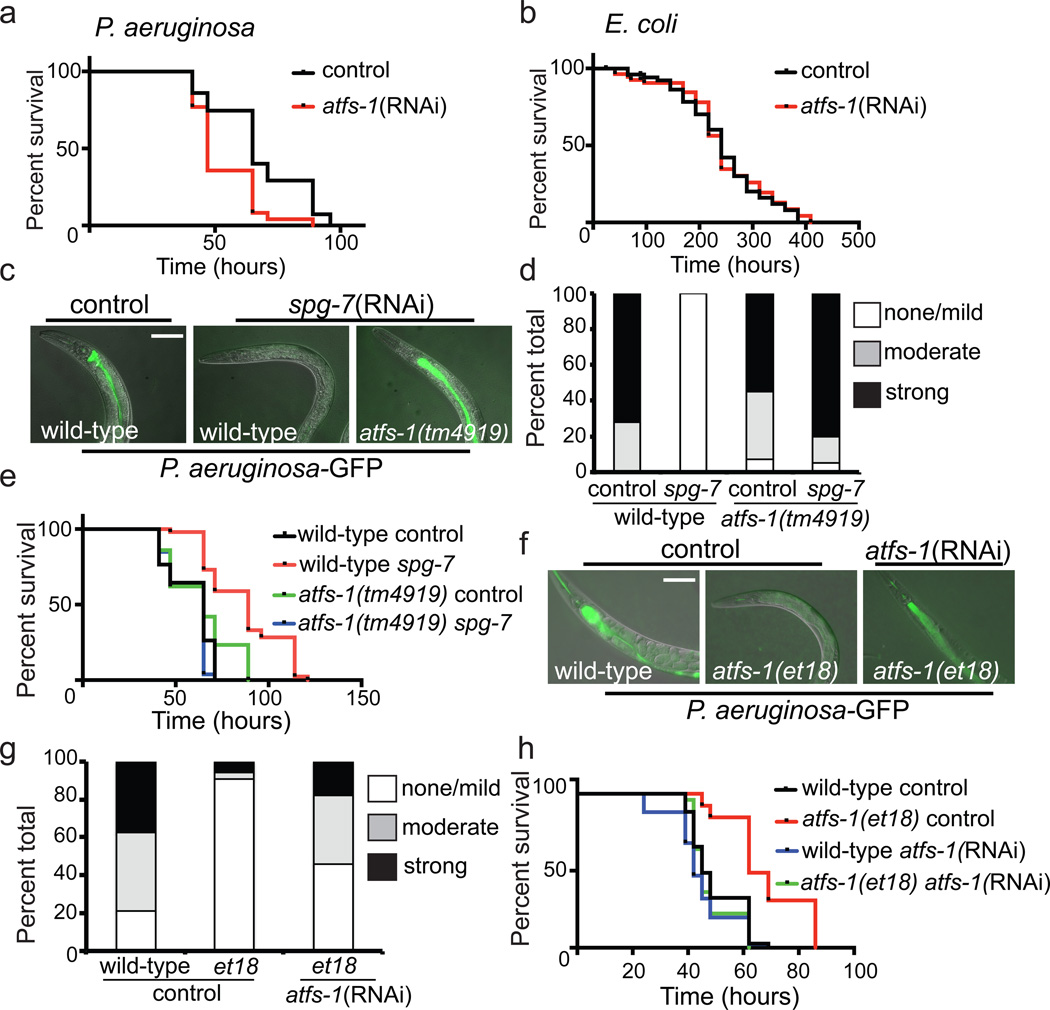
Figure 3. UPRmt activation provides resistance to P. aeruginosa
a–b, Survival of worms on control or atfs-1(RNAi) exposed to P. aeruginosa or E. coli. Statistics are in Extended Data Table 3. c–d, Images and quantitation of P. aeruginosa-GFP in wild-type or atfs-1(tm4919) worms on control or spg-7(RNAi). Scale bar, 0.1 mm. (N=35 each treatment). e, Survival of wild-type and atfs-1(tm4919) worms on control or spg-7(RNAi) exposed to P. aeruginosa. Statistics are in Extended Data Table 3. f–g, Images and quantitation of P. aeruginosa-GFP in wild-type and atfs-1(et18) worms on control or atfs-1(RNAi) (N=35 each treatment). Scale bar, 0.1 mm. h, Survival of wild-type and atfs-1(et18) worms on control or atfs-1(RNAi) exposed to P. aeruginosa. Statistics are in Extended Data Table 3.
Figure 4
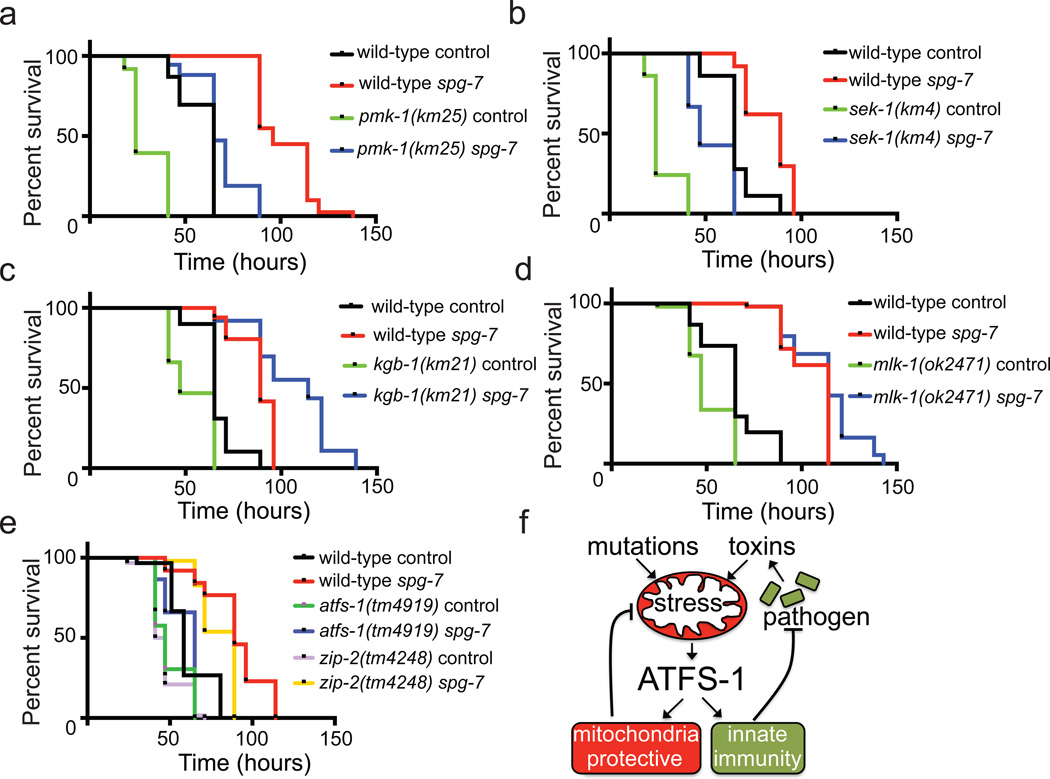
Figure 4. UPRmt activation prolongs survival independent of known innate immune pathways
a–d, Survival of wild-type, pmk-1(km25), sek-1(km4), kgb-1(km21) and mlk-1(ok2471) worms on control or spg-7(RNAi) exposed to P. aeruginosa. Statistics are in Extended Data Table 3. e, Survival of wild-type, zip-2(tm4248) and atfs-1(tm4919) worms raised on control or spg-7(RNAi) and exposed to P. aeruginosa. Statistics are in Extended Data Table 3. f, ATFS-1 signaling schematic.

References

    1. Melo JA, Ruvkun G. Inactivation of conserved C. elegans genes engages pathogen- and xenobiotic-associated defenses. Cell. 2012;149:452–466. - PMC - PubMed
    1. McEwan DL, Kirienko NV, Ausubel FM. Host translational inhibition by Pseudomonas aeruginosa Exotoxin A Triggers an immune response in Caenorhabditis elegans. Cell Host Microbe. 2012;11:364–374. - PMC - PubMed
    1. Dunbar TL, Yan Z, Balla KM, Smelkinson MG, Troemel ER. C. elegans detects pathogen-induced translational inhibition to activate immune signaling. Cell Host Microbe. 2012;11:375–386. - PMC - PubMed
    1. Wright G, Terada K, Yano M, Sergeev I, Mori M. Oxidative stress inhibits the mitochondrial import of preproteins and leads to their degradation. Exp Cell Res. 2001;263:107–117. - PubMed
    1. Nargund AM, Pellegrino MW, Fiorese CJ, Baker BM, Haynes CM. Mitochondrial import efficiency of ATFS-1 regulates mitochondrial UPR activation. Science. 2012;337:587–590. - PMC - PubMed

METHODS REFERENCES

    1. Yoneda T, et al. Compartment-specific perturbation of protein handling activates genes encoding mitochondrial chaperones. J Cell Sci. 2004;117:4055–4066. - PubMed
    1. Rual JF, et al. Toward improving Caenorhabditis elegans phenome mapping with an ORFeome-based RNAi library. Genome Res. 2004;14:2162–2168. - PMC - PubMed
    1. Ehses S, et al. Regulation of OPA1 processing and mitochondrial fusion by m-AAA protease isoenzymes and OMA1. J Cell Biol. 2009;187:1023–1036. - PMC - PubMed
    1. Zhao Q, et al. A mitochondrial specific stress response in mammalian cells. Embo J. 2002;21:4411–4419. - PMC - PubMed
    1. Tan MW, Mahajan-Miklos S, Ausubel FM. Killing of Caenorhabditis elegans by Pseudomonas aeruginosa used to model mammalian bacterial pathogenesis. Proc Natl Acad Sci U S A. 1999;96:715–720. - PMC - PubMed

Publication types

MeSH terms

Substances