


Refractory gastroesophageal reflux disease
- PMID: 25274499
- PMCID: PMC4324866
- DOI: 10.1093/gastro/gou061
Refractory gastroesophageal reflux disease
Abstract
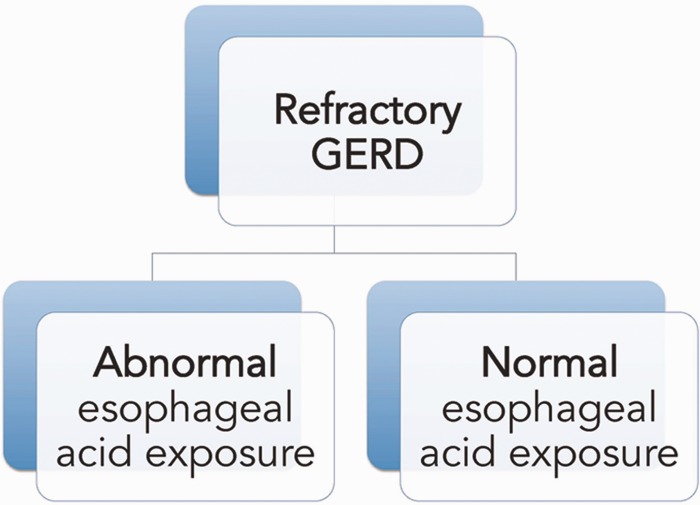
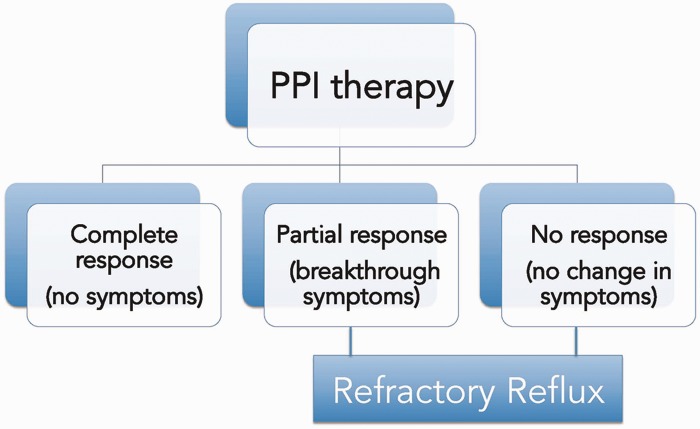
Gastroesophageal reflux disease (GERD) is a condition that develops when the reflux of stomach contents into the esophagus causes troublesome symptoms, esophageal injury, and/or complications. Use of proton pump inhibitors (PPI) remains the standard therapy for GERD and is effective in most patients. Those whose symptoms are refractory to PPIs should be evaluated further and other treatment options should be considered, according to individual patient characteristics. Response to PPIs could be total (no symptoms), partial (residual breakthrough symptoms), or absent (no change in symptoms). Patients experiencing complete response do not usually need further management. Patients with partial response can be treated surgically or by using emerging endoscopic therapies. Patients who exhibit no response to PPI need further evaluation to rule out other causes.
Keywords: acid-related diseases; endoscopy; gastroesophageal reflux disease; pH monitoring.
© The Author(s) 2014. Published by Oxford University Press and the Digestive Science Publishing Co. Limited.
Figures
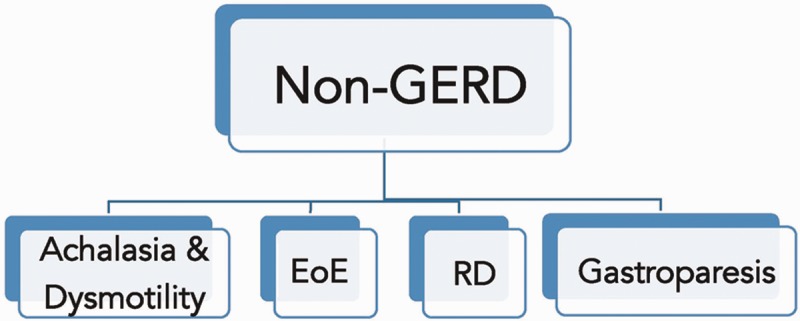
- Achalasia & dysmotility: defined manometrically.
- EoE (Eosinophilic Esophagitis): >15 eosinophils / HPF (high-power field).
- RD (reflux-like dyspepsia): normal endoscopy, biopsies and pH monitoring.
- Gastroparesis: normal endoscopy, abnormal gastric emptying scintigraphy.
References
-
- Pandolfino JE, Shi G, Trueworthy B, et al. Esophagogastric junction opening during relaxation distinguishes non-hernia reflux patients, hernia patients, and normal subjects. Gastroenterology. 2005;125:1018–24. - PubMed
-
- Dodds WJ, Dent J, Hogan WJ, et al. Mechanisms of gastroesophageal reflux in patients with reflux esophagitis. N Engl J Med. 1982;307:1547–52. - PubMed
-
- Ates F, Vaezi MF. New approaches to management of PPI-refractory gastroesophageal reflux disease. Curr Treat Options Gastroenterol. 2014;12:18–33. - PubMed
Publication types
LinkOut - more resources
Full Text Sources
Other Literature Sources
Medical
