


Respiratory distress in the newborn
- PMID: 25274969
- PMCID: PMC4533247
- DOI: 10.1542/pir.35-10-417
Respiratory distress in the newborn
Abstract
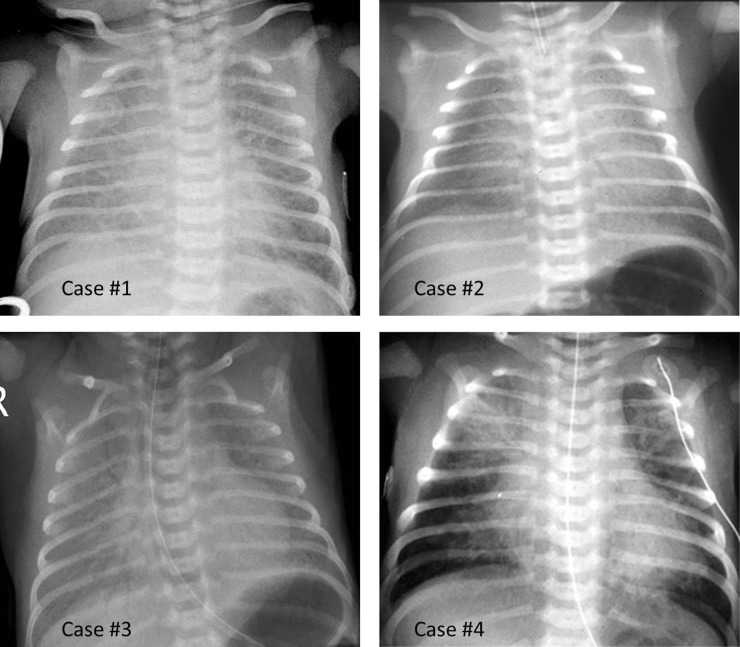
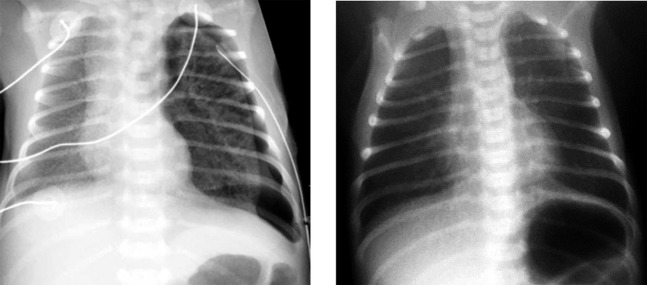
Respiratory distress presents as tachypnea, nasal flaring, retractions, and grunting and may progress to respiratory failure if not readily recognized and managed. Causes of respiratory distress vary and may not lie within the lung. A thorough history, physical examination, and radiographic and laboratory findings will aid in the differential diagnosis. Common causes include transient tachypnea of the newborn, neonatal pneumonia, respiratory distress syndrome (RDS), and meconium aspiration syndrome (MAS). Strong evidence reveals an inverse relationship between gestational age and respiratory morbidity. (1)(2)(9)(25)(26) Expert opinion recommends careful consideration about elective delivery without labor at less than 39 weeks’ gestation. Extensive evidence, including randomized control trials, cohort studies, and expert opinion, supports maternal group B streptococcus screening, intrapartum antibiotic prophylaxis, and appropriate followup of high-risk newborns according to guidelines established by the Centers for Disease Control and Prevention. (4)(29)(31)(32)(34) Following these best-practice strategies is effective in preventing neonatal pneumonia and its complications. (31)(32)(34). On the basis of strong evidence, including randomized control trials and Cochrane Reviews, administration of antenatal corticosteroids (5) and postnatal surfactant (6) decrease respiratory morbidity associated with RDS. Trends in perinatal management strategies to prevent MAS have changed. There is strong evidence that amnioinfusion, (49) oropharyngeal and nasopharyngeal suctioning at the perineum, (45) or intubation and endotracheal suctioning of vigorous infants (46)(47) do not decrease MAS or its complications. Some research and expert opinion supports endotracheal suctioning of nonvigorous meconium-stained infants (8) and induction of labor at 41 weeks’ gestation (7) to prevent MAS.
Figures
References
-
- Edwards MO, Kotecha SJ, Kotecha S. Respiratory distress of the term newborn infant. Paediatr Respir Rev. 2013;14(1):29–36 - PubMed
-
- Mahoney AD, Jain L. Respiratory disorders in moderately preterm, late preterm, and early term infants. Clin Perinatol. 2013;40(4):665–678 - PubMed
-
- Verani JR, McGee L, Schrag SJ. Division of Bacterial Diseases, National Center for Immunization and Respiratory Diseases, Centers for Disease Control and Prevention. Prevention of perinatal group B streptococcal disease: revised guidelines from CDC, 2010. MMWR Recomm Rep. 2010;59(RR-10):1–36 - PubMed
-
- Carlo WA, McDonald SA, Fanaroff AA, et al. ; Eunice Kennedy Shriver National Institute of Child Health and Human Development Neonatal Research Network. Association of antenatal corticosteroids with mortality and neurodevelopmental outcomes among infants born at 22 to 25 weeks’ gestation. JAMA. 2011;306(21):2348–2358 - PMC - PubMed
Publication types
MeSH terms
Grants and funding
LinkOut - more resources
Full Text Sources
Other Literature Sources
