


Ebola virus disease outbreak - Nigeria, July-September 2014
- PMID: 25275332
- PMCID: PMC4584877
Ebola virus disease outbreak - Nigeria, July-September 2014
Abstract
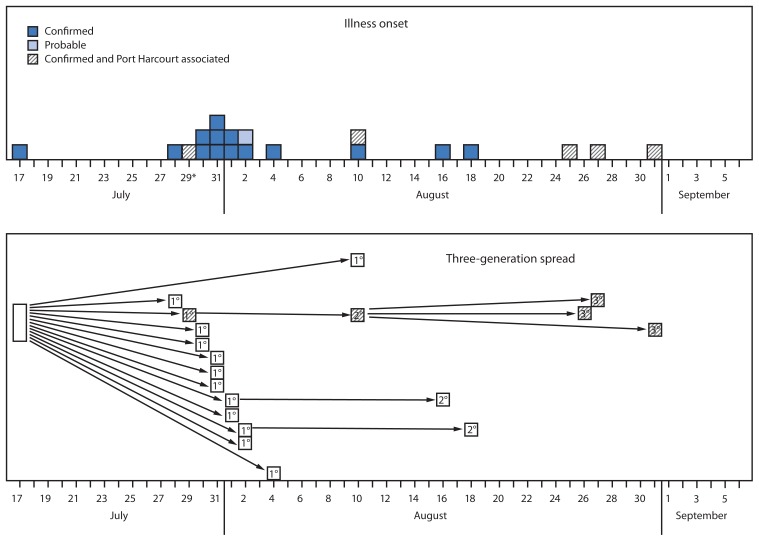
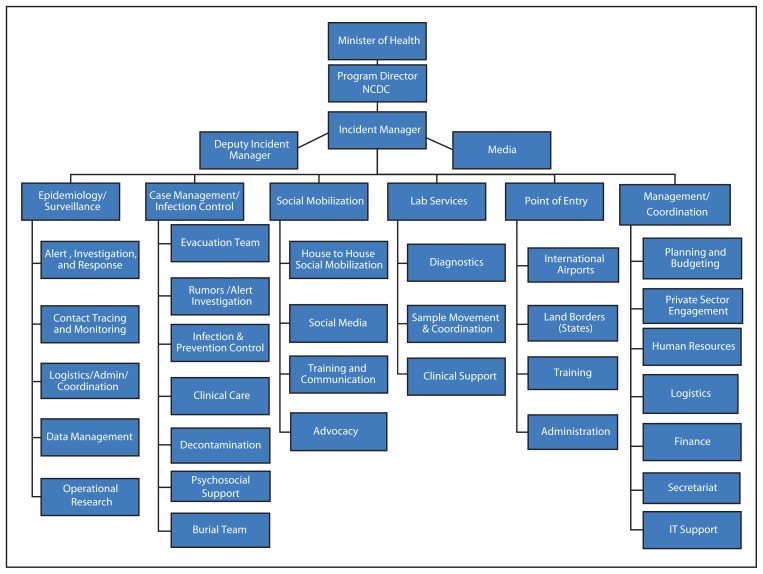
On July 20, 2014, an acutely ill traveler from Liberia arrived at the international airport in Lagos, Nigeria, and was confirmed to have Ebola virus disease (Ebola) after being admitted to a private hospital. This index patient potentially exposed 72 persons at the airport and the hospital. The Federal Ministry of Health, with guidance from the Nigeria Centre for Disease Control (NCDC), declared an Ebola emergency. Lagos, (pop. 21 million) is a regional hub for economic, industrial, and travel activities and a setting where communicable diseases can be easily spread and transmission sustained. Therefore, implementing a rapid response using all available public health assets was the highest priority. On July 23, the Federal Ministry of Health, with the Lagos State government and international partners, activated an Ebola Incident Management Center as a precursor to the current Emergency Operations Center (EOC) to rapidly respond to this outbreak. The index patient died on July 25; as of September 24, there were 19 laboratory-confirmed Ebola cases and one probable case in two states, with 894 contacts identified and followed during the response. Eleven patients with laboratory-confirmed Ebola had been discharged, an additional patient was diagnosed at convalescent stage, and eight patients had died (seven with confirmed Ebola; one probable). The isolation wards were empty, and 891 (all but three) contacts had exited follow-up, with the remainder due to exit on October 2. No new cases had occurred since August 31, suggesting that the Ebola outbreak in Nigeria might be contained. The EOC, established quickly and using an Incident Management System (IMS) to coordinate the response and consolidate decision making, is largely credited with helping contain the Nigeria outbreak early. National public health emergency preparedness agencies in the region, including those involved in Ebola responses, should consider including the development of an EOC to improve the ability to rapidly respond to urgent public health threats.
Figures
References
-
- World Population Review. Available at http://worldpopulationreview.com/world-cities/lagos-population.
-
- World Health Organization. International Health Regulations (2005) Second Edition. Geneva, Switzerland: World Health Organization; 2008.
MeSH terms
Grants and funding
LinkOut - more resources
Full Text Sources
Medical
