


Physicians' knowledge, beliefs, and use of race and human genetic variation: new measures and insights
- PMID: 25277068
- PMCID: PMC4283084
- DOI: 10.1186/1472-6963-14-456
Physicians' knowledge, beliefs, and use of race and human genetic variation: new measures and insights
Abstract
Background: Understanding physician perspectives on the intersection of race and genomics in clinical decision making is critical as personalized medicine and genomics become more integrated in health care services. There is a paucity of literature in the United States of America (USA) and globally regarding how health care providers understand and use information about race, ethnicity and genetic variation in their clinical decision making. This paper describes the development of three scales related to addressing this gap in the literature: the Bonham and Sellers Genetic Variation Knowledge Assessment Index--GKAI, Health Professionals Beliefs about Race-HPBR, and Racial Attributes in Clinical Evaluation-RACE scales.
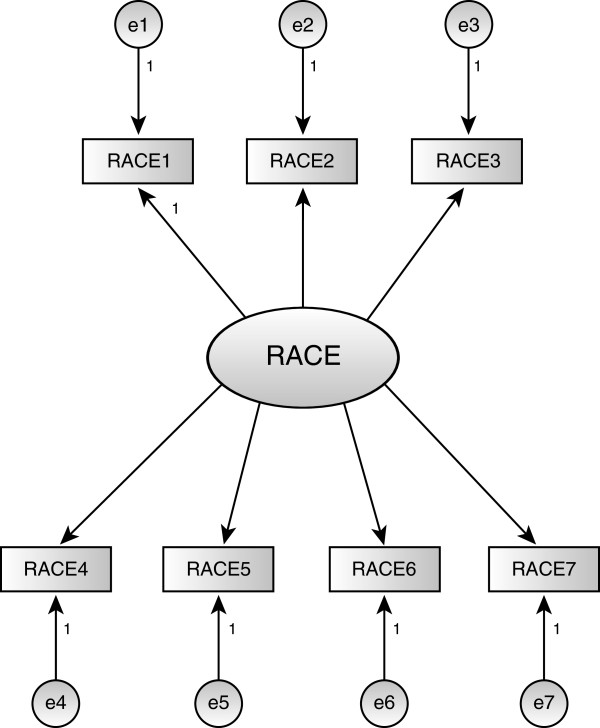
Methods: A cross-sectional, web survey of a national random sample of general internists in the USA (N = 787) was conducted. Confirmatory factor analysis was used to assess the construct validity of the scales. Scale items were developed through focus groups, cognitive interviews, expert advisory panels, and exploratory factor analysis of pilot data.
Results: GKAI was measured as a count of correct answers (Mean = 3.28 SD = 1.17). HPBR yielded two domains: beliefs about race as a biological phenomenon (HPBR-BD, alpha = .69, 4 items) and beliefs about the clinical value of race and genetic variation for understanding risk for disease (HPBR-CD alpha = .61, 3 items). RACE yielded one factor (alpha = .86, 7 items).
Conclusions: GKAI is a timely knowledge scale that can be used to assess health professional knowledge of race and human genetic variation. HPBR is a promising new tool for assessing health professionals' beliefs about the role of race and its relationship with human genetic variation in clinical practice. RACE offers a valid and reliable tool for assessing explicit use of racial attributes in clinical decision making.
Figures


References
-
- Bliss C. Race Decoded, The Genomic Fight for Social Justice. Stanford: Stanford University Press; 2012.
Pre-publication history
-
- The pre-publication history for this paper can be accessed here: http://www.biomedcentral.com/1472-6963/14/456/prepub
Publication types
MeSH terms
Grants and funding
LinkOut - more resources
Full Text Sources
Other Literature Sources
Miscellaneous
