Review
. 2014 Oct;27(4):727-52.
doi: 10.1128/CMR.00035-14.

Microbiological features and clinical relevance of new species of the genus Mycobacterium

Affiliations
Review

Microbiological features and clinical relevance of new species of the genus Mycobacterium

Enrico Tortoli. Clin Microbiol Rev. 2014 Oct.

Abstract

Nontuberculous mycobacteria (NTM) are present in the environment, mainly in water, and are occasionally responsible for opportunistic infections in humans. Despite the fact that NTM are characterized by a moderate pathogenicity, the diseases caused by NTM at various body sites are increasing on a worldwide level. Among over 150 officially recognized NTM species, only two or three dozen are familiar to clinicians, and even to most microbiologists. In this paper, approximately 50 new species described in the last 8 years are reviewed, and their role in human infections is assessed on the basis of reported clinical cases. The small number of reports concerning most of the "new" mycobacterial species is responsible for the widespread conviction that they are very rare. Their role is actually largely underestimated, mainly because they often remain unrecognized and misidentified. Aiming to minimize such bias, emphasis has been placed on more common identification pitfalls. Together with new NTM, new members of the Mycobacterium tuberculosis complex described in the last few years are also an object of the present review.


Figures

FIG 1
FIG 1
Sequence of helix 18 of the 16S rRNA genes (corresponding to Escherichia coli positions 430 to 500) of different Mycobacterium species. Sequences: 1, shared by all species of the M. simiae complex; 2, M. tuberculosis (representative of slowly growing species); 3, M. fortuitum (representative of rapidly growing species); 4, M. arupense (representative of the M. terrae complex). Dots indicate identities, and dashes indicate deletions.
FIG 2
FIG 2
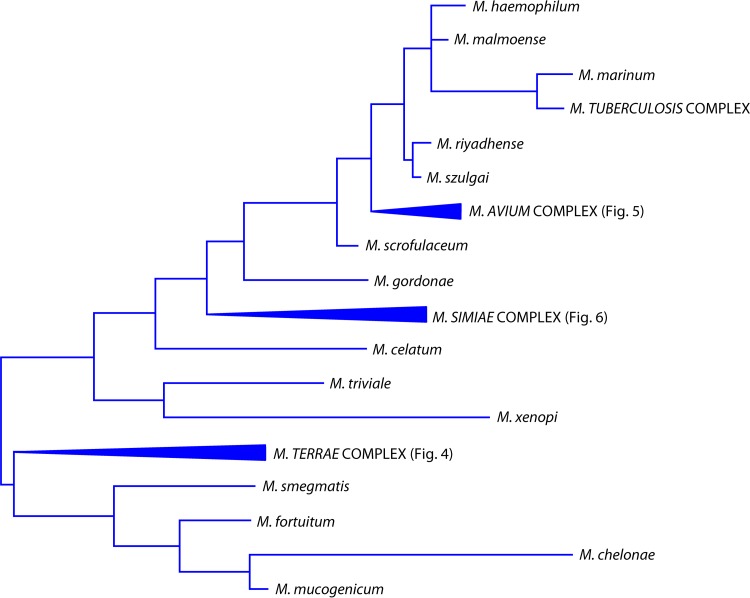
Phylogenetic tree, based on the 16S rRNA gene, including representative species of the genus Mycobacterium.
FIG 3
FIG 3
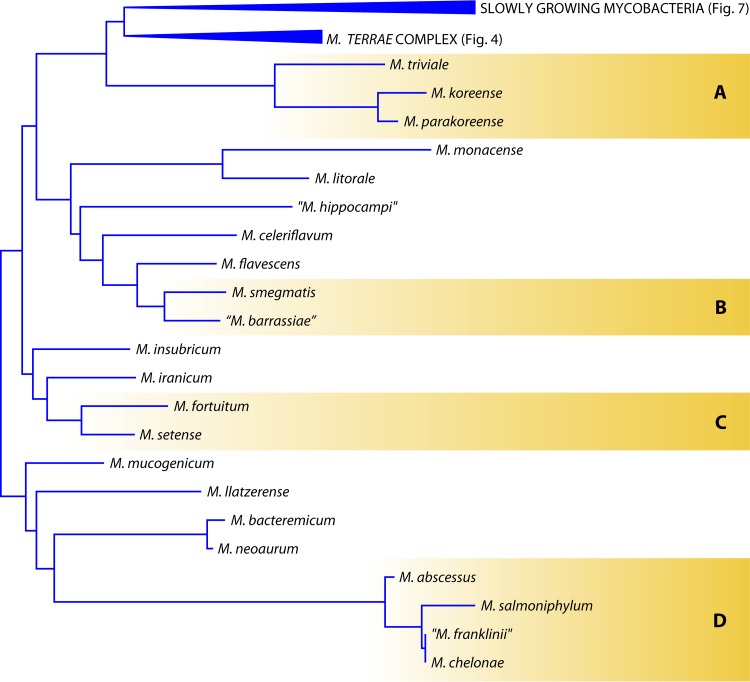
Phylogenetic tree, based on the 16S rRNA gene, including representative rapidly growing Mycobacterium species (A, M. triviale group; B, M. smegmatis group; C, M. fortuitum complex; and D, M. chelonae complex).
FIG 4
FIG 4
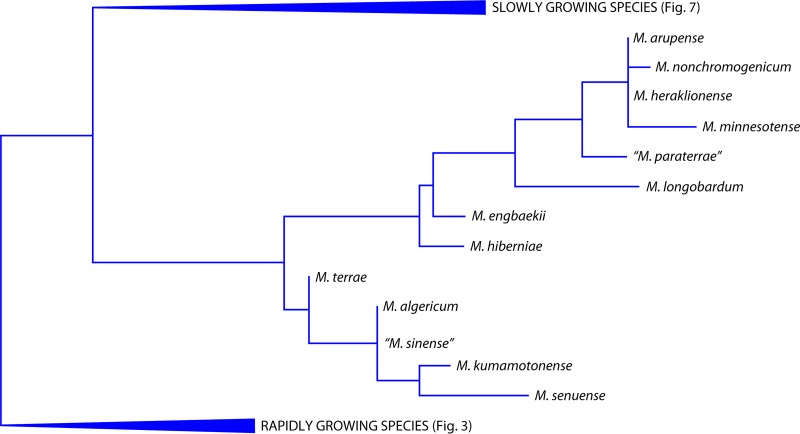
Phylogenetic tree, based on the 16S rRNA gene, for the species belonging to the M. terrae complex.
FIG 5
FIG 5
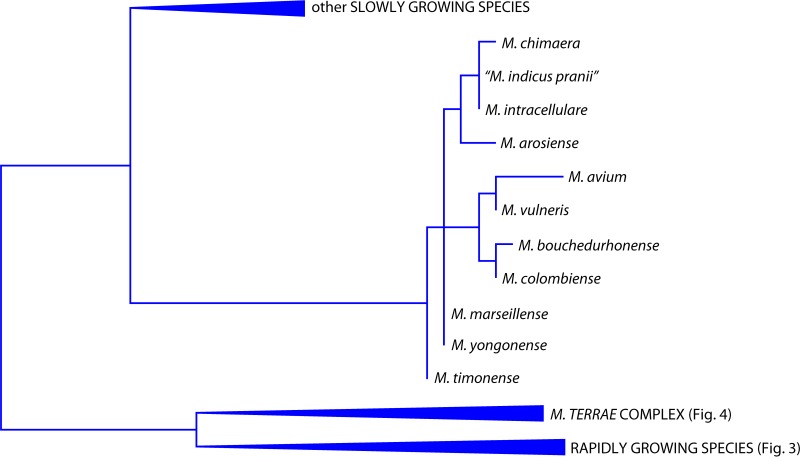
Phylogenetic tree, based on the 16S rRNA gene, for the species belonging to the M. avium complex.
FIG 6
FIG 6
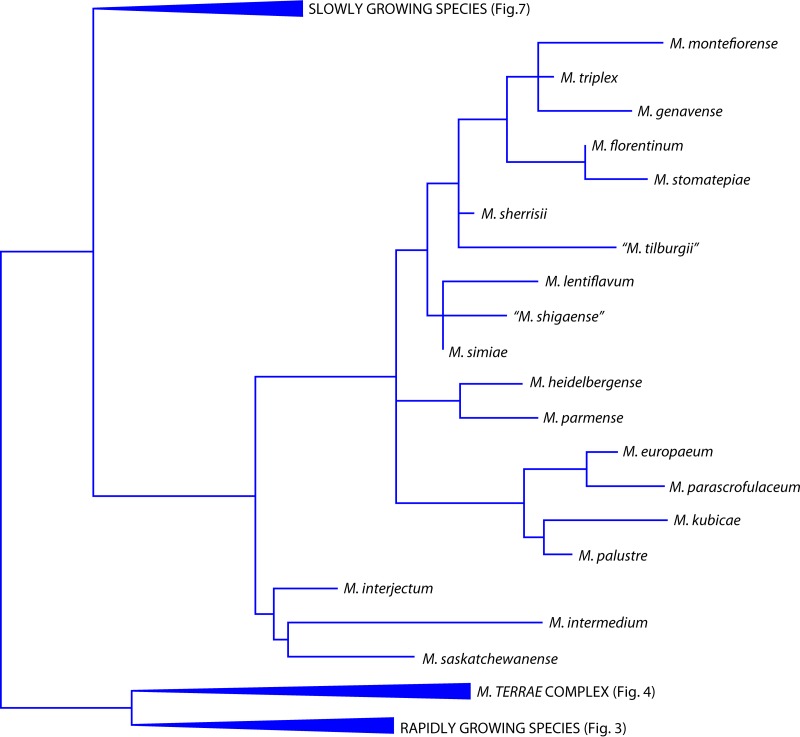
Phylogenetic tree, based on the 16S rRNA gene, for the species belonging to the M. simiae complex.
FIG 7
FIG 7
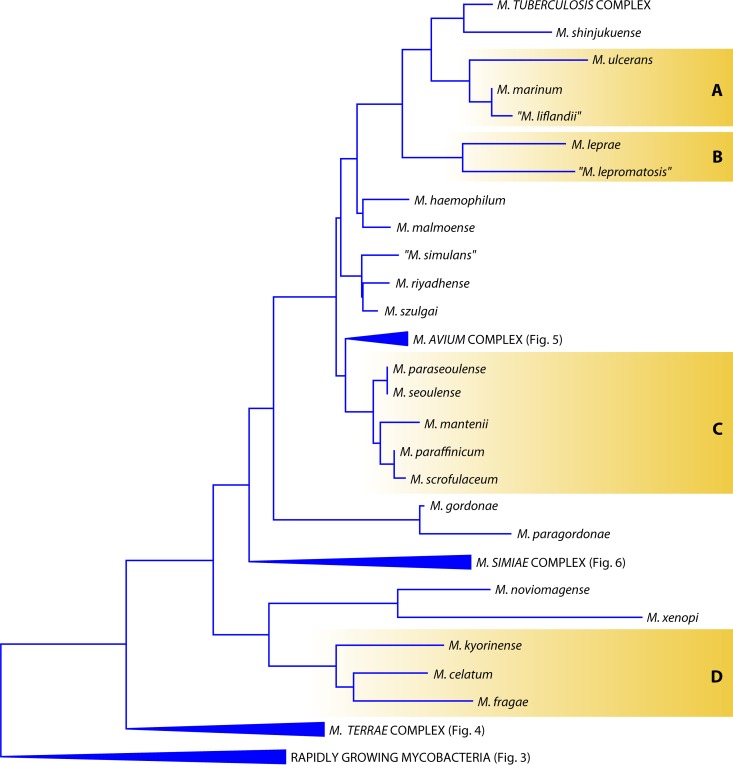
Phylogenetic tree, based on the 16S rRNA gene, including representative slow-growing Mycobacterium species (A, M. marinum group; B, M. leprae group; C, M. scrofulaceum group; and D, M. celatum group).
FIG 8
FIG 8
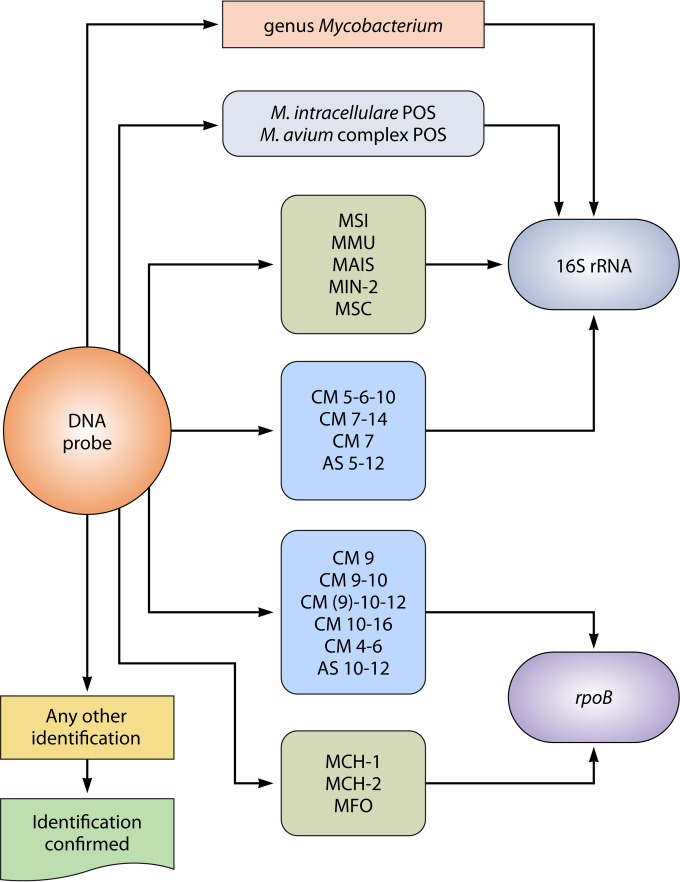
Identification algorithm combining the use of commercial DNA probes (rounded rectangles and squares) and genetic sequencing (ellipses). For hybridization patterns known to be subject to cross-reactions (rounded rectangles and squares) with different commercial DNA probes (AccuProbe, blue-gray; INNO-LiPA Mycobacteria, gray; GenoType Mycobacterium, light blue), the appropriate sequencing targets are suggested. The hybridization patterns are indicated by the positive probes (probe names are according to the package inserts of different kits).
None

References

    1. Wolinsky E. 1979. Nontuberculous mycobacteria and associated diseases. Am. Rev. Respir. Dis. 119:107–159 - PubMed
    1. Wayne LG, Sramek HA. 1992. Agents of newly recognized or infrequently encountered mycobacterial diseases. Clin. Microbiol. Rev. 5:1–25 - PMC - PubMed
    1. Tortoli E. 2003. Impact of genotypic studies on mycobacterial taxonomy: the new mycobacteria of the 1990s. Clin. Microbiol. Rev. 16:319–354. 10.1128/CMR.16.2.319-354.2003 - DOI - PMC - PubMed
    1. Tortoli E. 2006. The new mycobacteria: an update. FEMS Immunol. Med. Microbiol. 48:159–178. 10.1111/j.1574-695X.2006.00123.x - DOI - PubMed
    1. Brown-Elliott BA, Wallace RJ., Jr 2002. Clinical and taxonomic status of pathogenic nonpigmented or late-pigmenting rapidly growing mycobacteria. Clin. Microbiol. Rev. 15:716–746. 10.1128/CMR.15.4.716-746.2002 - DOI - PMC - PubMed

MeSH terms