


Herpes simplex encephalitis in Iceland 1987-2011
- PMID: 25279315
- PMCID: PMC4174550
- DOI: 10.1186/2193-1801-3-524
Herpes simplex encephalitis in Iceland 1987-2011
Abstract
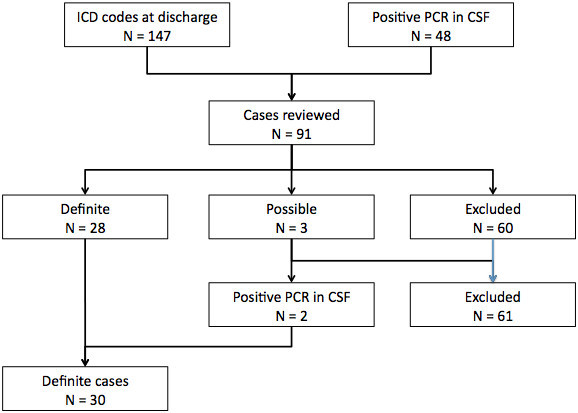
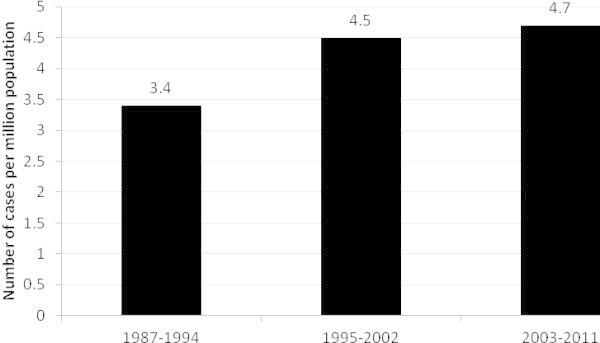
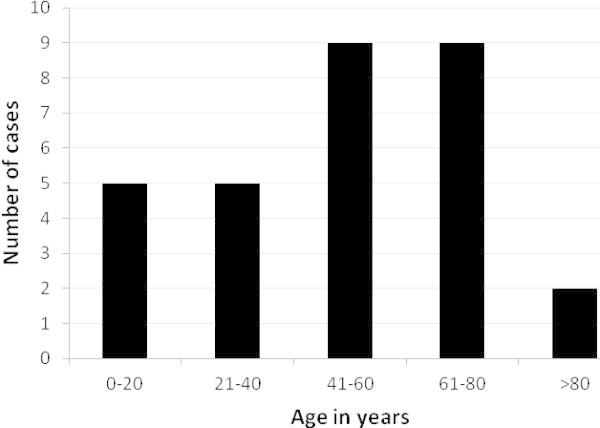
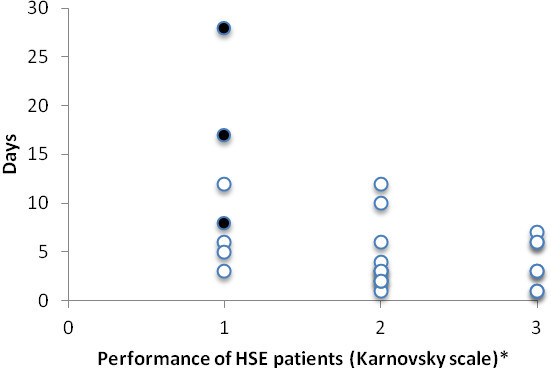
Herpes simplex encephalitis (HSE) is a serious disease with 10-20% mortality and high rate of neuropsychiatric sequelae. This study is a long-term, nationwide study in a single country, Iceland. Clinical data were obtained from patient records and from DNA PCR and antibody assays of CSF. Diagnosis of HSE was classified as definite, possible or rejected based on symptoms, as well as virological, laboratory and brain imaging criteria. A total of 30 definite cases of HSE were identified during the 25 year period 1987-2011 corresponding to incidence of 4.3 cases/106 inhabitants/year. Males were 57% of all patients, median age 50 years (range, 0-85). Fever (97%), cognitive deficits (79%), impaired consciousness (79% with GCS < 13), headache (55%) and seizures (55%) were the most common symptoms. Brain lesions were found in 24 patients (80%) by MRI or CT. All patients received intravenous acyclovir for a mean duration of 20 days. Three patients (10%) died within one year and 21/28 pts (75%) had a Karnofsky performance score of <70% with memory loss (59%), dysphasia (44%), frontal symptoms (44%) and seizures (30%) as the most frequent sequelae. Mean delay from onset of symptoms to treatment was 6 days; this was associated with adverse outcome. In conclusion, the incidence of `HSE is higher than recently reported in a national registry study from Sweden. Despite advances in rapid diagnosis and availability of treatment of HSE, approximately three of every four patients die or are left with serious neurological impairment.
Keywords: Herpes simplex encephalitis; Herpes simplex virus; Neurological sequelae; Viral encephalitis.
Figures
References
-
- Aurelius E, Johansson B, Skoldenberg B, Forsgren M. Encephalitis in immunocompetent patients due to herpes simplex virus type 1 or 2 as determined by type-specific polymerase chain reaction and antibody assays of cerebrospinal fluid. J Med Virol. 1993;39(3):179–186. doi: 10.1002/jmv.1890390302. - DOI - PubMed
-
- Cinque P, Vago L, Dahl H, Brytting M, Terreni MR, Fornara C, Racca S, Castagna A, Monforte AD, Wahren B, Lazzarin A, Linde A. Polymerase chain reaction on cerebrospinal fluid for diagnosis of virus-associated opportunistic diseases of the central nervous system in HIV-infected patients. AIDS. 1996;10(9):951–958. doi: 10.1097/00002030-199610090-00004. - DOI - PubMed
LinkOut - more resources
Full Text Sources
Other Literature Sources
