


What is the age for the fastest ultra-marathon performance in time-limited races from 6 h to 10 days?
- PMID: 25280550
- PMCID: PMC4185021
- DOI: 10.1007/s11357-014-9715-3
What is the age for the fastest ultra-marathon performance in time-limited races from 6 h to 10 days?
Abstract
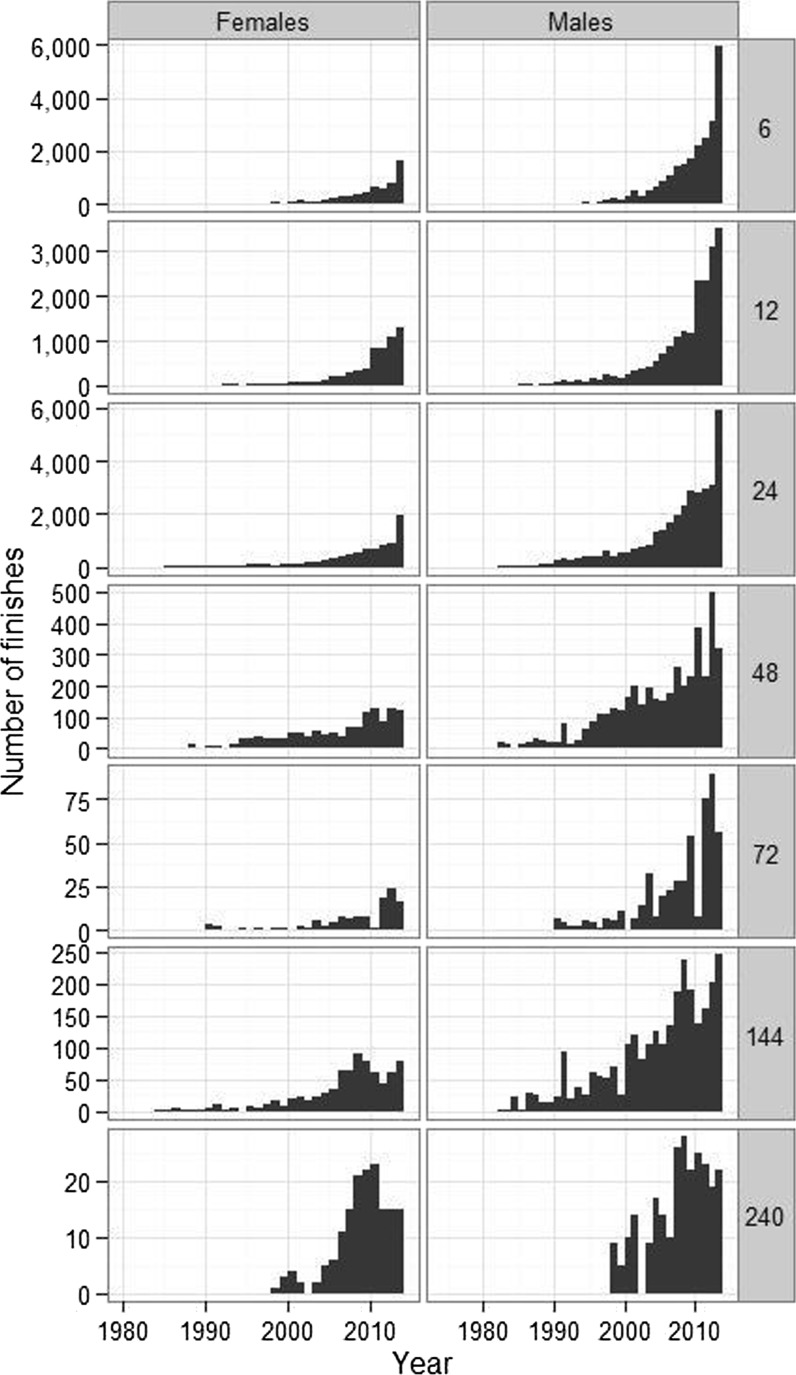
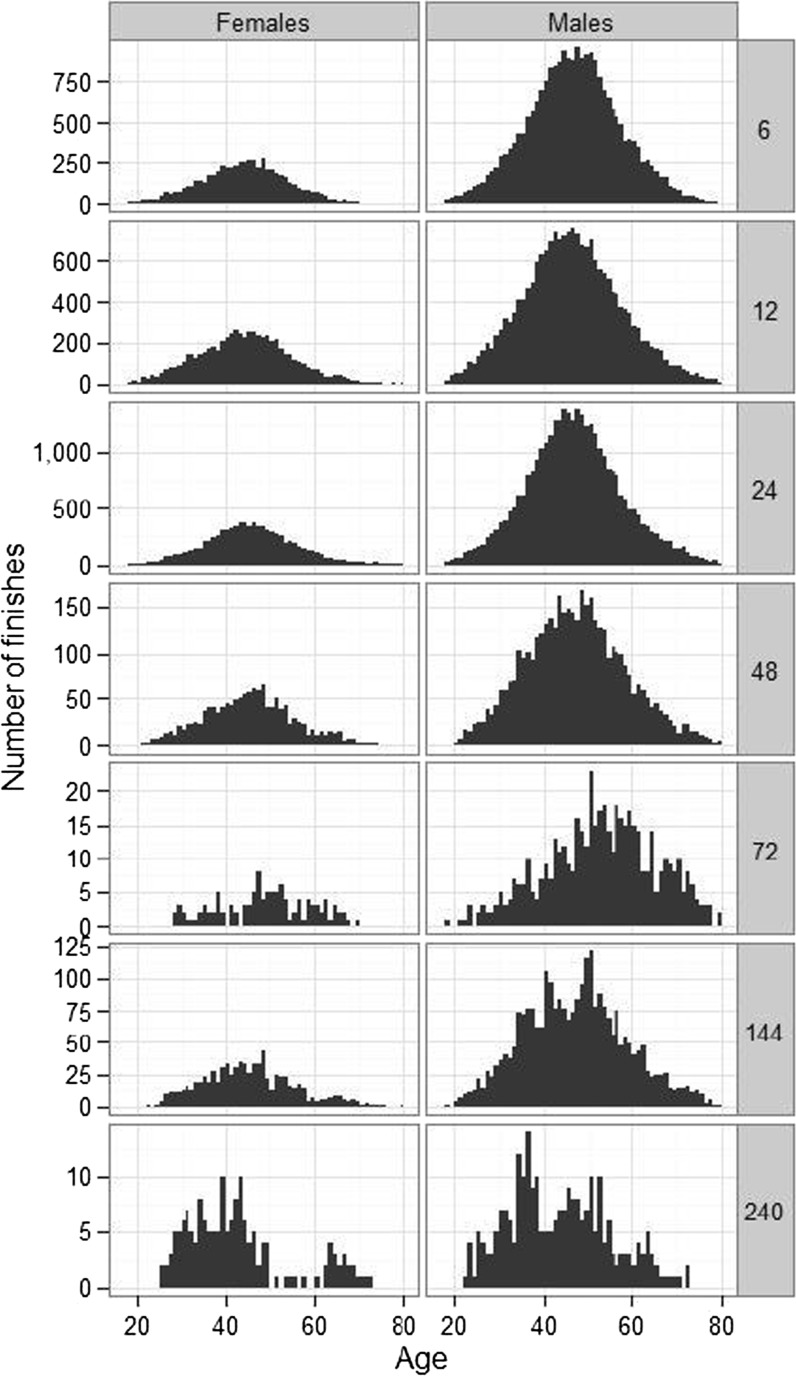
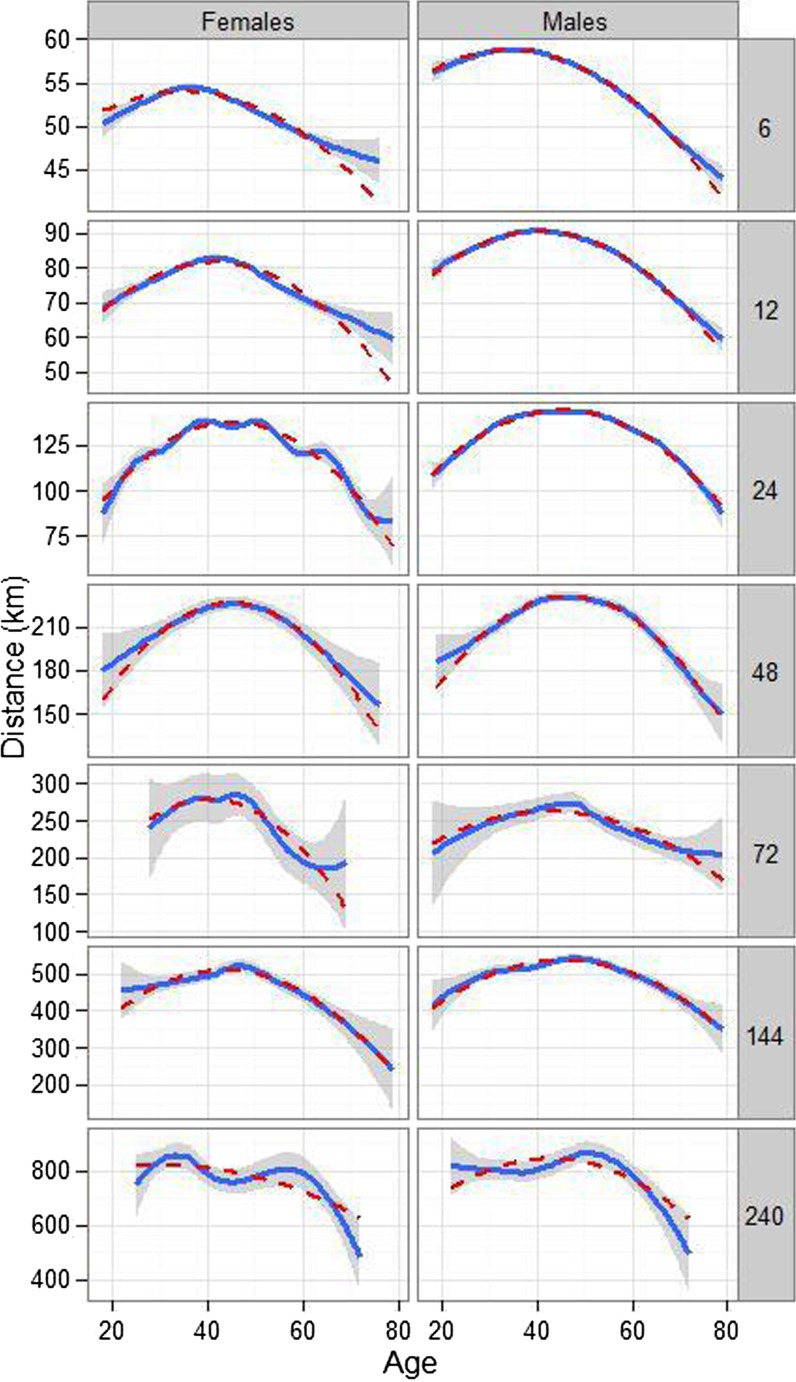
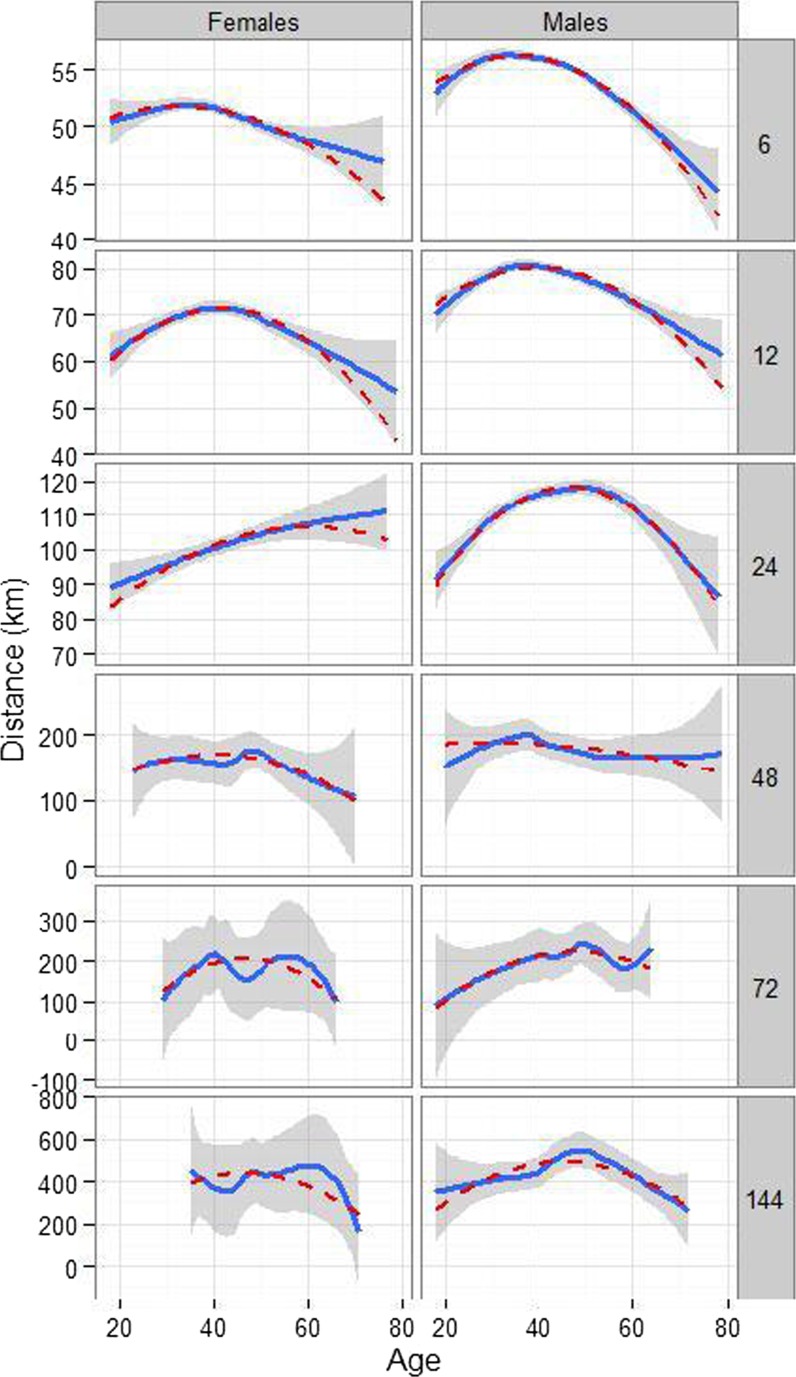
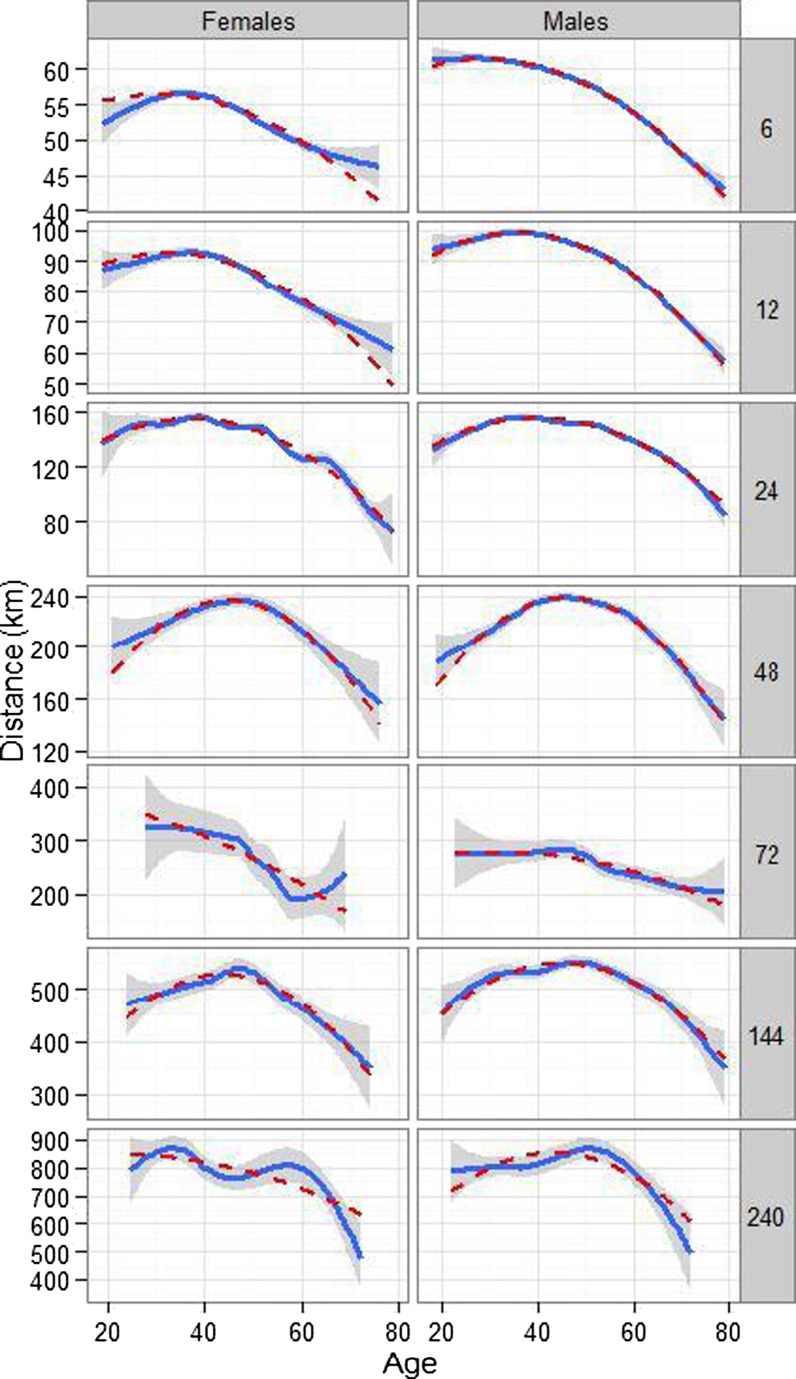
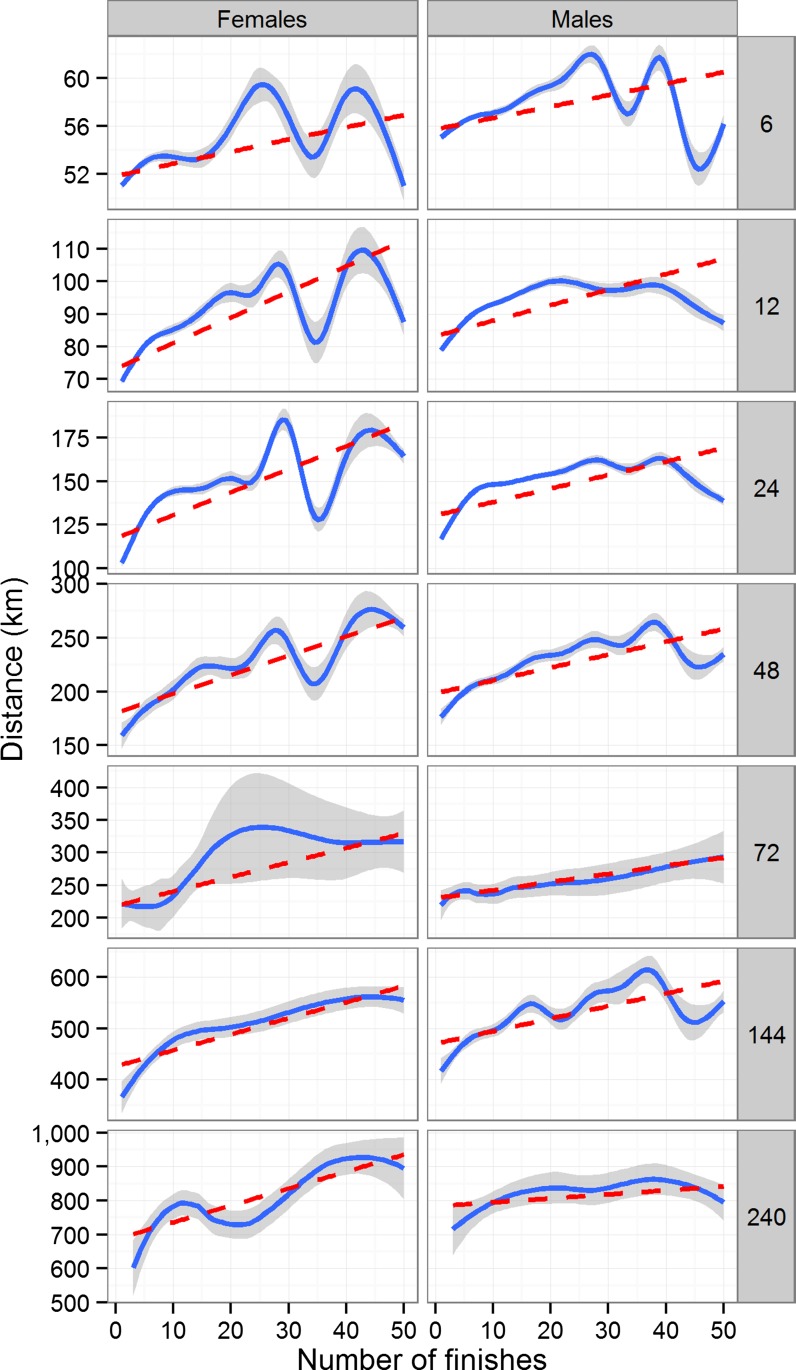
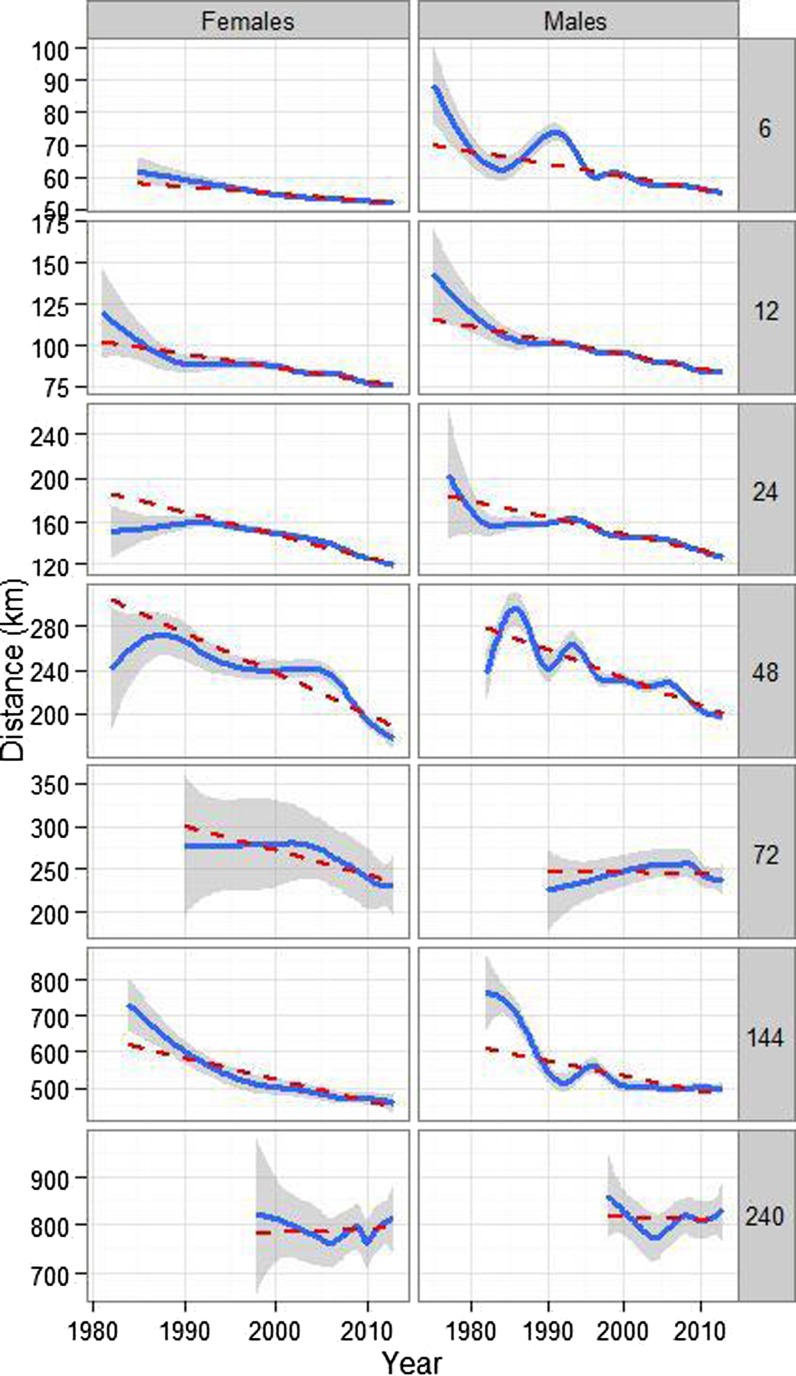
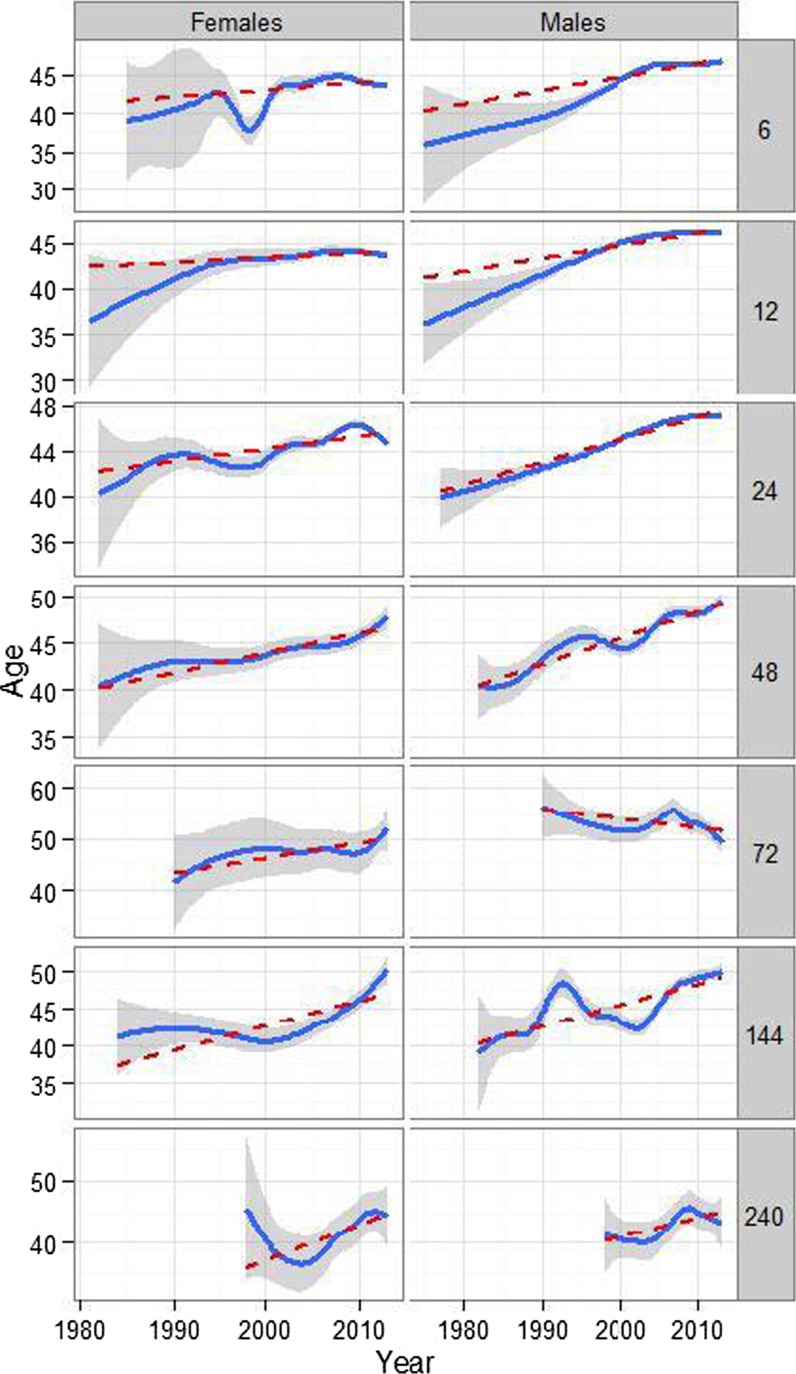
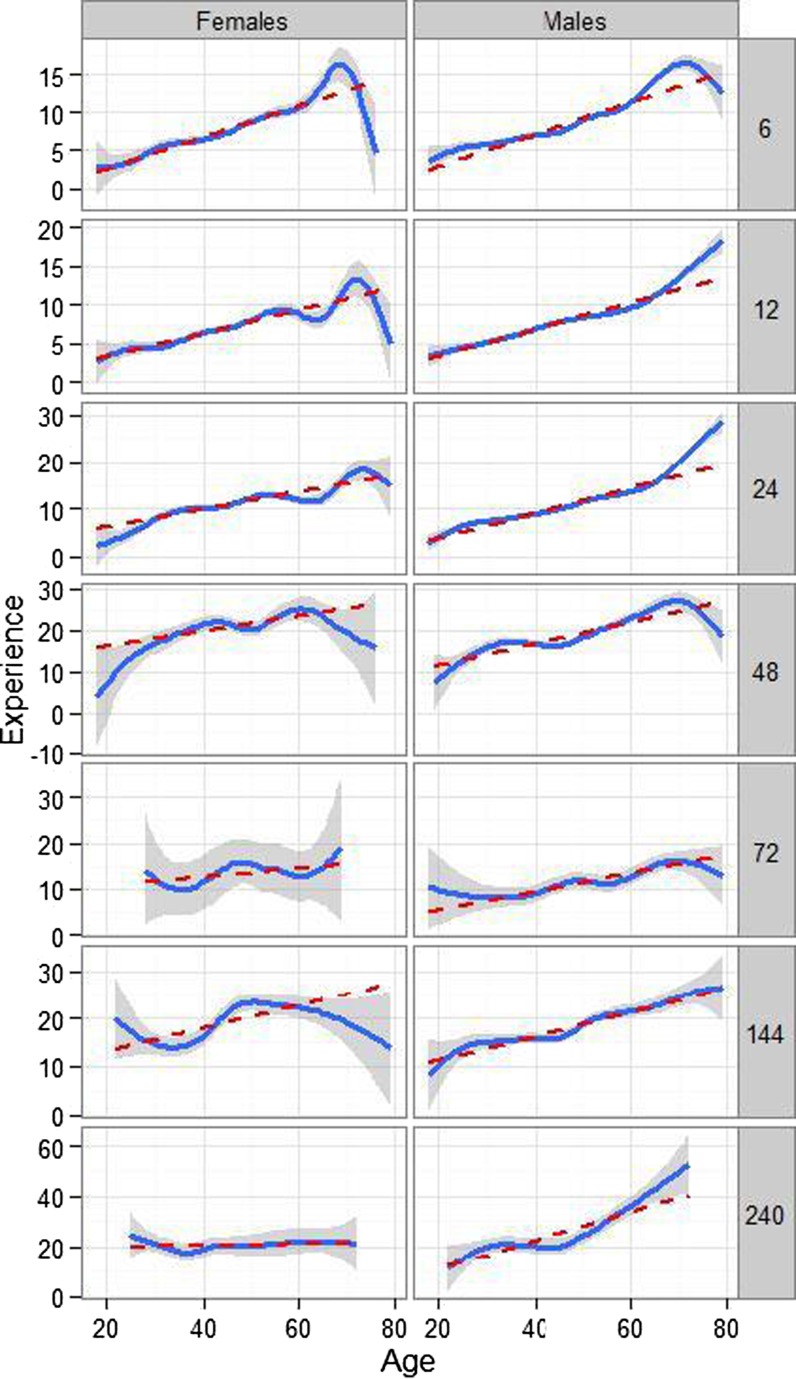
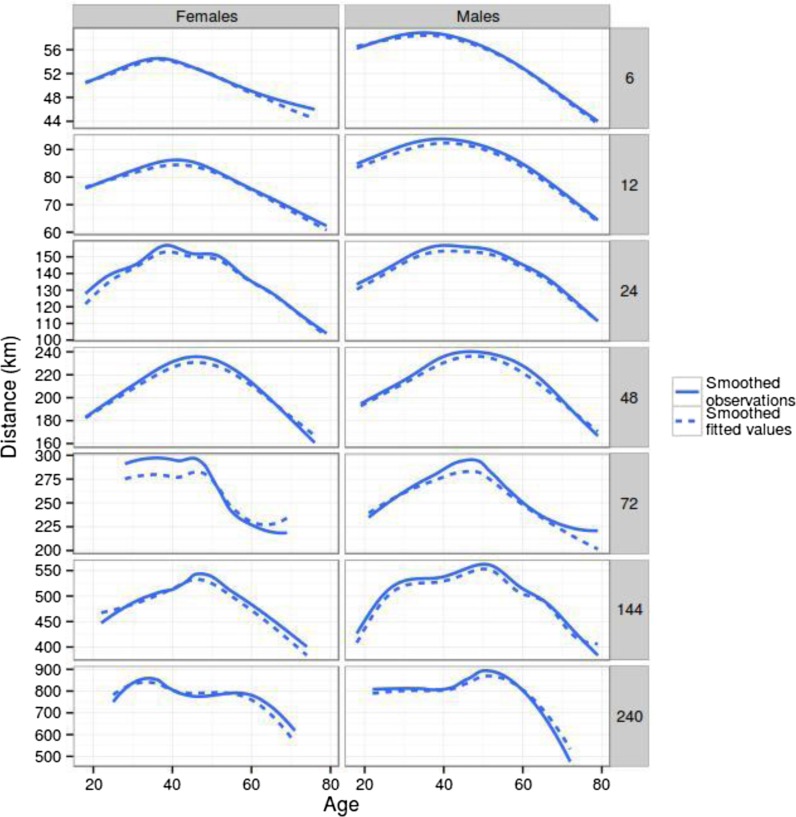
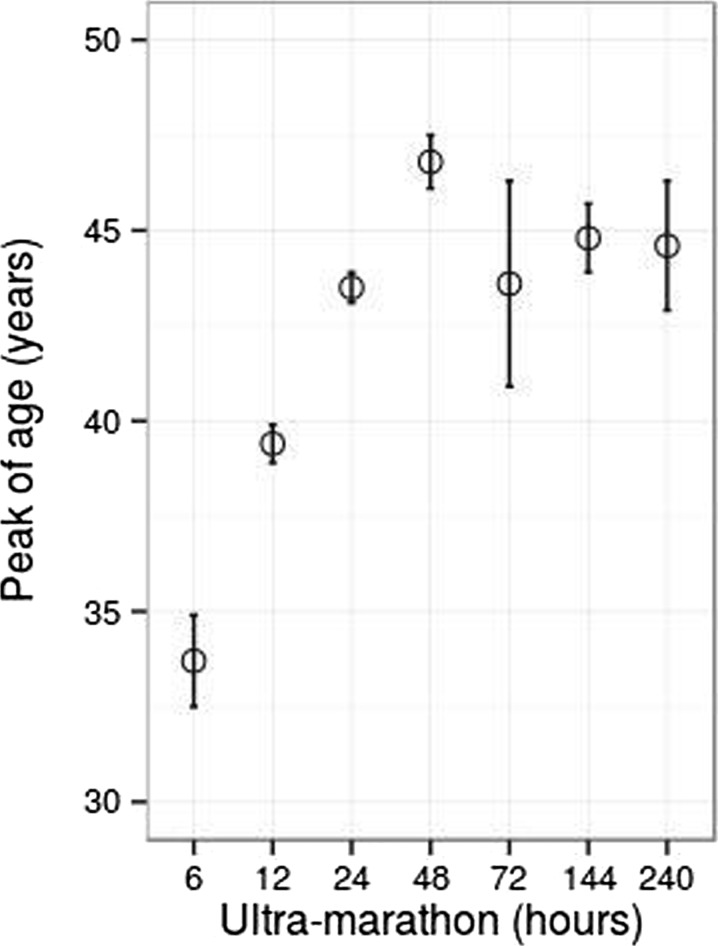
Recent findings suggested that the age of peak ultra-marathon performance seemed to increase with increasing race distance. The present study investigated the age of peak ultra-marathon performance for runners competing in time-limited ultra-marathons held from 6 to 240 h (i.e. 10 days) during 1975-2013. Age and running performance in 20,238 (21%) female and 76,888 (79%) male finishes (6,863 women and 24,725 men, 22 and 78%, respectively) were analysed using mixed-effects regression analyses. The annual number of finishes increased for both women and men in all races. About one half of the finishers completed at least one race and the other half completed more than one race. Most of the finishes were achieved in the fourth decade of life. The age of the best ultra-marathon performance increased with increasing race duration, also when only one or at least five successful finishes were considered. The lowest age of peak ultra-marathon performance was in 6 h (33.7 years, 95% CI 32.5-34.9 years) and the highest in 48 h (46.8 years, 95% CI 46.1-47.5). With increasing number of finishes, the athletes improved performance. Across years, performance decreased, the age of peak performance increased, and the age of peak ultra-marathon performance increased with increasing number of finishes. In summary, the age of peak ultra-marathon performance increased and performance decreased in time-limited ultra-marathons. The age of peak ultra-marathon performance increased with increasing race duration and with increasing number of finishes. These athletes improved race performance with increasing number of finishes.
Figures
References
-
- Cejka N, Rüst CA, Lepers R, Onywera V, Rosemann T, Knechtle B (2013) Participation and performance trends in 100-km ultra-marathons worldwide. J Sports Sci 2013 Sep 9. doi:10.1080/02640414.2013.825729 - PubMed
-
- Cejka N, Knechtle B, Rüst CA, Rosemann T, Lepers R (2014) Performance and age of the fastest female and male 100-km ultra-marathoners worldwide from 1960 to 2012. J Strength Cond Res. 2014 Jan 28. doi:10.1519/JSC.0000000000000370 - PubMed
MeSH terms
LinkOut - more resources
Full Text Sources
Other Literature Sources
Medical