


A matter of emphasis: Linguistic stress habits modulate serial recall
- PMID: 25280733
- PMCID: PMC4555234
- DOI: 10.3758/s13421-014-0466-2
A matter of emphasis: Linguistic stress habits modulate serial recall
Abstract
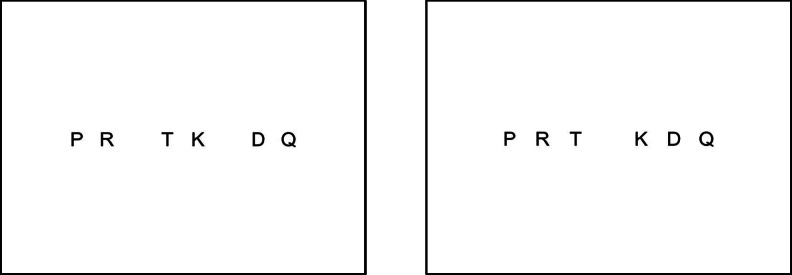
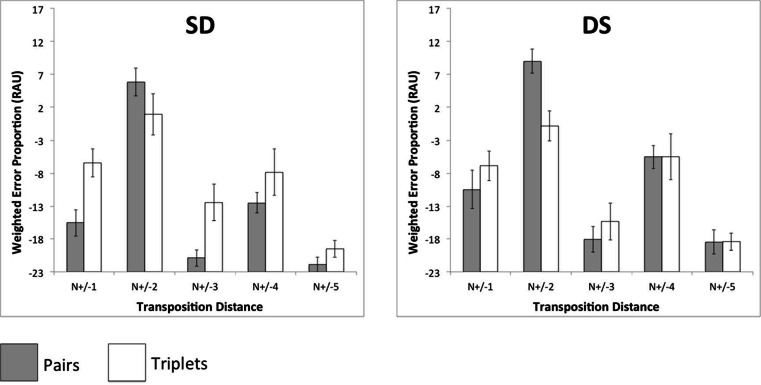
Models of short-term memory for sequential information rely on item-level, feature-based descriptions to account for errors in serial recall. Transposition errors within alternating similar/dissimilar letter sequences derive from interactions between overlapping features. However, in two experiments, we demonstrated that the characteristics of the sequence are what determine the fates of items, rather than the properties ascribed to the items themselves. Performance in alternating sequences is determined by the way that the sequences themselves induce particular prosodic rehearsal patterns, and not by the nature of the items per se. In a serial recall task, the shapes of the canonical "saw-tooth" serial position curves and transposition error probabilities at successive input-output distances were modulated by subvocal rehearsal strategies, despite all item-based parameters being held constant. We replicated this finding using nonalternating lists, thus demonstrating that transpositions are substantially influenced by prosodic features-such as stress-that emerge during subvocal rehearsal.
Figures




References
-
- Baddeley AD. A three-minute reasoning test based on grammatical trans-formation. Psychonomic Science. 1968;10:341–342. doi: 10.3758/BF03331551. - DOI
-
- Baddeley AD, Hitch GJ. Working memory. In: Bower GH, editor. The psychology of learning and motivation: Advances in research and theory. New York, NY: Academic Press; 1974. pp. 47–89.
Publication types
MeSH terms
LinkOut - more resources
Full Text Sources
Other Literature Sources
