


Innate receptors and cellular defense against pulmonary infections
- PMID: 25281754
- PMCID: PMC4185409
- DOI: 10.4049/jimmunol.1400978
Innate receptors and cellular defense against pulmonary infections
Abstract
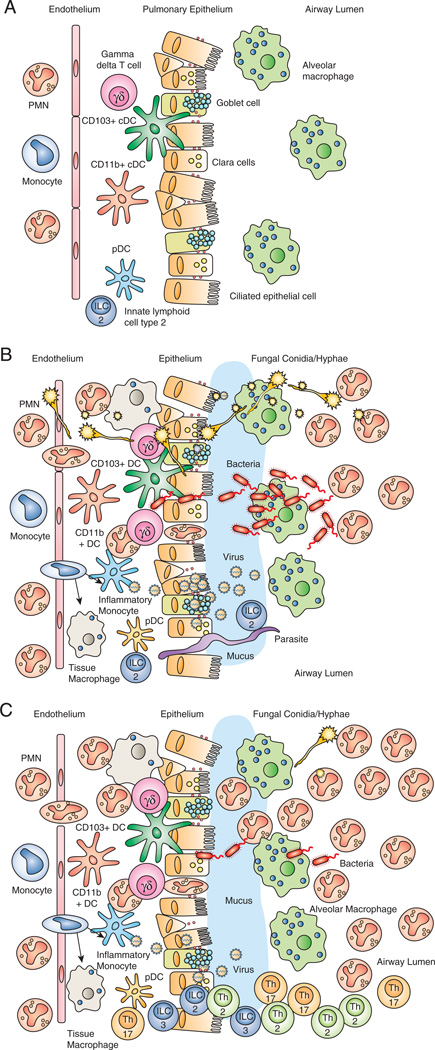
In the United States, lung infections consistently rank in the top 10 leading causes of death, accounting for >50,000 deaths annually. Moreover, >140,000 deaths occur annually as a result of chronic lung diseases, some of which may be complicated by an infectious process. The lung is constantly exposed to the environment and is susceptible to infectious complications caused by bacterial, viral, fungal, and parasitic pathogens. Indeed, we are continually faced with the threat of morbidity and mortality associated with annual influenza virus infections, new respiratory viruses (e.g., SARS-CoV), and lung infections caused by antibiotic-resistant "ESKAPE pathogens" (three of which target the lung). This review highlights innate immune receptors and cell types that function to protect against infectious challenges to the respiratory system yet also may be associated with exacerbations in chronic lung diseases.
Copyright © 2014 by The American Association of Immunologists, Inc.
Figures
References
-
- Sessa R, Di PM, Schiavoni G, Santino I, Altieri A, Pinelli S, Del PM. Microbiological indoor air quality in healthy buildings. New Microbiol. 2002;25:51–56. - PubMed
-
- Menegueti MG, Ferreira LR, Silva MF, Silva AS, Bellissimo-Rodrigues F. Assessment of microbiological air quality in hemato-oncology units and its relationship with the occurrence of invasive fungal infections: an integrative review. Rev. Soc. Bras. Med. Trop. 2013;46:391–396. - PubMed
Publication types
MeSH terms
Substances
Grants and funding
LinkOut - more resources
Full Text Sources
Other Literature Sources
Medical
Miscellaneous
