


Safety of primed repetitive transcranial magnetic stimulation and modified constraint-induced movement therapy in a randomized controlled trial in pediatric hemiparesis
- PMID: 25283350
- PMCID: PMC4380609
- DOI: 10.1016/j.apmr.2014.09.012
Safety of primed repetitive transcranial magnetic stimulation and modified constraint-induced movement therapy in a randomized controlled trial in pediatric hemiparesis
Abstract
Objective: To investigate the safety of combining a 6-Hz primed low-frequency repetitive transcranial magnetic stimulation (rTMS) intervention in the contralesional hemisphere with a modified constraint-induced movement therapy (mCIMT) program in children with congenital hemiparesis.
Design: Phase 1 randomized, double-blinded, placebo-controlled pretest/posttest trial.
Setting: University academic facility and pediatric specialty hospital.
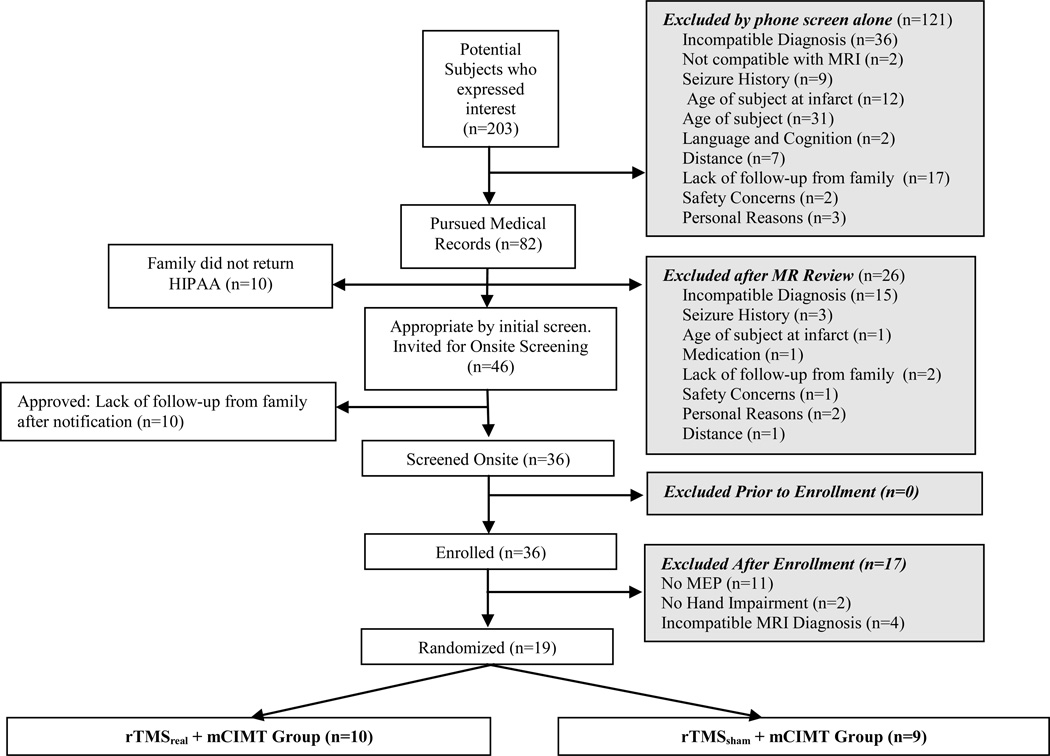
Participants: Subjects (N = 19; age range, 8-17 y) with congenital hemiparesis caused by ischemic stroke or periventricular leukomalacia. No subject withdrew because of adverse events. All subjects included completed the study.
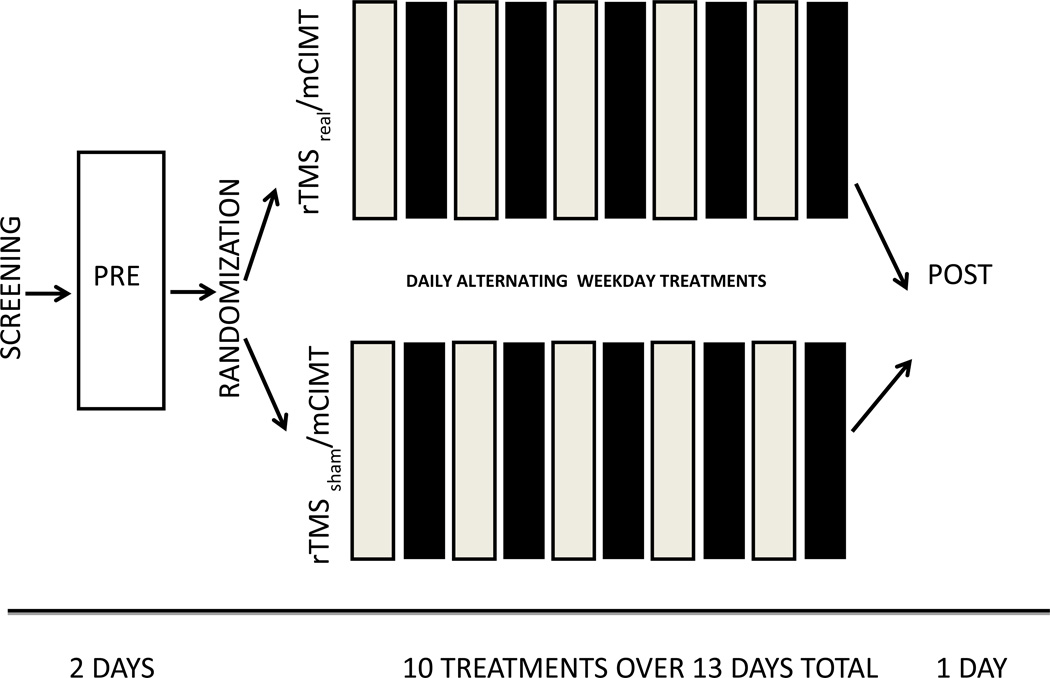
Interventions: Subjects were randomized to 1 of 2 groups: either real rTMS plus mCIMT (n = 10) or sham rTMS plus mCIMT (n = 9).
Main outcome measures: Adverse events, physician assessment, ipsilateral hand function, stereognosis, cognitive function, subject report of symptoms assessment, and subject questionnaire.
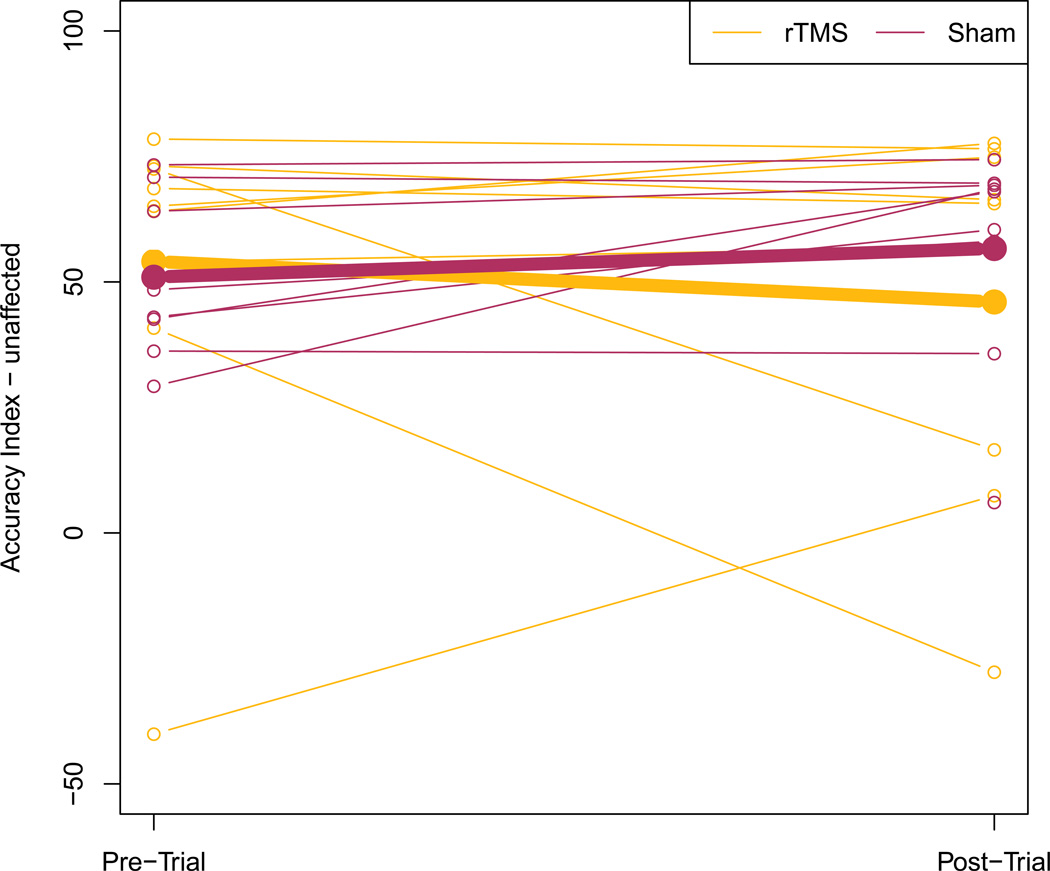
Results: No major adverse events occurred. Minor adverse events were found in both groups. The most common events were headaches (real: 50%, sham: 89%; P = .14) and cast irritation (real: 30%, sham: 44%; P = .65). No differences between groups in secondary cognitive and unaffected hand motor measures were found.
Conclusions: Primed rTMS can be used safely with mCIMT in congenital hemiparesis. We provide new information on the use of rTMS in combination with mCIMT in children. These findings could be useful in research and future clinical applications in advancing function in congenital hemiparesis.
Trial registration: ClinicalTrials.gov NCT01104064.
Keywords: Pediatrics; Rehabilitation; Safety; Stroke; Transcranial magnetic stimulation.
Copyright © 2015 American Congress of Rehabilitation Medicine. Published by Elsevier Inc. All rights reserved.
Conflict of interest statement
No author has a conflict of interest.
Figures
References
-
- Khedr EM, Abdel-Fadeil MR, Farghali A, Qaid M. Role of 1 and 3 hz repetitive transcranial magnetic stimulation on motor function recovery after acute ischaemic stroke. Eur J Neurol. 2009;16(12):1323–1330. - PubMed
-
- Murase N, Duque J, Mazzocchio R, Cohen LG. Influence of interhemispheric interactions on motor function in chronic stroke. Ann Neurol. 2004;55(3):400–409. - PubMed
-
- Fregni F, Boggio PS, Valle AC, et al. A sham-controlled trial of a 5-day course of repetitive transcranial magnetic stimulation of the unaffected hemisphere in stroke patients. Stroke. 2006;37(8):2115–2122. - PubMed
Publication types
MeSH terms
Associated data
Grants and funding
LinkOut - more resources
Full Text Sources
Other Literature Sources
Medical
Miscellaneous
