


The role of endothelin-1 and endothelin receptor antagonists in inflammatory response and sepsis
- PMID: 25288367
- PMCID: PMC4289534
- DOI: 10.1007/s00005-014-0310-1
The role of endothelin-1 and endothelin receptor antagonists in inflammatory response and sepsis
Abstract
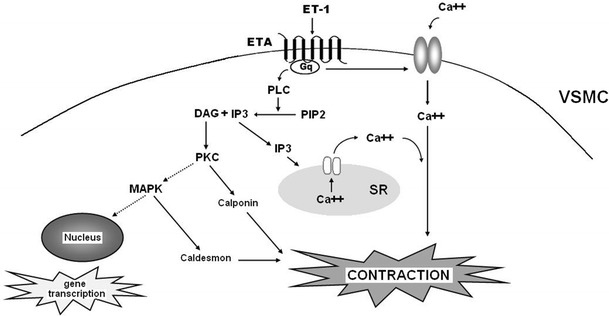
Endothelin-1 (ET-1) is a potent endogenous vasoconstrictor, mainly secreted by endothelial cells. It acts through two types of receptors: ETA and ETB. Apart from a vasoconstrictive action, ET-1 causes fibrosis of the vascular cells and stimulates production of reactive oxygen species. It is claimed that ET-1 induces proinflammatory mechanisms, increasing superoxide anion production and cytokine secretion. A recent study has shown that ET-1 is involved in the activation of transcription factors such as NF-κB and expression of proinflammatory cytokines including TNF-α, IL-1, and IL-6. It has been also indicated that during endotoxaemia, the plasma level of ET-1 is increased in various animal species. Some authors indicate a clear correlation between endothelin plasma level and morbidity/mortality rate in septic patients. These pathological effects of ET-1 may be abrogated at least partly by endothelin receptor blockade. ET-1 receptor antagonists may be useful for prevention of various vascular diseases. This review summarises the current knowledge regarding endothelin receptor antagonists and the role of ET-1 in sepsis and inflammation.
Figures
References
-
- Andersson A, Fenhammar J, Frithiof R, et al. Mixed endothelin receptor antagonism with tezosentan improves intestinal microcirculation in endotoxemic shock. J Surg Res. 2008;149:138–147. - PubMed
-
- Andersson A, Fenhammar J, Weitzberg E, et al. Endothelin-mediated gut microcirculatory dysfunction during porcine endotoxaemia. Br J Anaesth. 2010;105:640–647. - PubMed
-
- Anggrahini DW, Emoto N, Nakayama K, et al. Vascular endothelial cell-derived endothelin-1 mediates vascular inflammation and neointima formation following blood flow cessation. Cardiovasc Res. 2009;82:143–151. - PubMed
-
- Barton M, Traupe T, Haudenschild CC. Endothelin, hypercholesterolemia and atherosclerosis. Coron Artery Dis. 2003;14:477–490. - PubMed
-
- Bellisai F, Morozzi G, Scaccia F, et al. Evaluation of the effect of bosentan treatment on proinflammatory cytokine serum levels in patients affected by systemic sclerosis. Int J Immunopathol Pharmacol. 2011;24:261–264. - PubMed
Publication types
MeSH terms
Substances
LinkOut - more resources
Full Text Sources
Other Literature Sources
Medical
