


Patient-to-physician messaging: volume nearly tripled as more patients joined system, but per capita rate plateaued
- PMID: 25288428
- PMCID: PMC4418542
- DOI: 10.1377/hlthaff.2013.1145
Patient-to-physician messaging: volume nearly tripled as more patients joined system, but per capita rate plateaued
Abstract
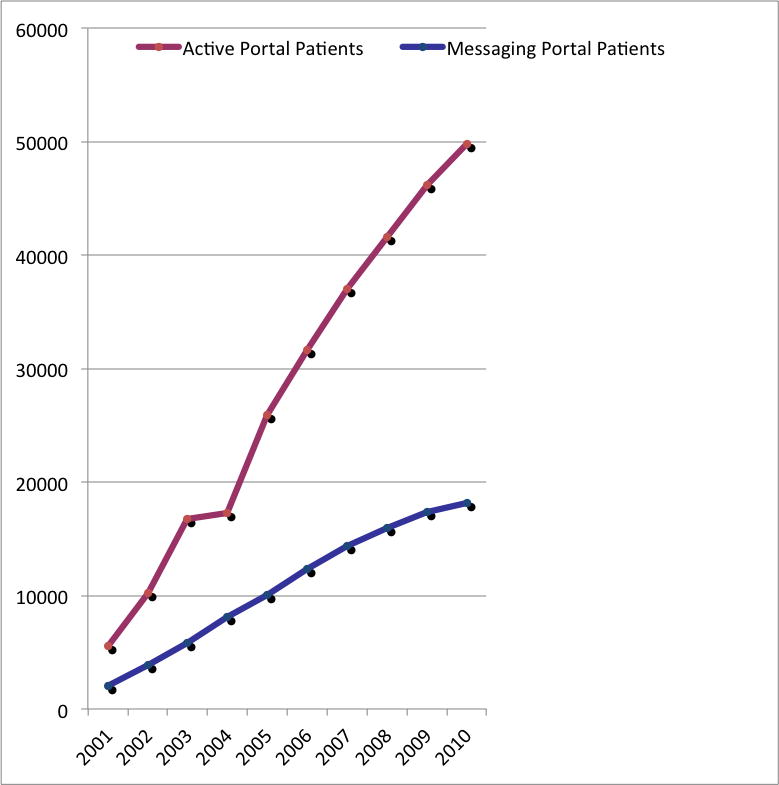
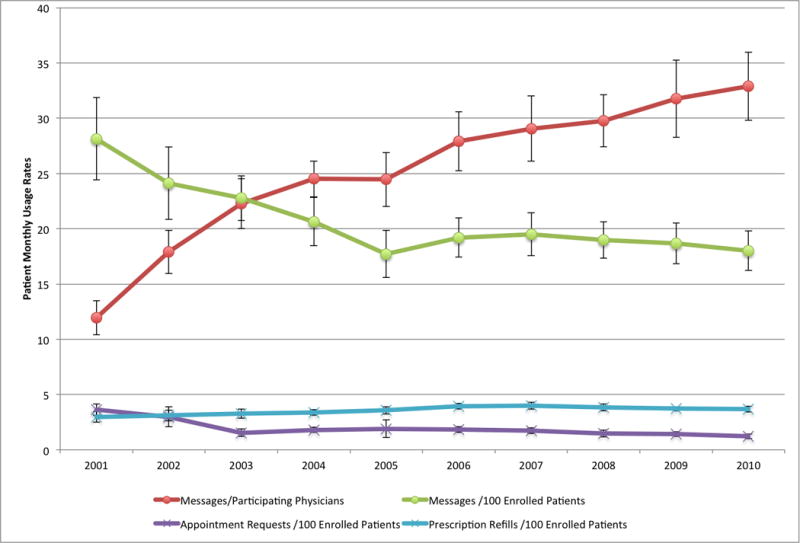
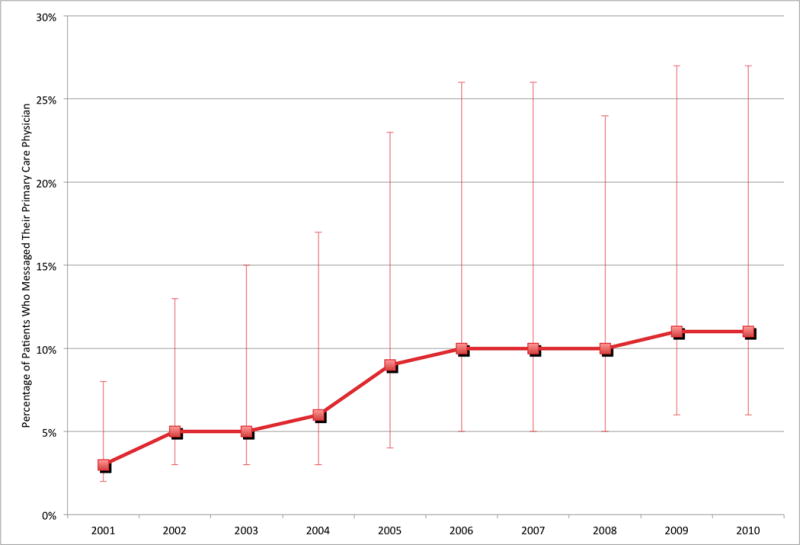
Patients want to be able to communicate with their physicians by e-mail. However, physicians are often concerned about the impact that such communications will have on their time, productivity, and reimbursement. Typically, physicians are not reimbursed for time spent communicating with patients electronically. But under federal meaningful-use criteria for information technology, physicians can receive a modest incentive for such communications. Little is known about trends in secure e-mail messaging between physicians and patients. To understand these trends, we analyzed the volume of messages in a large academic health system's patient portal in the period 2001-10. At the end of 2010, 49,778 patients (22.7 percent of all patients seen within the system) had enrolled in the portal, and 36.9 percent of enrolled patients (8.4 percent of all patients) had sent at least one message to a physician. Physicians in the aggregate saw a near tripling of e-mail messages during the study period. However, the number of messages per hundred patients per month stabilized between 2005 and 2010, at an average of 18.9 messages. As physician reimbursement moves toward global payments, physicians' and patients' participation in secure messaging will likely increase, and electronic communication should be considered part of physicians' job descriptions.
Keywords: Access To Care; Information Technology; Organization and Delivery of Care; Primary Care; Research And Technology.
Project HOPE—The People-to-People Health Foundation, Inc.
Figures
Comment in
-
Re: Patient-to-physician messaging: volume nearly tripled as more patients joined system, but per capita rate plateaued.J Urol. 2015 May;193(5):1616-7. doi: 10.1016/j.juro.2015.02.060. Epub 2015 Feb 17. J Urol. 2015. PMID: 25895799 No abstract available.
References
-
- Moyer CA, Stern DT, Dobias KS, Cox DT, Katz SJ. Bridging the electronic divide: patient and provider perspectives on e-mail communication in primary care. Am J Manag Care. 2002;8(5):427–33. - PubMed
-
- Kleiner KD, Akers R, Burke BL, Werner EJ. Parent and physician attitudes regarding electronic communication in pediatric practices. Pediatrics. 2002;109(5):740–4. - PubMed
Publication types
MeSH terms
Grants and funding
LinkOut - more resources
Full Text Sources
Other Literature Sources
Medical
