


Effect of a heat shock protein 90-specific inhibitor on the proliferation and apoptosis induced by VEGF-C in cervical cancer cells
- PMID: 25289059
- PMCID: PMC4186365
- DOI: 10.3892/etm.2014.1930
Effect of a heat shock protein 90-specific inhibitor on the proliferation and apoptosis induced by VEGF-C in cervical cancer cells
Abstract
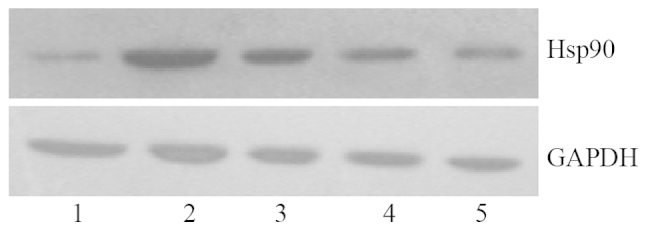
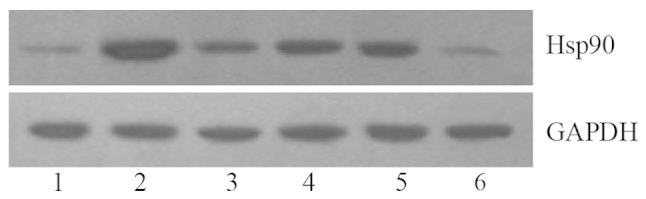
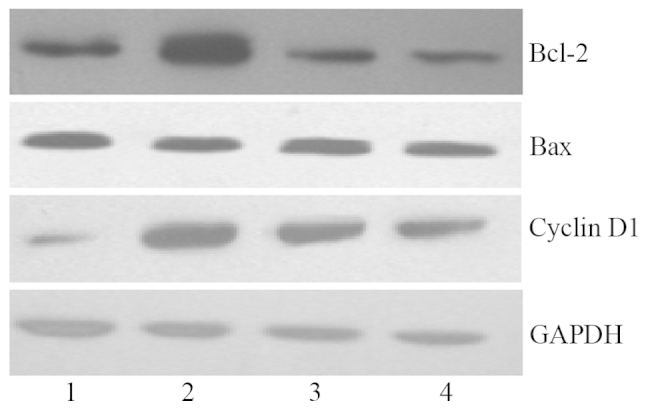
The aim of the present study was to investigate the effect of heat shock protein 90 (Hsp90)-specific inhibitor geldanamycin (GA) on the proliferation and apoptosis induced by vascular endothelial growth factor-C (VEGF-C) in cervical cancer cells. HeLa cells (1×10⁶/ml) in the logarithmic growth phase were incubated without serum for 24 h. The cells were pretreated with kinase insert domain receptor antibody (KDR)-Ab (20 μg/ml), phosphatidylinositol 3-kinase (PI3K) inhibitor LY294002 (3 μmol/l), mitogen-activated protein kinase (MAPK) inhibitor PD98059 (30 μmol/l) or Hsp90-specific inhibitor GA (10 μmol/l) for 30 min, and then treated with VEGF-C (50 ng/μl) for a further 24 h. The cells were harvested for MTT analysis, annexin V-FITC/propidium iodide double staining for early apoptosis and SDS-PAGE and western blot analysis in order to determine Hsp90, B-cell lymphoma 2 (Bcl-2), Bcl-2-associated X protein (Bax) and cyclin D1 expression. Treatment with VEGF-C alone induced Hsp90 protein expression in HeLa cells at all time-points. Hsp90 expression was increased 3.31-fold in VEGF-C treated HeLa cells, and this increase was attenuated in the treatment groups (2.17-, 1.69-, 1.82-fold in VEGF-C + KDR-Ab, VEGF-C + PD98059 and VEGF-C + LY294002, respectively). The proliferation of the VEGF-C-treated HeLa cells was increased ~2.13-fold, while that of the VEGF-C + GA-treated HeLa cells decreased 0.87-fold (P<0.05). Even low concentrations of GA (0.02 μmol/l) were found to inhibit the Bcl-2 and cyclin D1 protein expression induced by VEGF-C. Therefore, the results indicate that the Hsp90-specific inhibitor GA has a critical role in the proliferation and apoptosis induced by VEGF-C in cervical cancer cells.
Keywords: apoptosis; cervical cancer; heat shock protein 90; proliferation; vascular endothelial growth factor-C.
Figures
References
-
- Bishop SC, Burlison JA, Blagg BS. Hsp90: a novel target for the disruption of multiple signaling cascades. Curr Cancer Drug Targets. 2007;7:369–388. - PubMed
-
- Lee WY, Chen YC, Shih CM, et al. The induction of heme oxygenase-1 suppresses heat shock protein 90 and the proliferation of human breast cancer cells through its byproduct carbon monoxide. Toxicol Appl Pharmacol. 2014;274:55–62. - PubMed
-
- Schwock J, Pham NA, Cao MP, Hedley DW. Efficacy of Hsp90 inhibition for induction of apoptosis and inhibition of growth in cervical carcinoma cells in vitro and in vivo. Cancer Chemother Pharmacol. 2008;61:669–681. - PubMed
LinkOut - more resources
Full Text Sources
Other Literature Sources
Research Materials