Lactation studies of anticonvulsants: a quality review
- PMID: 25291358
- PMCID: PMC4386941
- DOI: 10.1111/bcp.12524
Lactation studies of anticonvulsants: a quality review
Abstract
Aim: The aim of this review was to investigate the quality of the current literature on the transfer of anticonvulsants to breast milk to provide an overview of which anticonvulsants are in need of further research.
Methods: We reviewed the quality of the available lactation studies for 19 anticonvulsants against the guidelines of the Food and Drug Administration (FDA) and the International Lactation Consultant Association (ILCA).
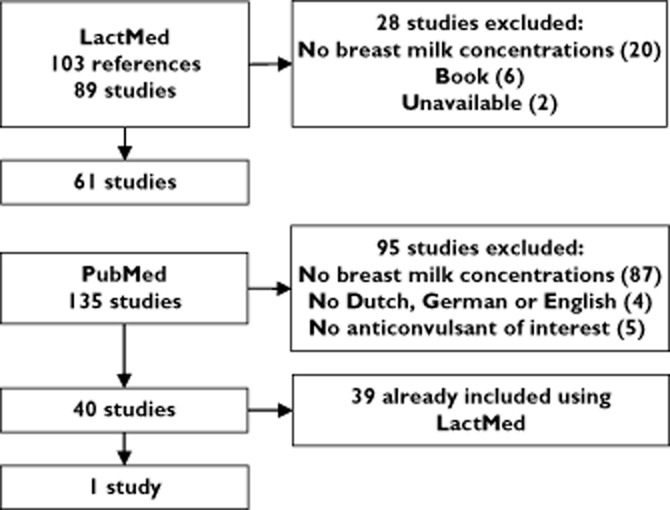
Results: Except for one study on lamotrigine and one case report on gabapentin, no study on anticonvulsants had both the absolute infant dose (AID) and milk to plasma ratio (M : P) correctly assessed. Only one study on carbamazepine, phenytoin and vigabatrin was found that correctly assessed the AID. The main cause for this low number is the lack of essential details in published studies, since 25 of 62 studies were case reports, letters or abstracts. Other major shortcomings were the lack of information on sampling methods, the number of samples in a particular dose interval as well as the low number of study participants.
Conclusion: The quality of the current literature on the transfer of anticonvulsants to breast milk is low, except for lamotrigine, which makes it hard to draw conclusions about the safety of the use of anticonvulsants during the lactation period. Therefore, further research is needed.
Keywords: anti-epileptic drugs; anticonvulsants; breast milk; human milk; lactation.
© 2014 The British Pharmacological Society.
Figures
References
-
- Chung M, Raman G, Trikalinos T, Lau J, Ip S. Interventions in primary care to promote breastfeeding: an evidence review for the U.S. Preventive Services Task Force. Ann Intern Med. 2008;149:565–582. - PubMed
-
- Breastfeeding and the use of human milk. Pediatrics. 2012;129:e827–841. - PubMed
-
- 2012. Centers for Disease Control and Prevention. Breastfeeding report card – United States.
-
- Yerby MS. Quality of life, epilepsy advances, and the evolving role of anticonvulsants in women with epilepsy. Neurology. 2000;55(5 Suppl. 1):S21–31. discussion S54–8. - PubMed
Publication types
MeSH terms
Substances
LinkOut - more resources
Full Text Sources
Other Literature Sources