. 2014 Oct;15(10):888-99.
doi: 10.1631/jzus.B1400065.

Needle-free injection of insulin powder: delivery efficiency and skin irritation assessment

Affiliations

Needle-free injection of insulin powder: delivery efficiency and skin irritation assessment

Chun-yu Li et al. J Zhejiang Univ Sci B. 2014 Oct.

Abstract

Insulin is widely used in treating diabetes, but still needs to be administered by needle injection. This study investigated a new needle-free approach for insulin delivery. A portable powder needleless injection (PNI) device with an automatic mechanical unit was designed. Its efficiency in delivering insulin was evaluated in alloxan-induced diabetic rabbits. The skin irritation caused by the device was investigated and the results were analyzed in relation to aerodynamic parameters. Inorganic salt-carried insulin powders had hypoglycemic effects, while raw insulin powders were not effective when delivered by PNI, indicating that salt carriers play an important role in the delivery of insulin via PNI. The relative delivery efficiency of phosphate-carried insulin powder using the PNI device was 72.25%. A safety assessment test showed that three key factors (gas pressure, cylinder volume, and nozzle distance) were related to the amount of skin irritation caused by the PNI device. Optimized injection conditions caused minimal skin lesions and are safe to use in practice. The results suggest that PNI has promising prospects as a novel technology for delivering insulin and other biological drugs.

Keywords: Insulin; Powder needleless injection; Skin irritation; Transdermal drug delivery.


Conflict of interest statement

Compliance with ethics guidelines: Chun-yu LI, Zhe-wei WANG, Can TU, Jia-bo WANG, Bing-qian JIANG, Qi LI, Ling-na ZENG, Zhi-jie MA, Ping ZHANG, Yan-ling ZHAO, Ya-ming ZHANG, Dan YAN, Rui TAN, and Xiao-he XIAO declare that they have no conflict of interest.

All institutional and national guidelines for the care and use of laboratory animals were followed.

Figures

Fig. 1
Fig. 1
Powder needleless injection (PNI) device (300.3 g) (a) The structure scheme of the PNI device; (b) A 3D design sketch of the PNI device; (c) A prototype of the PNI device
Fig. 2
Fig. 2
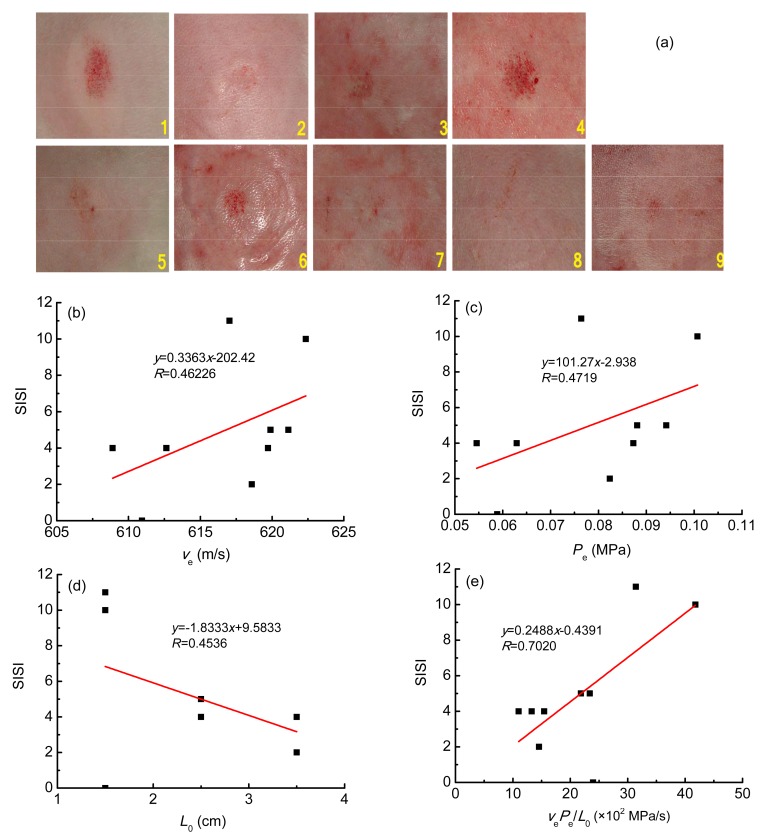
Skin irritation of PNI and its relationship with aerodynamic parameters (a) Skin trauma of PNI. The test numbers in the orthogonal design are shown in the lower right corner of each panel; (b, c, d, e) Correlations between the extent of skin lesion and aerodynamic parameters (exit gas velocity (v e) (b), exit pressure (P e) (c), nozzle distance (L 0) (d), and combining the product of v e and P e divided by L 0 (e)) of PNI
Fig. 3
Fig. 3
Numerical simulation of the aerodynamic course of the PNI device (a) The velocity (m/s) of the gas flow distributed in the de Laval nozzle. (b) The temperature (K) of the gas flow distributed in the de Laval nozzle. The numbers labeled in the diagram show the value at each point. (c) Simulated movements of the drug powder accelerated through de Laval nozzle from various initial positions. The colored lines indicate the tracks of powders moving through the nozzle. rx (cm) indicates the radial position of the powder away from the nozzle axis. (d) The velocities and momentums of drug powders in different diameters accelerated through the de Laval nozzle. v max: the maximal velocity of the powder achieved in the nozzle; v min: the velocity of the powder when impacting the baffle; MV: momentum. The powder density was assigned as 1 g/cm3 (Note: for interpretation of the references to color in this figure legend, the reader is referred to the web version of this article)
Fig. 4
Fig. 4
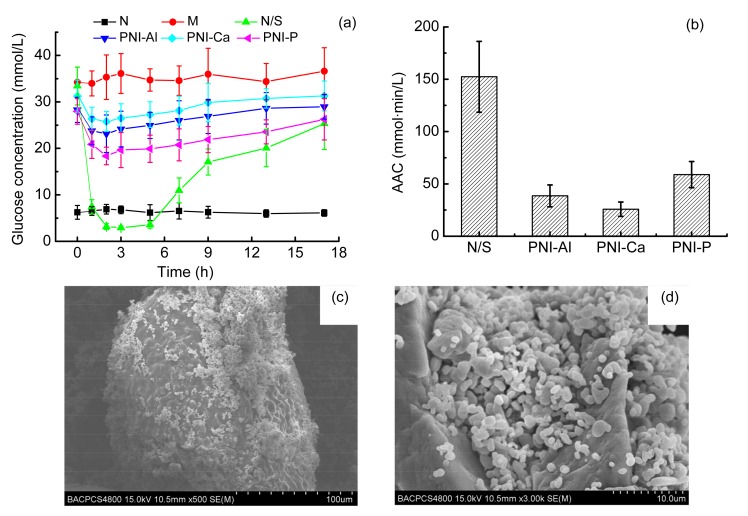
Hypoglycemic effects of different salt-carried insulin powders delivered by PNI (a) The change in glucose concentration caused by different salt-carried insulin powders delivered by PNI. (b) The area above the curve (AAC) of the glucose concentration of different salt-carried insulin powders delivered by PNI. Data are expressed as mean±SD. (c, d) Scanning electron microscope (SEM) images of the phosphate-carried insulin powder. The powder core is the phosphate crystal. The micro particles are insulin attached or adhered to the surface of the phosphate crystal

References

    1. Agnihotri SA, Nadagouda N, Mallikarjuna TM. Recent advances on chitosan-based micro- and nanoparticles in drug delivery. J Control Release. 2004;100(1):5–28. doi: 10.1016/j.jconrel.2004.08.010. - DOI - PubMed
    1. Agu RU, Ugwoke MI, Armand M, et al. The lung as a route for systemic delivery of therapeutic proteins and peptide. Respir Res. 2001;2(4):198–209. doi: 10.1186/rr58. - DOI - PMC - PubMed
    1. Arora A, Prausnitz MR, Mitragotri S. Micro-scale devices for transdermal drug delivery. Int J Pharm. 2008;364(2):227–236. doi: 10.1016/j.ijpharm.2008.08.032. - DOI - PMC - PubMed
    1. Burkoth TL, Bellhouse BJ, Hewson G, et al. Transdermal and transmucosal powdered drug delivery. Crit Rev Ther Drug Carrier Syst. 1999;16(4):331–384. doi: 10.1615/CritRevTherDrugCarrierSyst.v16.i4.10. - DOI - PubMed
    1. Chen D, Erickson CA, Endres RL, et al. Adjuvantation of epidermal powder immunization. Vaccine. 2001;19(20-22):2908–2917. doi: 10.1016/S0264-410X(00)00544-2. - DOI - PubMed

Publication types

MeSH terms