Review
. 2014 Sep 23:5:447.
doi: 10.3389/fimmu.2014.00447. eCollection 2014.

Elucidation of pathways driving asthma pathogenesis: development of a systems-level analytic strategy

Affiliations
Review

Elucidation of pathways driving asthma pathogenesis: development of a systems-level analytic strategy

Michael L Walker et al. Front Immunol. .

Abstract

Asthma is a genetically complex, chronic lung disease defined clinically as episodic airflow limitation and breathlessness that is at least partially reversible, either spontaneously or in response to therapy. Whereas asthma was rare in the late 1800s and early 1900s, the marked increase in its incidence and prevalence since the 1960s points to substantial gene × environment interactions occurring over a period of years, but these interactions are very poorly understood (1-6). It is widely believed that the majority of asthma begins during childhood and manifests first as intermittent wheeze. However, wheeze is also very common in infancy and only a subset of wheezy children progress to persistent asthma for reasons that are largely obscure. Here, we review the current literature regarding causal pathways leading to early asthma development and chronicity. Given the complex interactions of many risk factors over time eventually leading to apparently multiple asthma phenotypes, we suggest that deeply phenotyped cohort studies combined with sophisticated network models will be required to derive the next generation of biological and clinical insights in asthma pathogenesis.

Keywords: allergy; asthma; birth cohort; childhood; epidemiology; immune function; systems biology; virus infection.


Figures
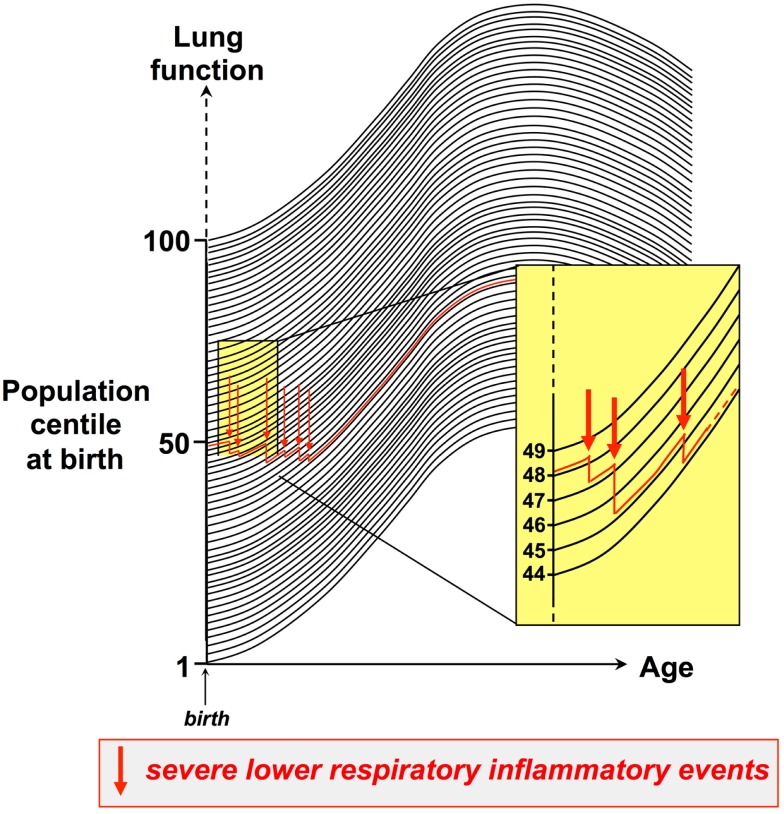
Figure 1
Figure 1
Establishing trajectories for maturation of respiratory function during childhood. Respiratory function can be expressed as population centiles, and during the preschool years individual children typically track on the same respiratory function centile (dark lines) defined by their personal centile at birth. Experiencing recurrent inflammatory events of sufficient intensity and duration to perturb ongoing growth/differentiation of lung tissues can result in non-reversible tissue remodeling, accompanied by stepwise dropping to progressively lower levels of lung function. The figure exemplifies an infant who is in the 49th centile at birth, who after three such severe events has declined to the 44th centile.
Figure 2
Figure 2
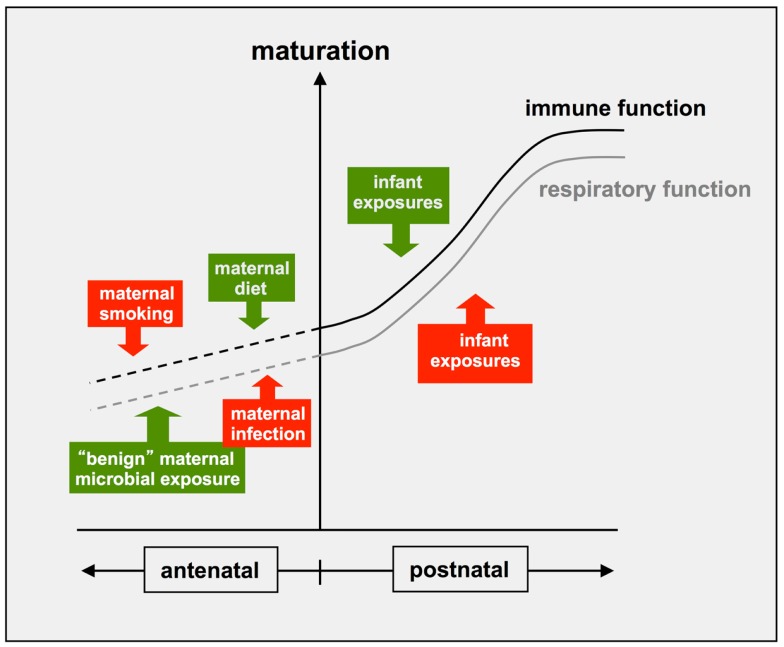
Antenatal and postnatal factors influencing development if immune and respiratory functions. Recent evidence indicates that the postnatal maturation of both respiratory and immune functions can be influenced by positive (green) and negative (red) environmental influences, which can exert their effects after birth and/or antenatally.
Box 1
Box 1
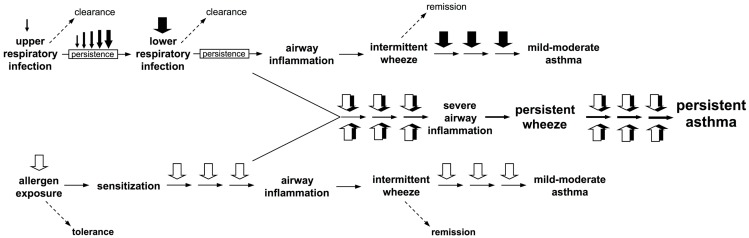
Interactions between atopic and anti-viral inflammatory pathways during exacerbations drive progression to persistent asthma. Two clear pathways to wheeze development are now recognized. Firstly, upper respiratory viral infections which evade clearance, and instead persist and intensify and spread to the small airways of the lower respiratory tract where they trigger intermittent inflammatory responses and associated wheeze. These symptoms frequently remit, but recurrence of such episodes can result in their persistence and this is associated with heightened risk for asthma development. Secondly, sensitization to perennial (especially indoor) allergens which are present continuously in the domestic environment can also lead to airway inflammation of generally lower intensity than those associated with infections, but such events are likely to occur considerably more frequently, and can also be associated with asthma risk. However, the highest risk is associated with concomitant exposure to virus and aeroallergen against a background of aeroallergen sensitization, resulting in interaction(s) between the pro-inflammatory pathways triggered by these agents that appear synergistic.
Figure 3
Figure 3
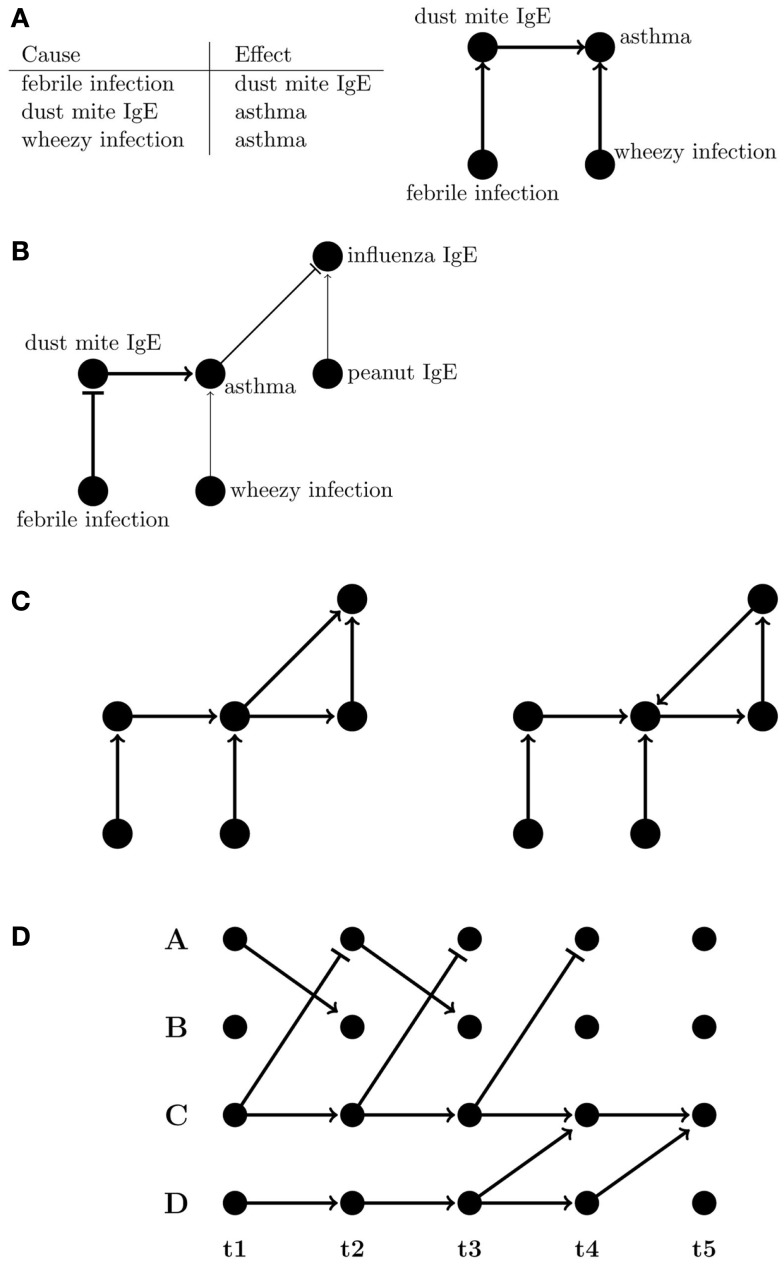
Representations of directed networks. (A) Tabular and graphical (left and right, respectively) displays of directional flow between variables. (B) Graph showing variations in strength and sign of effects between variables. The flattened edges indicate negative relationships. (C) Directed acyclic (DAG) and directed cyclic graphs (left and right, respectively). (D) A dynamic Bayesian network where edges are only between subsequent time points.
Figure 4
Figure 4
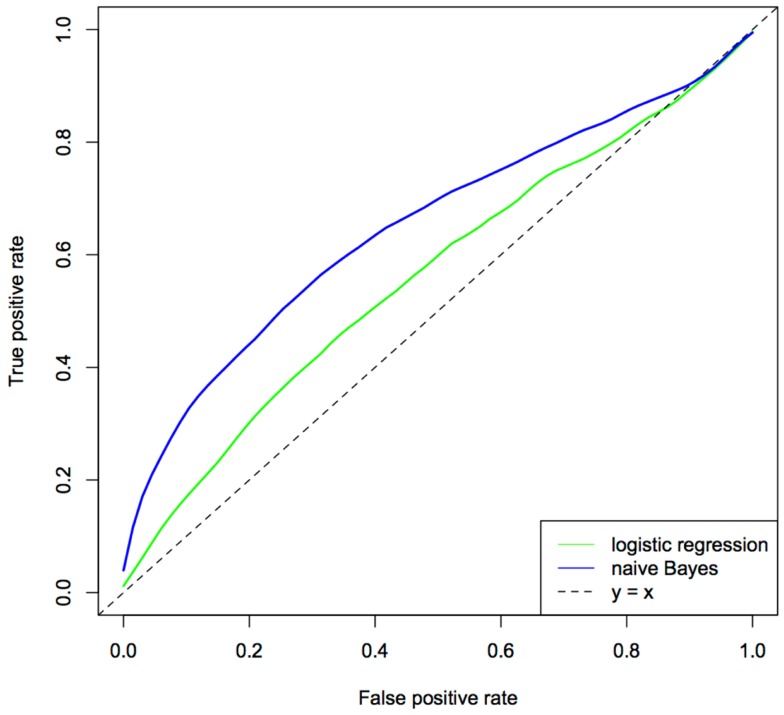
Comparison of logistical regression and naïve Bayes ROC curves. The predictor set contains 45 different predictors, including measures of respiratory infections, immune function, lung function, and maternal and environmental factors. The ROC curve was generated using 100 × 3-fold cross-validation.

References

    1. Ober C, Hoffjan S. Asthma genetics 2006: the long and winding road to gene discovery. Genes Immun (2006) 7:95–100 10.1038/sj.gene.6364284 - DOI - PubMed
    1. Ege MJ, Strachan DP, Cookson WO, Moffatt MF, Gut I, Lathrop M, et al. Gene-environment interaction for childhood asthma and exposure to farming in Central Europe. J Allergy Clin Immunol (2011) 127:e1–4 10.1016/j.jaci.2010.09.041 - DOI - PubMed
    1. Moffatt MF, Gut IG, Demenais F, Strachan DP, Bouzigon E, Heath S, et al. A large-scale, consortium-based genomewide association study of asthma. N Engl J Med (2010) 363:1211–21 10.1056/NEJMoa0906312 - DOI - PMC - PubMed
    1. Moffatt MF, Kabesch M, Liang L, Dixon AL, Strachan D, Heath S, et al. Genetic variants regulating ORMDL3 expression contribute to the risk of childhood asthma. Nature (2007) 448:470–3 10.1038/nature06014 - DOI - PubMed
    1. Renz H, von Mutius E, Brandtzaeg P, Cookson WO, Autenrieth IB, Haller D. Gene-environment interactions in chronic inflammatory disease. Nat Immunol (2011) 12:273–7 10.1038/ni0411-273 - DOI - PubMed

LinkOut - more resources