


Movement disorders in neuroleptic-naïve patients with schizophrenia spectrum disorders
- PMID: 25298069
- PMCID: PMC4195874
- DOI: 10.1186/s12888-014-0280-1
Movement disorders in neuroleptic-naïve patients with schizophrenia spectrum disorders
Abstract
Background: Spontaneous Movements Disorders (SMDs) or dyskinetic movements are often seen in patients with schizophrenia and other psychotic disorders, and are widely considered to be adverse consequences of the use of antipsychotic medications. Nevertheless, SMDs are also observed in the pre-neuroleptic ear and among patients who were never exposed to antipsychotic medications. The aim of this study was to determine the extent of SMDs among antipsychotic-naïve patients in a low income setting, and to evaluate contextually relevant risk factors.
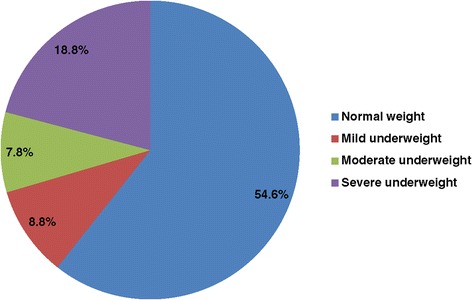
Methods: The study was a cross-sectional facility-based survey conducted at a specialist psychiatric hospital in Addis Ababa, Ethiopia. Consecutive consenting treatment-naïve patients with a diagnosis of schizophrenia, schizoaffective disorder and schizophreniform disorder contacting services for the first time were assessed using the Simpson-Angus Rating Scale (SAS) and the Abnormal Involuntary Movement Scale (AIMS) to evaluate the presence of SMDS. Scale for the Assessment of Negative Symptoms (SANS) and Scale for the Assessment of Positive Symptoms (SAPS) were administered to evaluate negative and positive symptom profiles respectively. Body mass index (BMI) was used as a proxy measure for nutritional status.
Result: Sixty-four patients, 67.2% male (n = 43), with first contact psychosis who met the DSM-IV-TR criteria for schizophrenia (n = 47), schizophreniform disorder (n= 5), and schizoaffective disorder (n = 12) were assessed over a two month study period. Seven patients (10.9%) had SMDs. BMI (OR = 0.6, 95% CI = 0.40, 0.89; p = 0.011) and increasing age (OR = 1.10; 95% CI = 1.02, 1.20; p = 0.017) were associated with SMD.
Conclusions: This finding supports previous suggestions that abnormal involuntary movements in schizophrenia and other psychotic disorders may be related to the pathophysiology of psychotic disorders and therefore cannot be attributed entirely to the adverse effects of neuroleptic medication.
Figures
References
-
- Kane J, Woerner M, Lieberman J. Tardive dyskinesia: rate incidence and risk factors, in Dyskinesia Research and Treatment. Berlin: Springer; 1985.
Publication types
MeSH terms
Substances
LinkOut - more resources
Full Text Sources
Other Literature Sources
Medical
Miscellaneous
