


A neural interface provides long-term stable natural touch perception
- PMID: 25298320
- PMCID: PMC5517305
- DOI: 10.1126/scitranslmed.3008669
A neural interface provides long-term stable natural touch perception
Abstract
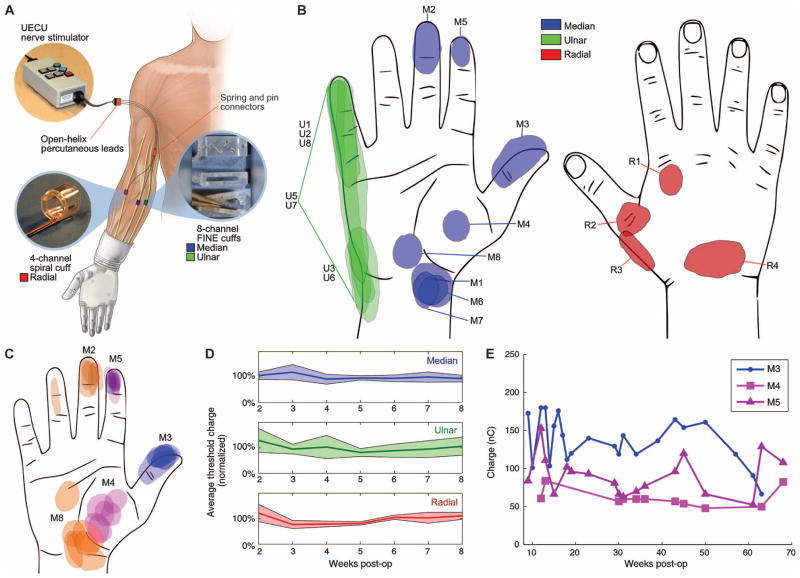
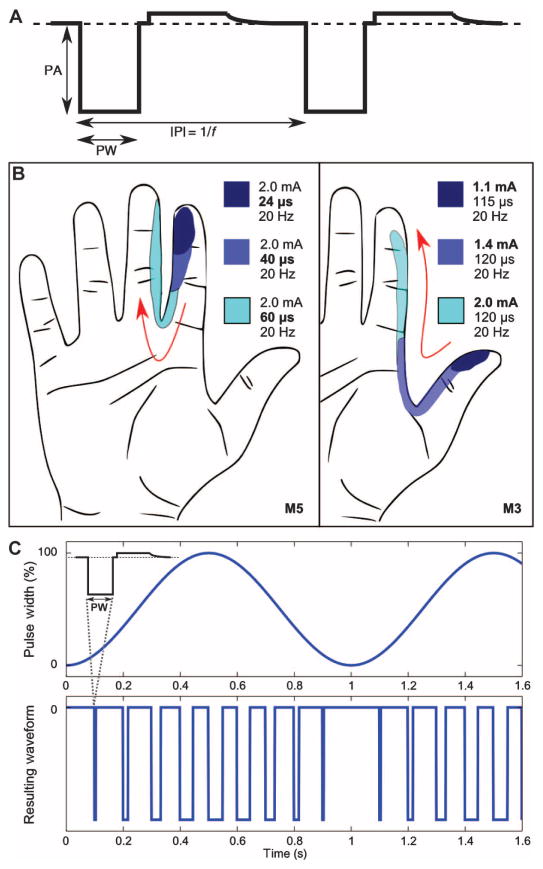
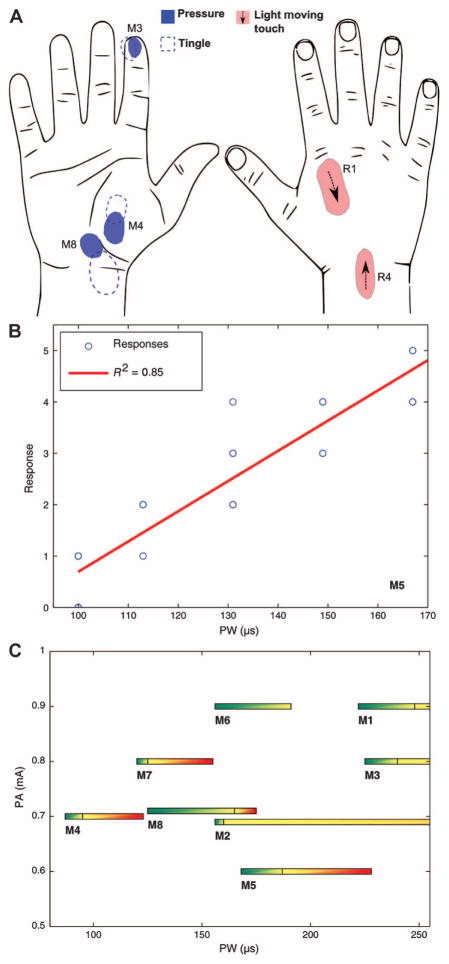
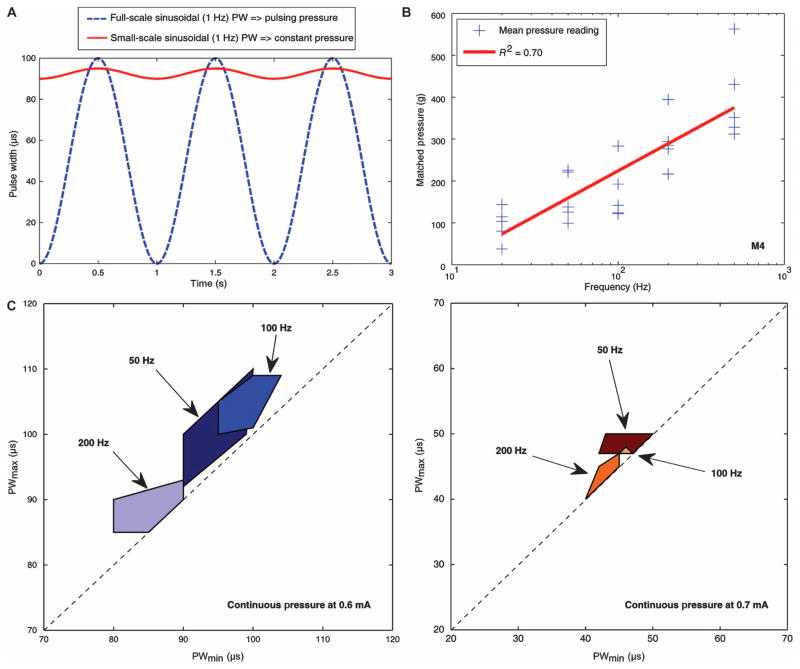
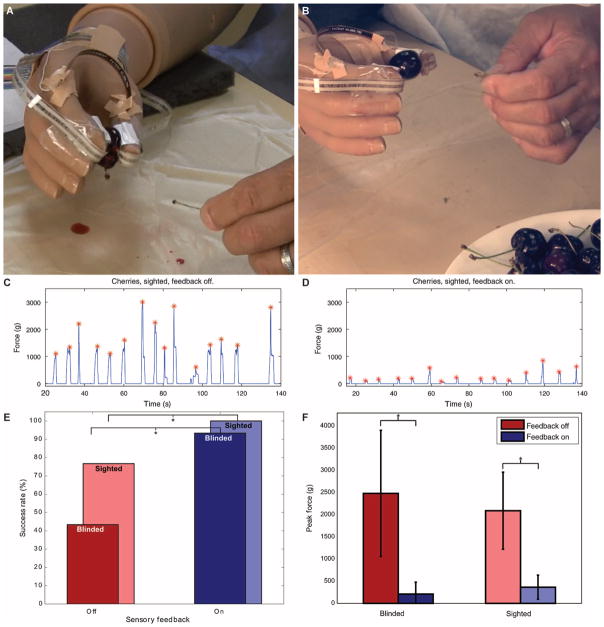
Touch perception on the fingers and hand is essential for fine motor control, contributes to our sense of self, allows for effective communication, and aids in our fundamental perception of the world. Despite increasingly sophisticated mechatronics, prosthetic devices still do not directly convey sensation back to their wearers. We show that implanted peripheral nerve interfaces in two human subjects with upper limb amputation provided stable, natural touch sensation in their hands for more than 1 year. Electrical stimulation using implanted peripheral nerve cuff electrodes that did not penetrate the nerve produced touch perceptions at many locations on the phantom hand with repeatable, stable responses in the two subjects for 16 and 24 months. Patterned stimulation intensity produced a sensation that the subjects described as natural and without "tingling," or paresthesia. Different patterns produced different types of sensory perception at the same location on the phantom hand. The two subjects reported tactile perceptions they described as natural tapping, constant pressure, light moving touch, and vibration. Changing average stimulation intensity controlled the size of the percept area; changing stimulation frequency controlled sensation strength. Artificial touch sensation improved the subjects' ability to control grasping strength of the prosthesis and enabled them to better manipulate delicate objects. Thus, electrical stimulation through peripheral nerve electrodes produced long-term sensory restoration after limb loss.
Copyright © 2014, American Association for the Advancement of Science.
Conflict of interest statement
Figures
Comment in
-
Bionic limbs: clinical reality and academic promises.Sci Transl Med. 2014 Oct 8;6(257):257ps12. doi: 10.1126/scitranslmed.3010453. Sci Transl Med. 2014. PMID: 25298319
-
Neural repair and rehabilitation: human-machine interfaces expand the functionality of prosthetic limbs.Nat Rev Neurol. 2014 Dec;10(12):671. doi: 10.1038/nrneurol.2014.212. Epub 2014 Nov 4. Nat Rev Neurol. 2014. PMID: 25366109 No abstract available.
References
-
- Robles-De-La-Torre G. The importance of the sense of touch in virtual and real environments. IEEE Multimed. 2006;13:24–30.
-
- Augurelle AS, Smith AM, Lejeune T, Thonnard JL. Importance of cutaneous feedback in maintaining a secure grip during manipulation of hand-held objects. J Neurophysiol. 2003;89:665–671. - PubMed
-
- Ramachandran VS, Rogers-Ramachandran D. Synaesthesia in phantom limbs induced with mirrors. Proc Biol Sci. 1996;263:377–386. - PubMed
-
- Rossini PM, Micera S, Benvenuto A, Carpaneto J, Cavallo G, Citi L, Cipriani C, Denaro L, Denaro V, Di Pino G, Ferreri F, Guglielmelli E, Hoffmann KP, Raspopovic S, Rigosa J, Rossini L, Tombini M, Dario P. Double nerve intraneural interface implant on a human amputee for robotic hand control. Clin Neurophysiol. 2010;121:777–783. - PubMed
Publication types
MeSH terms
Grants and funding
LinkOut - more resources
Full Text Sources
Other Literature Sources
Medical
