


Obesity associated molecular forms of C-reactive protein in human
- PMID: 25299074
- PMCID: PMC4192316
- DOI: 10.1371/journal.pone.0109238
Obesity associated molecular forms of C-reactive protein in human
Abstract
Objective: To describe novel C-reactive protein (CRP) molecular forms (mf) in human plasma.
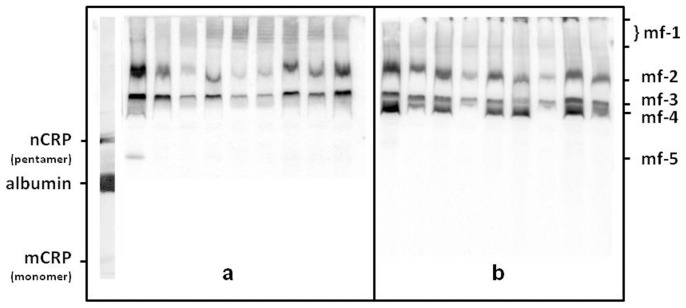
Design and methods: Five novel CRP-mfs, disctinct from the previously described native (nCRP) and modified (mCRP) C-reactive proteins, were separated from human plasma by polyacrylamide gel electrophoresis and immunodetected by western blot in subjects with or without increased BMI, cardiovascular disease (CVD), and diabetes (n = 1800).
Results: Three of the five CRP-mfs were present in all samples. One, CRPmf-4, was present in a subgroup of subjects and its presence was associated with elevated body mass index (BMI). CRP-mf-5 was present in about 2% of the subjects and was not associated with any other parameters. The presence or distribution of the 5 CRP-mfs were not Ca2+-dependent. Crossed immuno-localization experiments indicated that none of the CRP-mfs were complexed with any of the lipoprotein classes or with signature proteins of the complement-factor. Moreover, the distribution of CRP-mfs were not significantly correlated with plasma CRP levels. CRP-mf-4 was significantly associated with increased BMI, but not with other parameters of the metabolic syndrome (HDL-C and triglyceride levels, and diabetes).
Conclusions: We have identified five new CRP-mfs out of which CRP-mf-4 was significantly associated with obesity. We have shown that oligomerization of CRP was not calcium dependent. We hypothesize that adipose tissue produces a factor which influences the formation of CRP mf-4. CRP-mfs might be used as an obesity-associated inflammatory marker.
Conflict of interest statement
Figures
References
-
- Shrive AK, Cheetham GM, Holden D, Myles DA, Turnell WG, et al. (1996) Three dimensional structure of human C-reactive protein. Nat Struct Biol. 3(4): 346–354. - PubMed
-
- Lau DC, Dhillon B, Yan H, Szmitko PE, Verma S (2005) Adipokines: molecular links between obesity and atheroslcerosis. Am J Physiol Heart Circ Physiol 288(5): H2031–2041. - PubMed
-
- Pepys MB, Baltz ML (1983) Acute phase proteins with special reference to C-reactive protein and related proteins (pentaxins) and serum amyloid A protein. Adv Immunol 34: 141–212. - PubMed
-
- Ridker PM (2007) C-reactive protein and the prediction of cardiovascular events among those at intermediate risk: moving an inflammatory hypothesis toward consensus. J Am Coll Cardiol 49(21): 2129–2138. - PubMed
Publication types
MeSH terms
Substances
Grants and funding
LinkOut - more resources
Full Text Sources
Other Literature Sources
Medical
Research Materials
Miscellaneous
