


Induced pluripotent stem cell therapy ameliorates hyperoxia-augmented ventilator-induced lung injury through suppressing the Src pathway
- PMID: 25310015
- PMCID: PMC4195701
- DOI: 10.1371/journal.pone.0109953
Induced pluripotent stem cell therapy ameliorates hyperoxia-augmented ventilator-induced lung injury through suppressing the Src pathway
Abstract
Background: High tidal volume (VT) mechanical ventilation (MV) can induce the recruitment of neutrophils, release of inflammatory cytokines and free radicals, and disruption of alveolar epithelial and endothelial barriers. It is proposed to be the triggering factor that initiates ventilator-induced lung injury (VILI) and concomitant hyperoxia further aggravates the progression of VILI. The Src protein tyrosine kinase (PTK) family is one of the most critical families to intracellular signal transduction related to acute inflammatory responses. The anti-inflammatory abilities of induced pluripotent stem cells (iPSCs) have been shown to improve acute lung injuries (ALIs); however, the mechanisms regulating the interactions between MV, hyperoxia, and iPSCs have not been fully elucidated. In this study, we hypothesize that Src PTK plays a critical role in the regulation of oxidants and inflammation-induced VILI during hyperoxia. iPSC therapy can ameliorate acute hyperoxic VILI by suppressing the Src pathway.
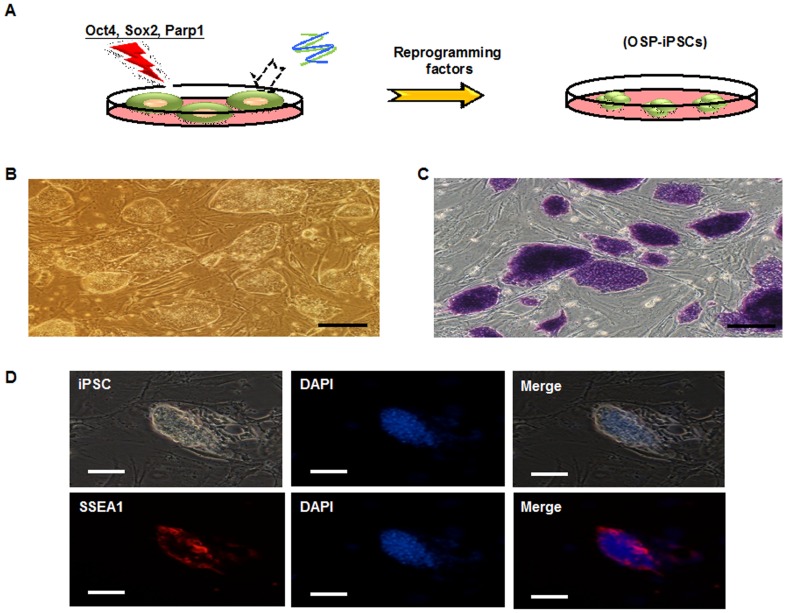
Methods: Male C57BL/6 mice, either wild-type or Src-deficient, aged between 2 and 3 months were exposed to high VT (30 mL/kg) ventilation with or without hyperoxia for 1 to 4 h after the administration of Oct4/Sox2/Parp1 iPSCs at a dose of 5×10(7) cells/kg of mouse. Nonventilated mice were used for the control groups.
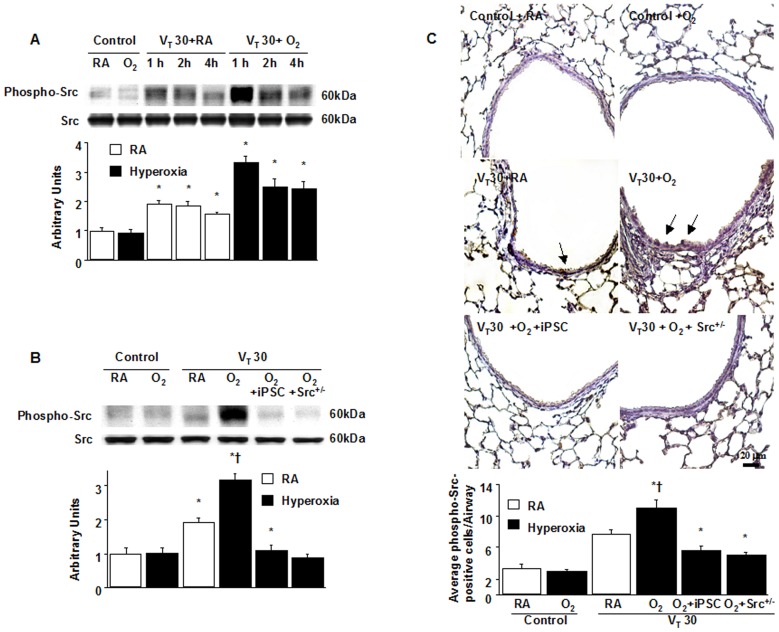
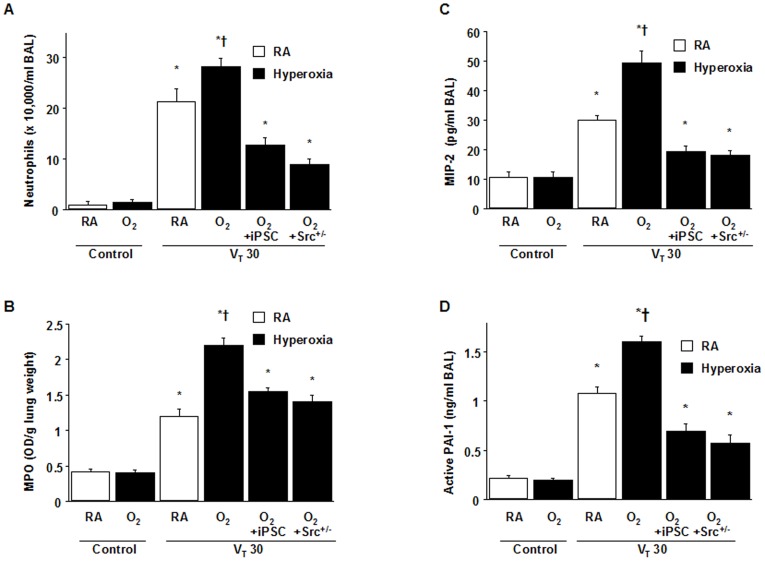
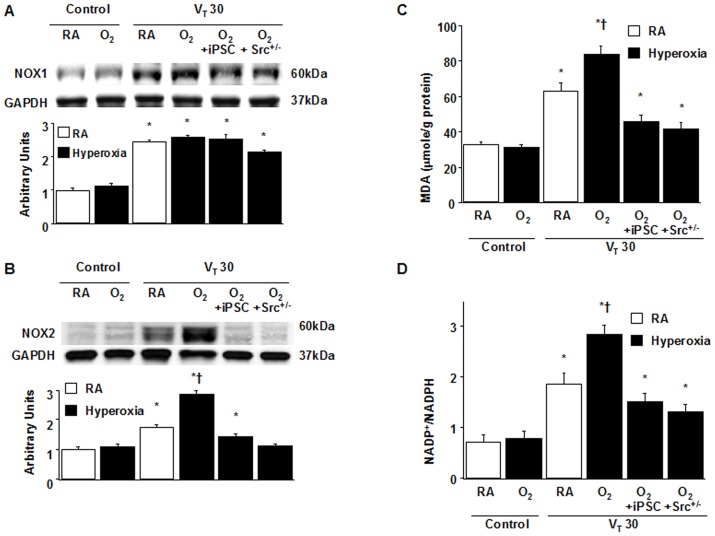
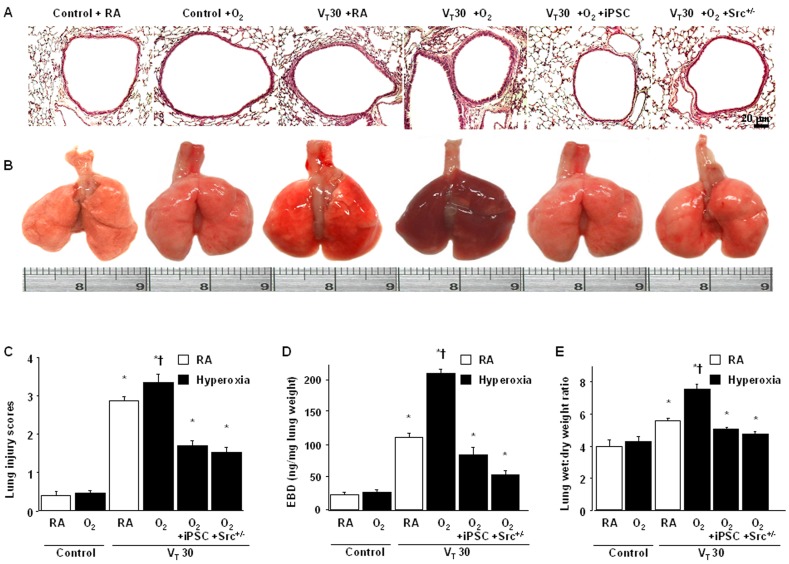
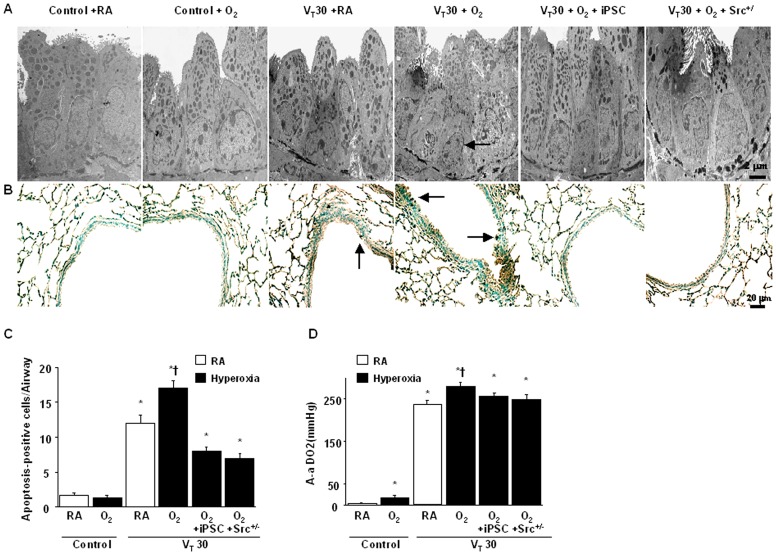
Results: High VT ventilation during hyperoxia further aggravated VILI, as demonstrated by the increases in microvascular permeability, neutrophil infiltration, macrophage inflammatory protein-2 (MIP-2) and plasminogen activator inhibitor-1 (PAI-1) production, Src activation, nicotinamide adenine dinucleotide phosphate (NADPH) oxidase activity, and malaldehyde (MDA) level. Administering iPSCs attenuated ALI induced by MV during hyperoxia, which benefited from the suppression of Src activation, oxidative stress, acute inflammation, and apoptosis, as indicated by the Src-deficient mice.
Conclusion: The data suggest that iPSC-based therapy is capable of partially suppressing acute inflammatory and oxidant responses that occur during hyperoxia-augmented VILI through the inhibition of Src-dependent signaling pathway.
Conflict of interest statement
Figures
References
-
- ARDSNet (2000) The acute respiratory distress syndrome network, ventilation with lower tidal volumes as compared with traditional tidal volumes for acute lung injury and the acute respiratory distress syndrome. N Engl J Med 342: 1301–1308. - PubMed
-
- Abraham E (2003) Neutrophils and acute lung injury. Crit Care Med 31: S195–199. - PubMed
-
- Held HD, Boettcher S, Hamann L, Uhlig S (2001) Ventilation-induced chemokine and cytokine release is associated with activation of nuclear factor-kappa B and is blocked by steroids. Am J Respir Crit Care Med 163: 711–716. - PubMed
-
- Ricard JD, Dreyfuss D, Saumon G (2003) Ventilator-induced lung injury. Eur Respir J 22: 2 s-9s. - PubMed
-
- Tremblay LN, Slutsky AS (2006) Ventilator-induced lung injury: from the bench to the bedside. Intensive Care Med 32: 24–33. - PubMed
Publication types
MeSH terms
Substances
LinkOut - more resources
Full Text Sources
Other Literature Sources
Miscellaneous
