Impact of a spatial repellent on malaria incidence in two villages in Sumba, Indonesia
- PMID: 25311699
- PMCID: PMC4257627
- DOI: 10.4269/ajtmh.13-0735
Impact of a spatial repellent on malaria incidence in two villages in Sumba, Indonesia
Abstract
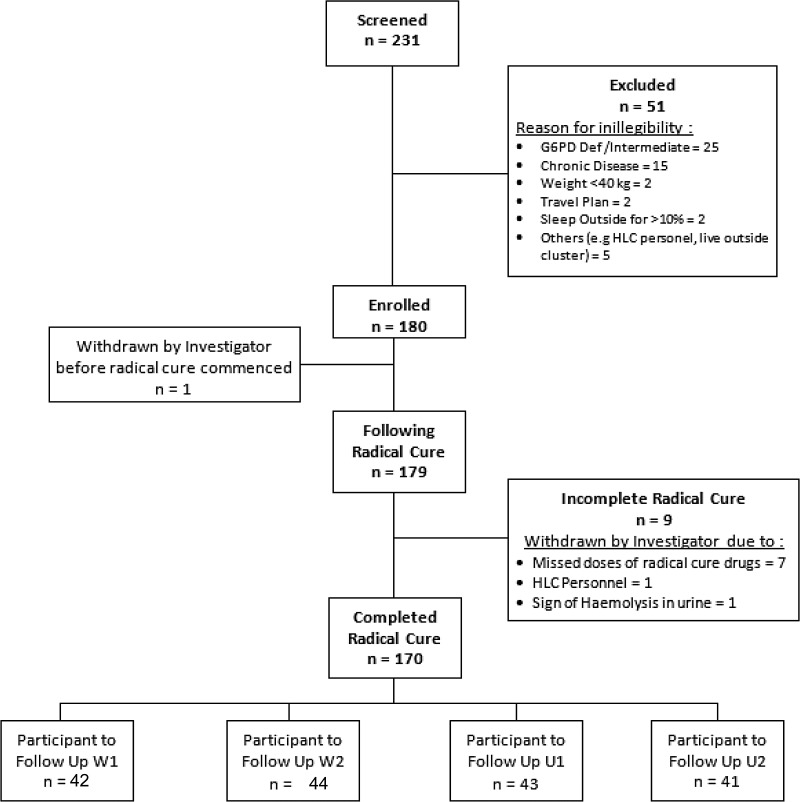
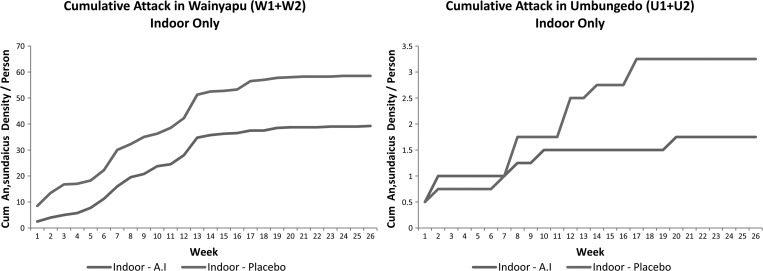
A randomized, double-blinded, placebo-controlled study was conducted to examine the effect of spatial repellent (SR) in households at risk of malaria in Indonesia. Following presumptive radical cure for malaria in 180 adult men representing sentinels of new infection in four clusters within two villages, all households were given either metofluthrin or placebo mosquito coils. Weekly blood smear screening and human-landing mosquito catches were done throughout the 6 months intervention. Malaria infections occurred in 61 subjects living in placebo households and 31 subjects living in SR coil households, suggesting a 52% protective effect of SR. Likewise, anopheles indoor human landing rates were 32% lower in homes receiving SR coils. Differences in the malaria attack rate between SR- and placebo-treated homes was significant when not accounting for the effects of clustering. When the analysis was adjusted for intra-cluster correlation, the differences between SR- and placebo-treated homes were not statistically significant. The findings provide evidence of SR public health benefit and support a larger trial statistically powered to detect those effects.
© The American Society of Tropical Medicine and Hygiene.
Figures
References
-
- World Health Organization . World Malaria Report. Geneva: WHO; 2011.
-
- Murray CJ, Rosenfeld LC, Lim SS, Andrews KG, Foreman KG, Haring D, Fullman N, Naghavi M, Lozano M, Lopez AD. Global malaria mortality between 1980 and 2010: a systematic review. Lancet. 2011;379:413–431. - PubMed
-
- Hill J, Rowland M. Insecticide-treated nets. Adv Parasitol. 2006;61:77–128. - PubMed
-
- World Health Organization . Guidelines for Efficacy Testing of Spatial Repellents. Geneva: WHO; 2013.
Publication types
MeSH terms
Substances
Grants and funding
LinkOut - more resources
Full Text Sources
Other Literature Sources
Medical
Research Materials