


Timely inhibition of Notch signaling by DAPT promotes cardiac differentiation of murine pluripotent stem cells
- PMID: 25313563
- PMCID: PMC4196912
- DOI: 10.1371/journal.pone.0109588
Timely inhibition of Notch signaling by DAPT promotes cardiac differentiation of murine pluripotent stem cells
Abstract
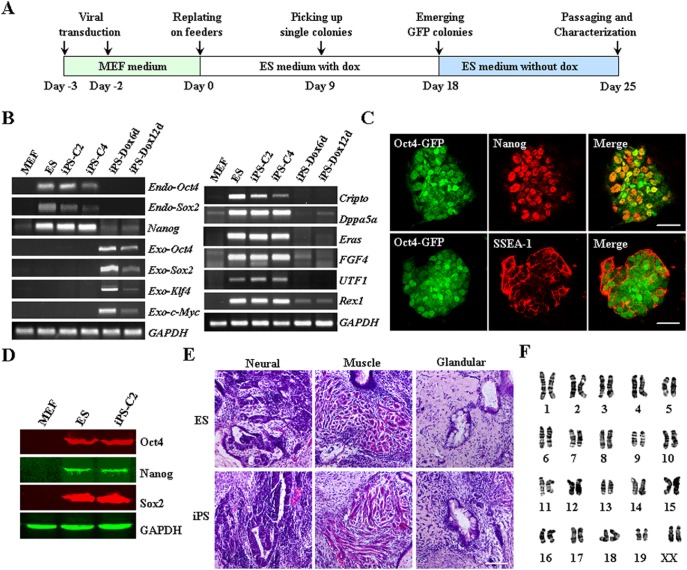
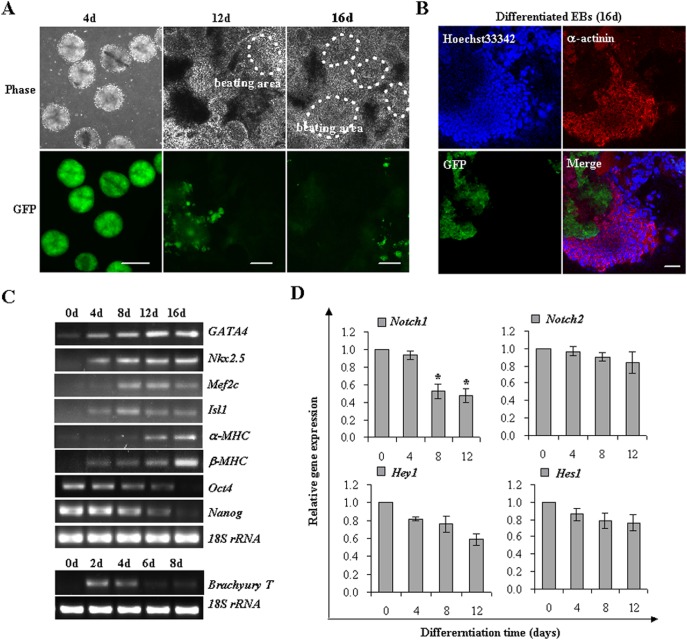
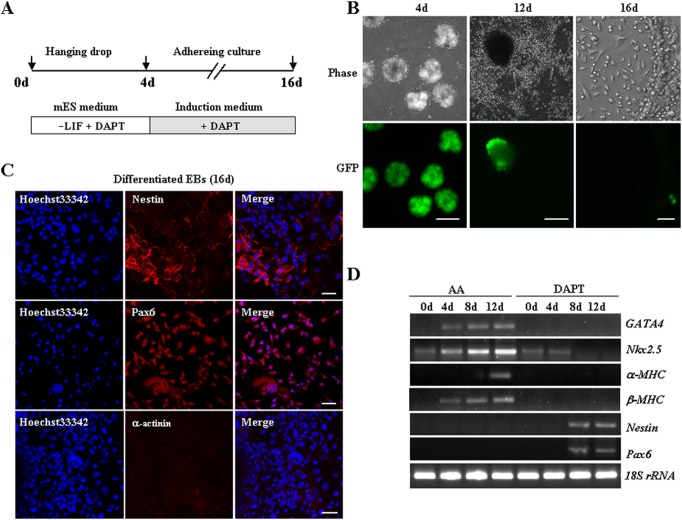
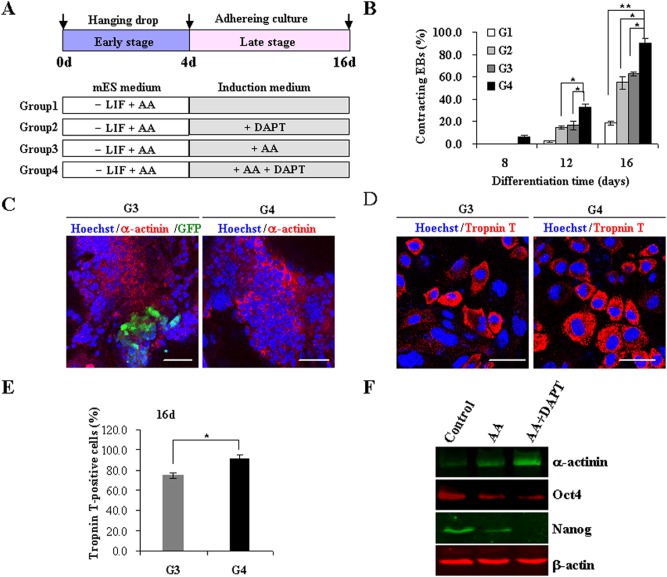
The Notch signaling pathway plays versatile roles during heart development. However, there is contradictory evidence that Notch pathway either facilitates or impairs cardiomyogenesis in vitro. In this study, we developed iPSCs by reprogramming of murine fibroblasts with GFP expression governed by Oct4 promoter, and identified an effective strategy to enhance cardiac differentiation through timely modulation of Notch signaling. The Notch inhibitor DAPT (N-[N-(3,5-difluorophenacetyl)-l-alanyl]-S-phenylglycine t-butyl ester) alone drove the iPSCs to a neuronal fate. After mesoderm induction of embryoid bodies initiated by ascorbic acid (AA), the subsequent treatment of DAPT accelerated the generation of spontaneously beating cardiomyocytes. The timed synergy of AA and DAPT yielded an optimal efficiency of cardiac differentiation. Mechanistic studies showed that Notch pathway plays a biphasic role in cardiomyogenesis. It favors the early-stage cardiac differentiation, but exerts negative effects on the late-stage differentiation. Therefore, DAPT administration at the late stage enforced the inhibition of endogenous Notch activity, thereby enhancing cardiomyogenesis. In parallel, DAPT dramatically augmented the expression of Wnt3a, Wnt11, BMP2, and BMP4. In conclusion, our results highlight a practicable approach to generate cardiomyocytes from iPSCs based on the stage-specific biphasic roles of Notch signaling in cardiomyogenesis.
Conflict of interest statement
Figures
References
-
- Takahashi K, Yamanaka S (2006) Induction of pluripotent stem cells from mouse embryonic and adult fibroblast cultures by defined factors. Cell 126: 663–676. - PubMed
-
- Yu J, Vodyanik MA, Smuga-Otto K, Antosiewicz-Bourget J, Frane JL, et al. (2007) Induced pluripotent stem cell lines derived from human somatic cells. Science 318: 1917–1920. - PubMed
-
- Kattman SJ, Witty AD, Gagliardi M, Dubois NC, Niapour M, et al. (2011) Stage-specific optimization of activin/nodal and BMP signaling promotes cardiac differentiation of mouse and human pluripotent stem cell lines. Cell Stem Cell 8: 228–240. - PubMed
-
- Kawai T, Takahashi T, Esaki M, Ushikoshi H, Nagano S, et al. (2004) Efficient cardiomyogenic differentiation of embryonic stem cell by fibroblast growth factor 2 and bone morphogenetic protein 2. Circ J 68: 691–702. - PubMed
Publication types
MeSH terms
Substances
LinkOut - more resources
Full Text Sources
Other Literature Sources
