


Tumor suppression by the Fbw7 ubiquitin ligase: mechanisms and opportunities
- PMID: 25314076
- PMCID: PMC4227608
- DOI: 10.1016/j.ccell.2014.09.013
Tumor suppression by the Fbw7 ubiquitin ligase: mechanisms and opportunities
Abstract
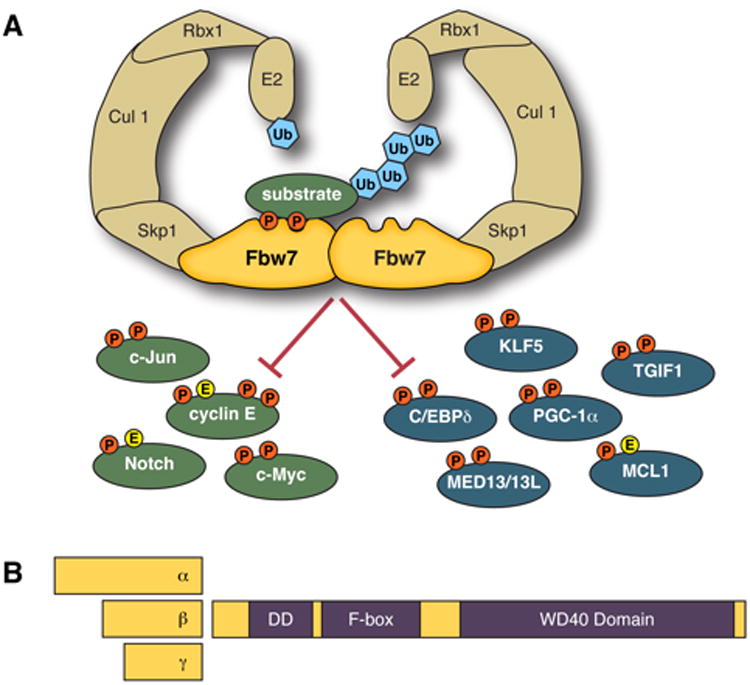
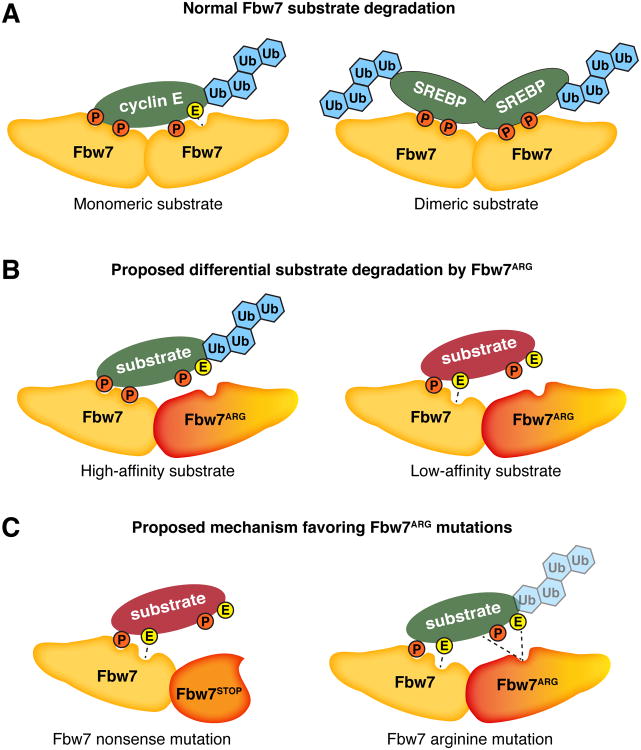
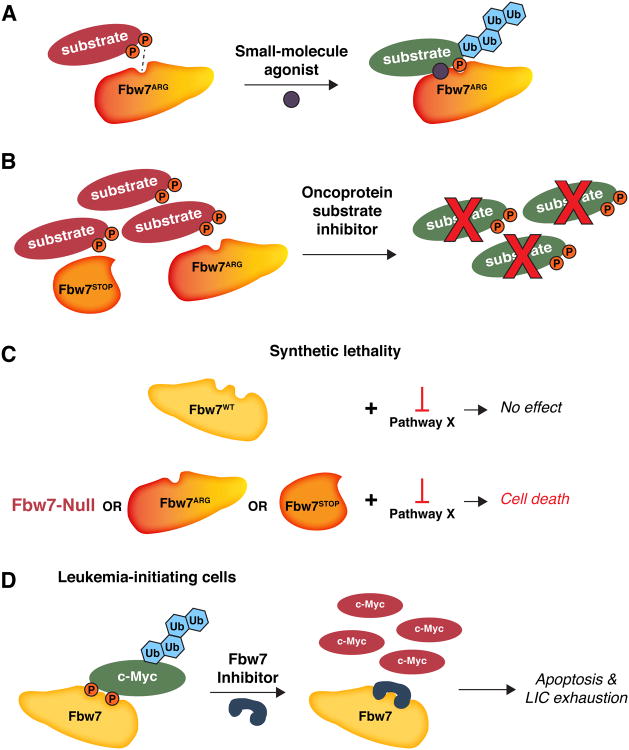
Tumor suppressors with widespread impact on carcinogenesis control broad spectra of oncogenic pathways. Protein degradation is an emerging mechanism by which tumor suppressors regulate a diversity of pathways and is exemplified by the SCF(Fbw7) ubiquitin ligase. Rapidly accumulating data indicate that SCF(Fbw7) regulates a network of crucial oncoproteins. Importantly, the FBXW7 gene, which encodes Fbw7, is one of the most frequently mutated genes in human cancers. These studies are yielding important new insights into tumorigenesis and may soon enable therapies targeting the Fbw7 pathway. Here, we focus on the mechanisms and consequences of Fbw7 deregulation in cancers and discuss possible therapeutic approaches.
Copyright © 2014 Elsevier Inc. All rights reserved.
Figures
References
-
- Akhoondi S, Sun D, von der Lehr N, Apostolidou S, Klotz K, Maljukova A, Cepeda D, Fiegl H, Dafou D, Marth C, et al. FBXW7/hCDC4 is a general tumor suppressor in human cancer. Cancer research. 2007;67:9006–9012. - PubMed
-
- Babaei-Jadidi R, Li N, Saadeddin A, Spencer-Dene B, Jandke A, Muhammad B, Ibrahim EE, Muraleedharan R, Abuzinadah M, Davis H, et al. FBXW7 influences murine intestinal homeostasis and cancer, targeting Notch, Jun, and DEK for degradation. The Journal of experimental medicine. 2011;208:295–312. - PMC - PubMed
-
- Bahram F, von der Lehr N, Cetinkaya C, Larsson LG. c-Myc hot spot mutations in lymphomas result in inefficient ubiquitination and decreased proteasome-mediated turnover. Blood. 2000;95:2104–2110. - PubMed
Publication types
MeSH terms
Substances
Grants and funding
LinkOut - more resources
Full Text Sources
Other Literature Sources
Molecular Biology Databases
