


Identification of plant-derived natural products as potential inhibitors of the Mycobacterium tuberculosis proteasome
- PMID: 25315519
- PMCID: PMC4203866
- DOI: 10.1186/1472-6882-14-400
Identification of plant-derived natural products as potential inhibitors of the Mycobacterium tuberculosis proteasome
Abstract
Background: The Mycobacterium tuberculosis (Mtb) proteasome has been established as a viable target for the development of anti-tuberculosis agents. In this study, the inhibitory activities of 100 plant-derived natural products on the Mtb proteasome were analyzed to identify novel potential inhibitors.
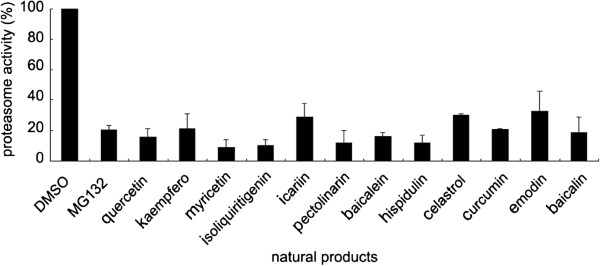
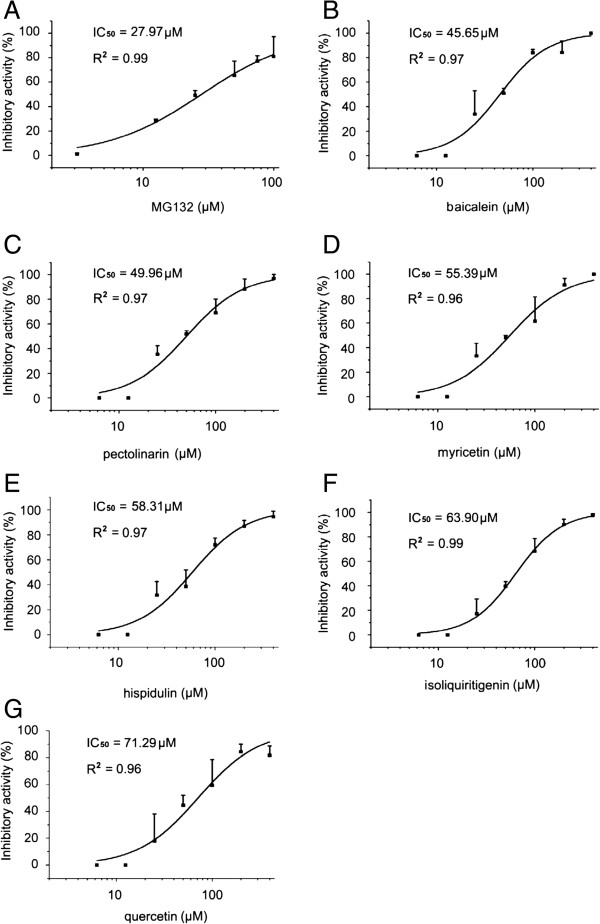
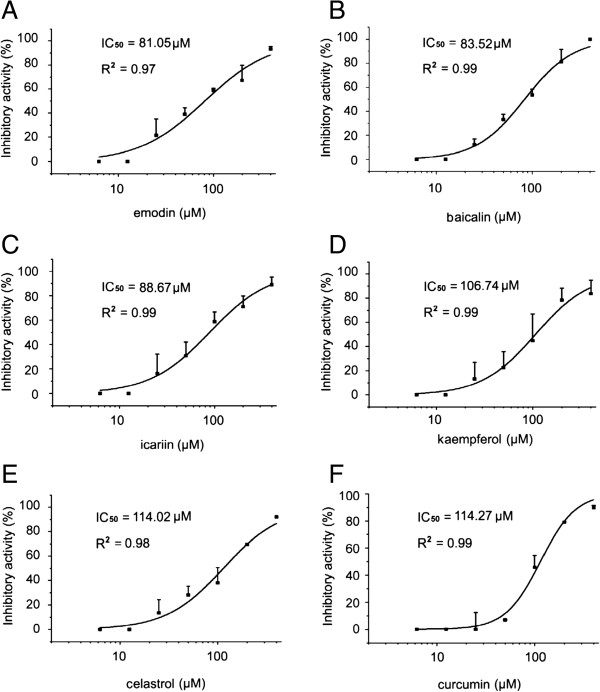
Methods: The fluorescent substrate Suc-Leu-Leu-Val-Tyr-AMC can be hydrolyzed by the proteasome to release free AMC, the fluorescence of which is proportional to the proteasome activity. The inhibitory activities of 100 natural products (each at a final concentration of 200 μM) were detected by this method using MG132 as a positive control.
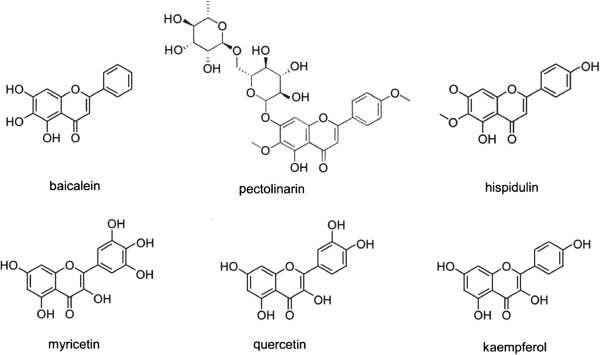
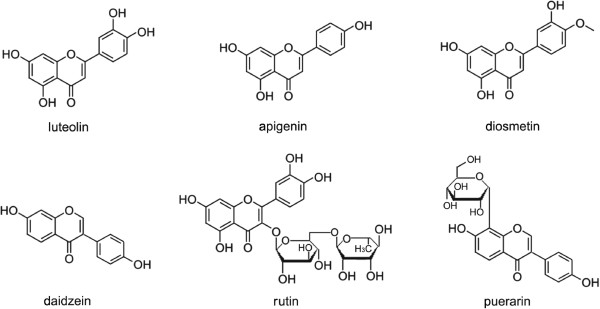
Results: Twelve of these natural products (10 of which were flavonoids) inhibited the activity of the Mtb proteasome by more than 65%. Comparison of the structural differences between the flavonoids with good inhibitory activity and those without inhibitory activity revealed that the hydroxyl at the flavonoid C ring C-3 or the hydroxyl/methoxyl at the flavonoid A ring C-6 were critical for the inhibition of proteasomal activity.
Conclusions: These data indicate that flavonoids represent a basis for rational structural design in the process of novel anti-tuberculosis drug discovery.
Figures

References
-
- WHO . Global Tuberculosis Report. Geneva, Switzerland: WHO; 2012.
Pre-publication history
-
- The pre-publication history for this paper can be accessed here:http://www.biomedcentral.com/1472-6882/14/400/prepub
Publication types
MeSH terms
Substances
LinkOut - more resources
Full Text Sources
Other Literature Sources
Miscellaneous
