Trends in disease burden in Germany: results, implications and limitations of the Global Burden of Disease study
- PMID: 25316518
- PMCID: PMC4199248
- DOI: 10.3238/arztebl.2014.0629
Trends in disease burden in Germany: results, implications and limitations of the Global Burden of Disease study
Abstract
Background: The Global Burden of Disease (GBD) study is designed to give a comprehensive and standardized assessment of the health of populations around the world. It measures the burden of disease by considering years of life lost due to premature death as well as years lived with disability. The findings enable the identification of secular trends and disparities between countries and can serve as a basis for decision-making in health policy.
Method: In cooperation with the authors of the GBD study, we summarize the key methods used to assess the burden of disease in terms of disability-adjusted life years (DALYs). We present findings that specifically pertain to Germany, drawn from freely available data of the most recent round of analysis for the years 1990 and 2010.
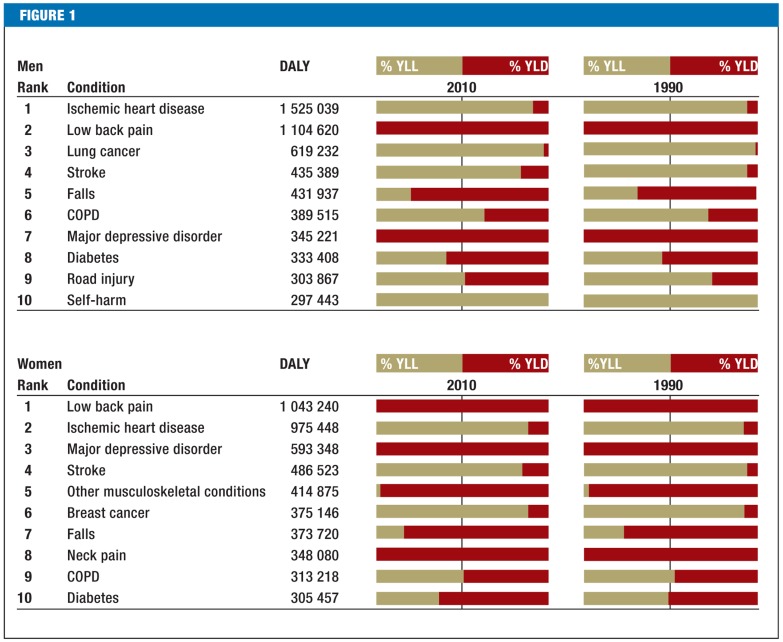
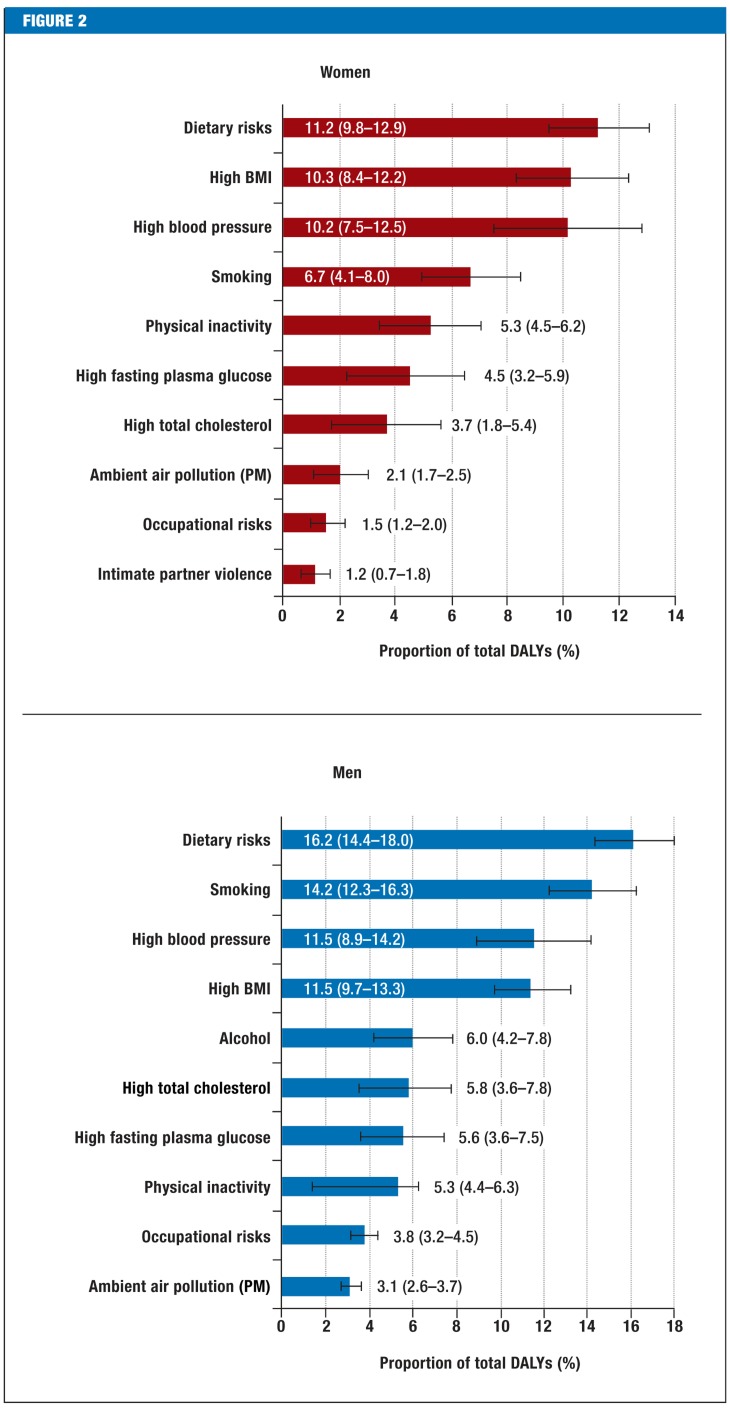
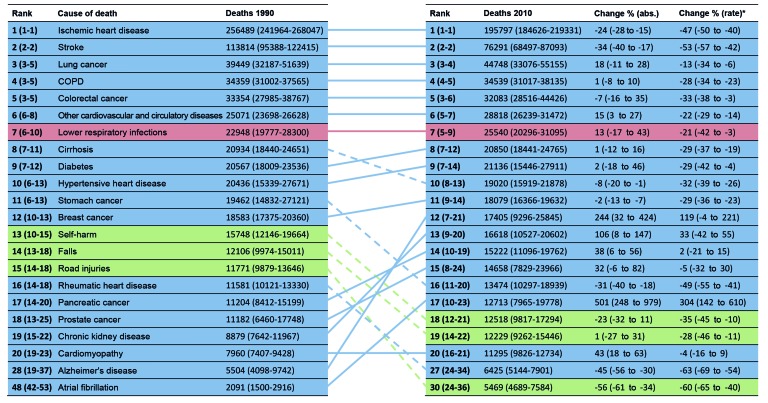
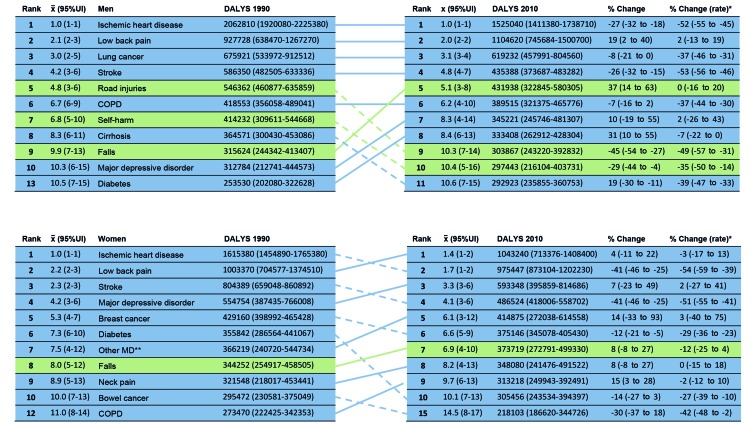
Results: According to the GBD study, life expectancy in Germany rose from 75.4 years in 1990 to 80.2 years in 2010. Ischemic heart disease and back pain caused the largest number of DALYs lost (2.5 million and 2.1 million, respectively). Over the period of the study, the absolute number of DALYs due to ischemic heart disease dropped by 33%, while the number of DALYs due to low back pain rose by 11%. Nutrition-related risks ranked first among all risk factors considered, accounting for 13.8% of total DALYs, followed by high blood pressure and high body-mass index, accounting for 10.9% each.
Conclusion: In Germany, important changes have been seen over time in the burden of disease attributable to different chronic diseases. Some of these changes reflect the successful interventions of the past, while others indicate a need for new action. The data from Germany that went into the GBD study must be systematically assessed and supplemented by further data relating to questions of specific relevance in this country.
Figures
Comment in
-
The disease burden on our shoulders.Dtsch Arztebl Int. 2014 Sep 19;111(38):627-8. doi: 10.3238/arztebl.2014.0627. Dtsch Arztebl Int. 2014. PMID: 25316517 Free PMC article. No abstract available.
-
Years of life lost.Dtsch Arztebl Int. 2015 Mar 20;112(12):211. doi: 10.3238/arztebl.2015.0211a. Dtsch Arztebl Int. 2015. PMID: 25838026 Free PMC article. No abstract available.
-
Global burden of disease study is of oncological interest.Dtsch Arztebl Int. 2015 Mar 20;112(12):211. doi: 10.3238/arztebl.2015.0211b. Dtsch Arztebl Int. 2015. PMID: 25838027 Free PMC article. No abstract available.
-
In reply.Dtsch Arztebl Int. 2015 Mar 20;112(12):212. doi: 10.3238/arztebl.2015.0212. Dtsch Arztebl Int. 2015. PMID: 25838028 Free PMC article. No abstract available.
References
-
- Murray CJL, Lopez AD. Cambridge: Harvard School of Public Health on behalf of the World Health Organization and the World Bank; 1996. The Global Burden of Disease: A comprehensive assessment of mortality and disability from diseases, injuries, and risk factors in 1990 and projected to 2020.
-
- Bradshaw D, Groenewald P, Laubscher R, et al. Initial burden of disease estimates for South Africa, 2000. South African Medical Journal. 2003;93:682–688. - PubMed
-
- The World Bank. Investing in Health. New York: Oxford University Press; 1993. World Development Report 1993.
-
- Murray CJL, Salomon JA, Mathers CD, Lopez AD. Geneva. World Health Organization: 2002. World Health Organization: Summary measures of population health: concepts, ethics, measurement and applications.
MeSH terms
LinkOut - more resources
Full Text Sources
Other Literature Sources
Medical
Miscellaneous