


Progress and peril: poliomyelitis eradication efforts in Pakistan, 1994-2013
- PMID: 25316830
- PMCID: PMC6261452
- DOI: 10.1093/infdis/jiu450
Progress and peril: poliomyelitis eradication efforts in Pakistan, 1994-2013
Abstract
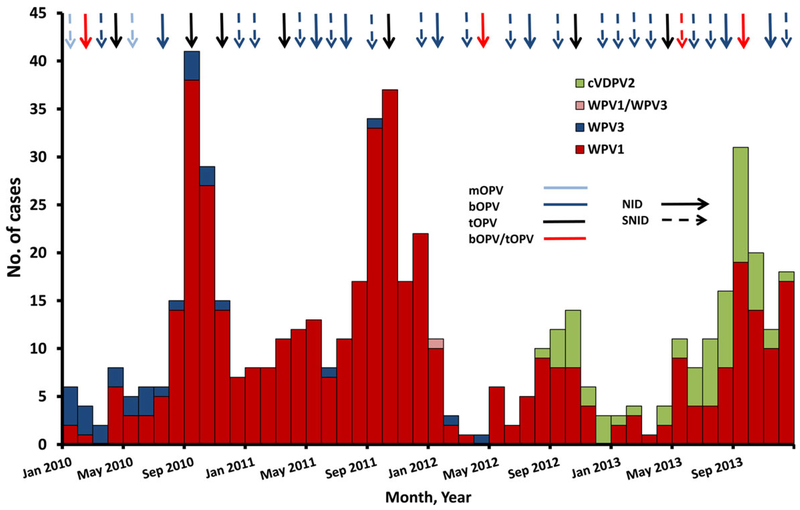
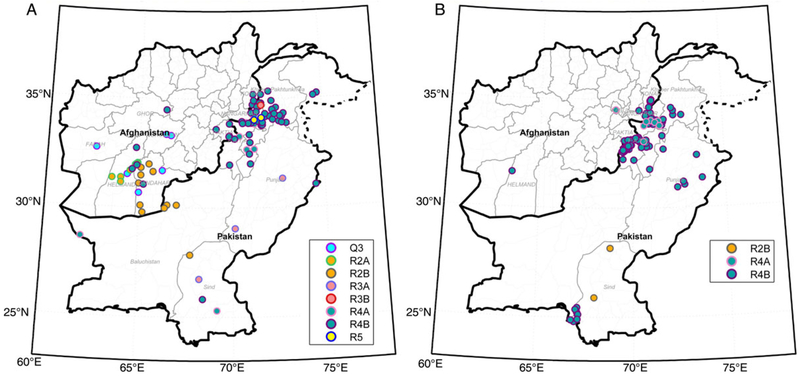
Pakistan is one of 3 countries where transmission of indigenous wild poliovirus (WPV) has never been interrupted. Numbers of confirmed polio cases have declined by >90% from preeradication levels, although outbreaks occurred during 2008-2013. During 2012 and 2013, 58 and 93 WPV cases, respectively, were reported, almost all of which were due to WPV type 1. Of the 151 WPV cases reported during 2012-2013, 123 (81%) occurred in the conflict-affected Federally Administered Tribal Areas (FATA) and in security-compromised Khyber Pakhtunkhwa province. WPV type 3 was isolated from only 3 persons with polio in a single district in 2012. During August 2012-December 2013, 62 circulating vaccine-derived poliovirus type 2 cases were detected, including 40 cases (65%) identified in the FATA during 2013. Approximately 350 000 children in certain districts of the FATA have not received polio vaccine during supplementary immunization activities (SIAs) conducted since mid-2012, because local authorities have banned polio vaccination. In other areas of Pakistan, SIAs have been compromised by attacks targeting polio workers, which started in mid-2012. Further efforts to reach children in conflict-affected and security-compromised areas will be necessary to prevent reintroduction of WPV into other areas of Pakistan and other parts of the world.
Keywords: Pakistan; disease eradication; epidemiology; polio; surveillance.
Published by Oxford University Press on behalf of the Infectious Diseases Society of America 2014. This work is written by (a) US Government employee(s) and is in the public domain in the US.
Conflict of interest statement
Notes
Potential conflicts of interest.
All authors: No reported conflicts.
All authors have submitted the ICMJE Form for Disclosure of Potential Conflicts of Interest. Conflicts that the editors consider relevant to the content of the manuscript have been disclosed.
Figures


References
-
- United Nations Department of Economic and Social Affairs. World population prospects, 2012 revision. http://esa.un.org/unpd/wpp/Excel-Data/population.htm. Accessed 19 May 2014.
-
- World Health Organization. Demographic, social and health indicators for countries of the Eastern Mediterranean. http://applications.emro.who.int/dsaf/EMROPUB_2013_EN_1537.pdf?ua=1. Accessed 19 May 2014.
-
- Centers for Disease Control and Prevention. Progress toward poliomyelitis eradication—Eastern Mediterranean Region, 1988–1994. MMWR Morb Mortal Wkly Rep 1995; 44:809–11, 817–8. - PubMed
-
- Centers for Disease Control and Prevention. Progress toward poliomyelitis eradication—Pakistan, 1994–1998. MMWR Morb Mortal Wkly Rep 1999; 48:121–6. - PubMed
Publication types
MeSH terms
Substances
Grants and funding
LinkOut - more resources
Full Text Sources
Other Literature Sources
Medical
