


Incidence and outcome of acute lung injury and acute respiratory distress syndrome in the surgical intensive care unit
- PMID: 25316976
- PMCID: PMC4195196
- DOI: 10.4103/0972-5229.142175
Incidence and outcome of acute lung injury and acute respiratory distress syndrome in the surgical intensive care unit
Abstract
Introduction: To determine the incidence and mortality of acute lung injury (ALI) and acute respiratory distress syndrome (ARDS) in a cohort of patients with risk factors admitted to the Surgical Intensive Care Unit (SICU).
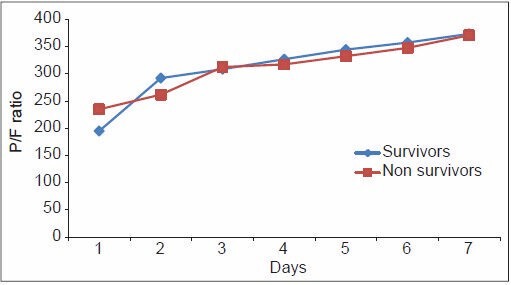
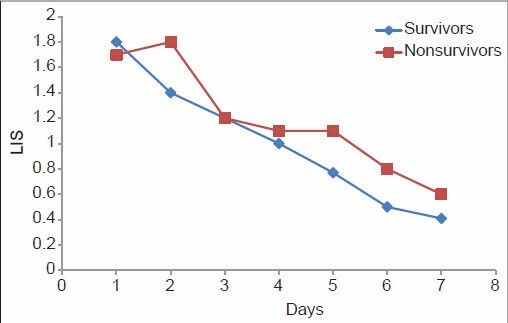
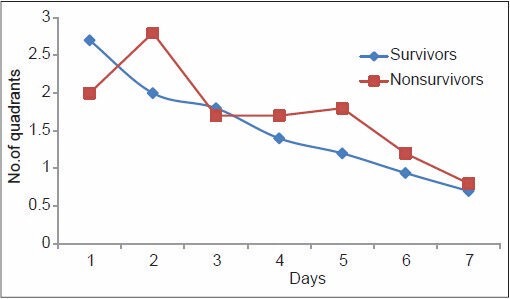
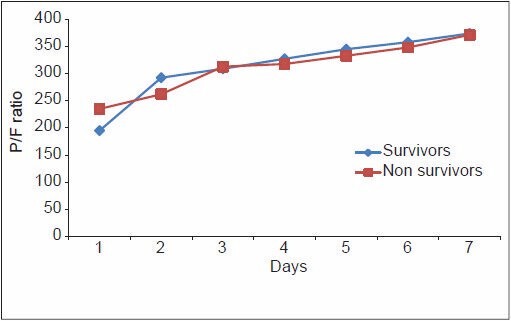
Materials and methods: A prospective observational inception cohort study with no intervention was conducted over 12 months. All patients with at least one known risk factor for ALI/ARDS admitted to the SICU were included in the study. The APACHE II severity of disease classification system scoring was performed within 1 h of admission. The ventilatory parameters and chest radiographs were recorded every 24 h. The P/F ratio, PEEP and Lung Injury Score were calculated each day until the day of discharge from the Intensive Care Unit or for the first 7 days of admission, whichever was shorter.
Results: The incidence of ARDS among those who were mechanically ventilated was 11.4%. Sepsis was the most common (34.6%) etiology. Among those with risk factors, the incidence of ARDS was 30% and that of ALI was 32.7%. The mortality in those with ARDS was 41.8%. Those who develop ARDS had higher APACHE II scores, lower pH and higher PaCO2 at admission compared with those who developed ALI or no lung injury.
Conclusion: The incidence and mortality of ARDS was similar to other studies. Identifying those with risk factors for ARDS or mortality will enable appropriate interventional measures.
Keywords: Acute lung injury; acute respiratory distress syndrome; incidence; mortality.
Conflict of interest statement
Figures
References
-
- Murray JF, Matthay MA, Luce JM, Flick MR. An expanded definition of the adult respiratory distress syndrome. Am Rev Respir Dis. 1988;138:720–3. - PubMed
-
- Bernard GR, Artigas A, Brigham KL, Carlet J, Falke K, Hudson L, et al. The American-European Consensus Conference on ARDS. Definitions, mechanisms, relevant outcomes, and clinical trial coordination. Am J Respir Crit Care Med. 1994;149:818–24. - PubMed
-
- ARDS Definition Task Force. Ranieri VM, Rubenfeld GD, Thompson BT, Ferguson ND, Caldwell E, et al. Acute respiratory distress syndrome: the Berlin Definition. JAMA. 2012;307:2526–33. - PubMed
-
- Agarwal R, Aggarwal AN, Gupta D, Behera D, Jindal SK. Etiology and Outcomes of Pulmonary and Extrapulmonary Acute Lung Injury/ARDS in a Respiratory ICU in North India. Chest. 2006;130:724–9. - PubMed
-
- Gupta D, Ramanathan RP, Aggarwal AN, Jindal SK. Assessment of factors predicting outcome of acute respiratory distress syndrome in North India. Respirology. 2001;6:125–30. - PubMed
LinkOut - more resources
Full Text Sources
Other Literature Sources