


Reproducibility of a time-lapse embryo selection model based on morphokinetic data in a sequential culture media setting
- PMID: 25317043
- PMCID: PMC4195325
- DOI: 10.5152/jtgga.2014.13068
Reproducibility of a time-lapse embryo selection model based on morphokinetic data in a sequential culture media setting
Abstract
Objective: To compare the outcomes of embryos that were given a dynamic score based on a preconstructed embryo scoring model and to analyze whether this model complies with our data.
Material and methods: A total of 910 transferred embryos with known implantation data were retrospectively analyzed in this study. All of the embryos were given a dynamic score based on the preconstructed hierarchical embryo scoring model.
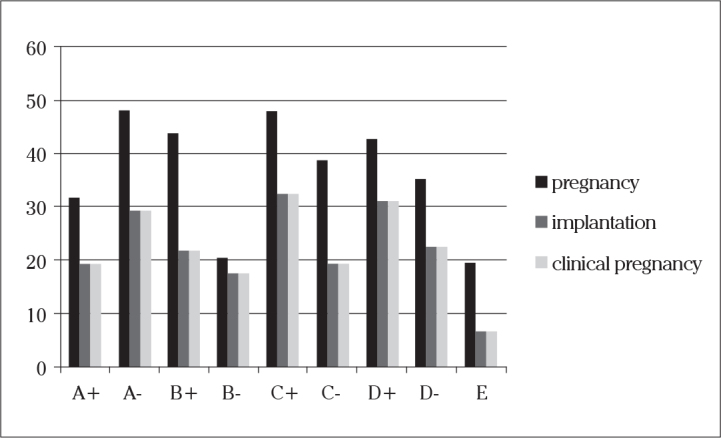
Results: The highest pregnancy rate was seen in groups C+ and A- (48.2% for each), and the lowest was observed in Group E (19.7%). When implantation and clinical pregnancy rates were compared between groups, it was found that the highest and statistically significant implantation and clinical pregnancy rates were seen in group C+ (32.7% for each, p=0.000). They were dropped down to 29.4% in Group A-.
Conclusion: The outcomes of the embryos based on the dynamic score do not comply with the results of the preconstructed model. Each IVF laboratory is unique based on its practice. Therefore, we suggest that each IVF laboratory should determine its own embryo selection criteria based on its own data instead of using a preconstructed model.
Keywords: Preconstructed model; dynamic score; pregnancy rate.
Figures
References
-
- Seli E, Sakkas D, Scott R, Kwok SC, Rosendahl SM, Burns DH. Noninvasive metabolomic profiling of embryo culture media using Raman and near-infrared spectroscopy correlates with reproductive potential of embryos in women undergoing in vitro fertilization. Fertil Steril. 2007;88:1350–7. - PubMed
-
- Sakkas D, Gardner DK. Noninvasive methods to assess embryo quality. Curr Opin Obstet Gynecol. 2005;17:283–8. - PubMed
-
- Katz-Jaffe MG, Gardner DK. Symposium: Innovative techniques in human embryo viability assessment. Can proteomics help to change the future of human assisted conception? Reprod Biomed Online. 2008;17:497–501. - PubMed
-
- Wong CC, Loewke KE, Bossert NL, Behr B, De Jonge CJ, Baer TM, Reijo Pera RA. Non-invasive imaging of human embryos before embryonic genome activation predicts development to the blastocyst stage. Nat Biotechnol. 2010;28:1115–21. - PubMed
-
- Wong C, Chen AA, Behr B, Shen S. Time-lapse microscopy and image analysis in basic and clinical embryo development research. Reprod Biomed Online. 2013;26:120–9. - PubMed
LinkOut - more resources
Full Text Sources
Other Literature Sources
