Trauma associated sleep disorder: a proposed parasomnia encompassing disruptive nocturnal behaviors, nightmares, and REM without atonia in trauma survivors
- PMID: 25317096
- PMCID: PMC4173093
- DOI: 10.5664/jcsm.4120
Trauma associated sleep disorder: a proposed parasomnia encompassing disruptive nocturnal behaviors, nightmares, and REM without atonia in trauma survivors
Abstract
Study objectives: To characterize the clinical, polysomnographic and treatment responses of patients with disruptive nocturnal behaviors (DNB) and nightmares following traumatic experiences.
Methods: A case series of four young male, active duty U.S. Army Soldiers who presented with DNB and trauma related nightmares. Patients underwent a clinical evaluation in a sleep medicine clinic, attended overnight polysomnogram (PSG) and received treatment. We report pertinent clinical and PSG findings from our patients and review prior literature on sleep disturbances in trauma survivors.
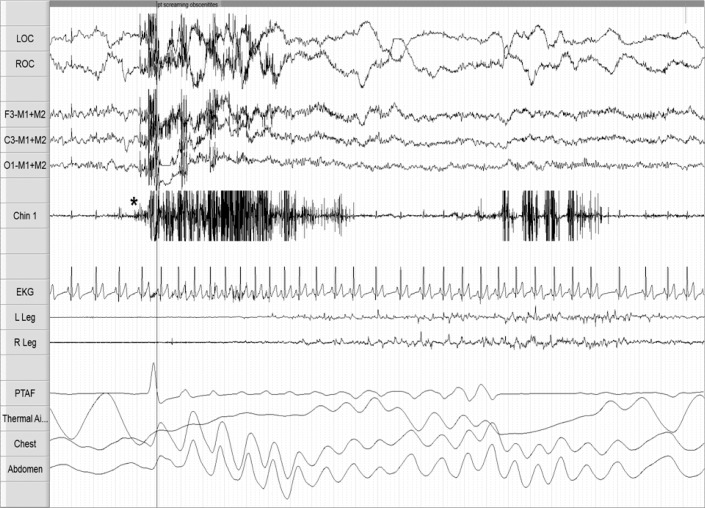
Results: DNB ranged from vocalizations, somnambulism to combative behaviors that injured bed partners. Nightmares were replays of the patient's traumatic experiences. All patients had REM without atonia during polysomnography; one patient had DNB and a nightmare captured during REM sleep. Prazosin improved DNB and nightmares in all patients.
Conclusions: We propose Trauma associated Sleep Disorder (TSD) as a unique sleep disorder encompassing the clinical features, PSG findings, and treatment responses of patients with DNB, nightmares, and REM without atonia after trauma.
Keywords: REM sleep behavior disorder; military; nightmares; posttraumatic stress disorder; veterans.
Figures
References
-
- Germain A, Hall M, Krakow B, Katherine Shear M, Buysse DJ. A brief sleep scale for Posttraumatic Stress Disorder: Pittsburgh Sleep Quality Index Addendum for PTSD. J Anxiety Disord. 2005;19:233–44. - PubMed
-
- Mellman TA, Kulick-Bell R, Ashlock LE, Nolan B. Sleep events among veterans with combat-related posttraumatic stress disorder. Am J Psychiatry. 1995;152:110–5. - PubMed
-
- van der Kolk B, Blitz R, Burr W, Sherry S, Hartmann E. Nightmares and trauma: a comparison of nightmares after combat with lifelong nightmares in veterans. Am J Psychiatry. 1984;141:187–90. - PubMed
-
- Wallace DM, Shafazand S, Ramos AR, et al. Insomnia characteristics and clinical correlates in Operation Enduring Freedom/Operation Iraqi Freedom veterans with post-traumatic stress disorder and mild traumatic brain injury: an exploratory study. Sleep Med. 2011;12:850–9. - PubMed
-
- Ross RJ, Ball WA, Sullivan KA, Caroff SN. Sleep disturbance as the hallmark of posttraumatic stress disorder. Am J Psychiatry. 1989;146:697–707. - PubMed
Publication types
MeSH terms
Substances
LinkOut - more resources
Full Text Sources
Other Literature Sources
Medical