


Peripheral nerve lengthening as a regenerative strategy
- PMID: 25317163
- PMCID: PMC4192963
- DOI: 10.4103/1673-5374.139471
Peripheral nerve lengthening as a regenerative strategy
Abstract
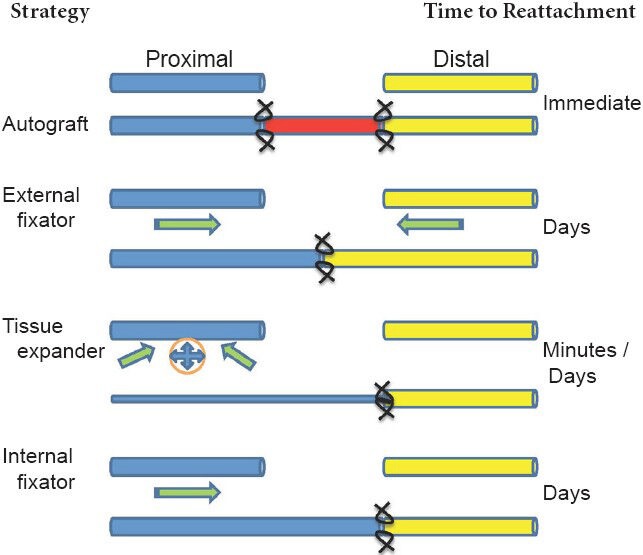
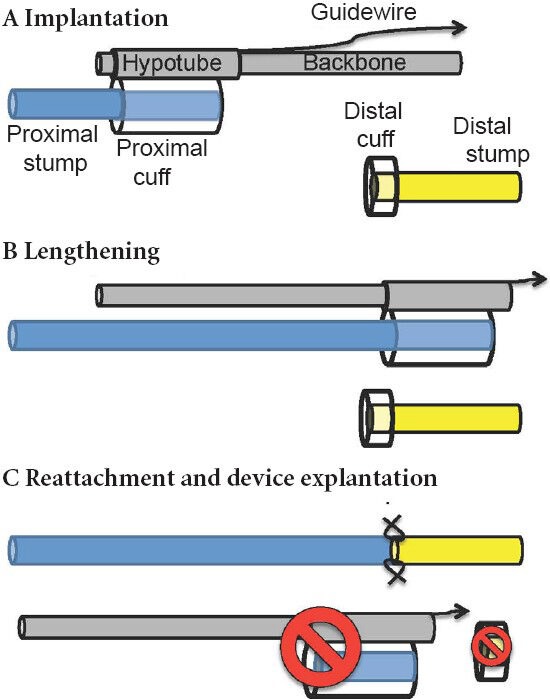
Peripheral nerve injury impairs motor, sensory, and autonomic function, incurring substantial financial costs and diminished quality of life. For large nerve gaps, proximal lesions, or chronic nerve injury, the prognosis for recovery is particularly poor, even with autografts, the current gold standard for treating small to moderate nerve gaps. In vivo elongation of intact proximal stumps towards the injured distal stumps of severed peripheral nerves may offer a promising new strategy to treat nerve injury. This review describes several nerve lengthening strategies, including a novel internal fixator device that enables rapid and distal reconnection of proximal and distal nerve stumps.
Keywords: biomedical device; mechanical loading; nerve injury; nerve regeneration; nerve transfer; peripheral nerve.
Figures
References
-
- Arnaoutoglou CM, Sakellariou A, Vekris M, Mitsionis GI, Korompilias A, Ioakim E, Harhantis A, Beris A. Maximum intraoperative elongation of the rat sciatic nerve with tissue expander: functional, neurophysiological, and histological assessment. Microsurgery. 2006;26:253–261. - PubMed
-
- Asplund M, Nilsson M, Jacobsson A, von Holst H. Incidence of traumatic peripheral nerve injuries and amputations in Sweden between 1998 and 2006. Neuroepidemiology. 2009;32:217–228. - PubMed
-
- Bray D. Axonal growth in response to experimentally applied mechanical tension. Dev Biol. 1984;102:379–389. - PubMed
-
- Brown JM, Mackinnon SE. Nerve transfers in the forearm and hand. Hand Clin. 2008;24:319–340. - PubMed
Publication types
LinkOut - more resources
Full Text Sources
Other Literature Sources