


Obtaining informed consent for clinical tumor and germline exome sequencing of newly diagnosed childhood cancer patients
- PMID: 25317207
- PMCID: PMC4195891
- DOI: 10.1186/s13073-014-0069-3
Obtaining informed consent for clinical tumor and germline exome sequencing of newly diagnosed childhood cancer patients
Abstract
Background: Effectively educating families about the risks and benefits of genomic tests such as whole exome sequencing (WES) offers numerous challenges, including the complexity of test results and potential loss of privacy. Research on best practices for obtaining informed consent (IC) in a variety of clinical settings is needed. The BASIC3 study of clinical tumor and germline WES in an ethnically diverse cohort of newly diagnosed pediatric cancer patients offers the opportunity to study the IC process in the setting of critical illness. We report on our experience for the first 100 families enrolled, including study participation rates, reasons for declining enrollment, assessment of clinical and demographic factors that might impact study enrollment, and preferences of parents for participation in optional genomics study procedures.
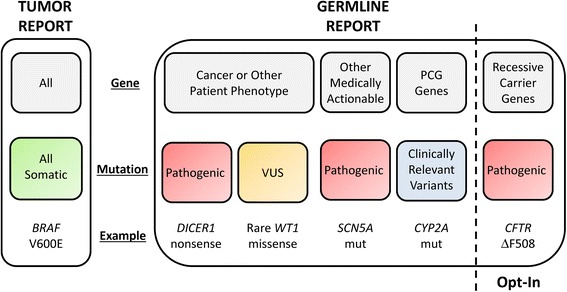
Methods: A specifically trained IC team offered study enrollment to parents of eligible children for procedures including clinical tumor and germline WES with results deposited in the medical record and disclosure of both diagnostic and incidental results to the family. Optional study procedures were also offered, such as receiving recessive carrier status and deposition of data into research databases. Stated reasons for declining participation were recorded. Clinical and demographic data were collected and comparisons made between enrolled and non-enrolled patients.
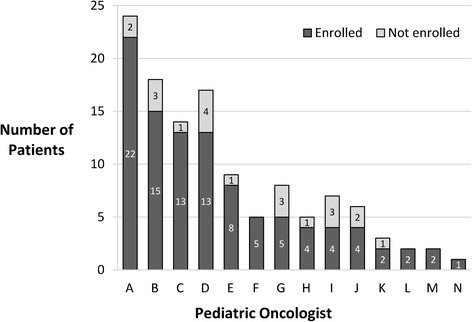
Results: Over 15 months, 100 of 121 (83%) eligible families elected to enroll in the study. No significant differences in enrollment were detected based on factors such as race, ethnicity, use of Spanish interpreters and Spanish consent forms, and tumor features (central nervous system versus non-central nervous system, availability of tumor for WES). The most common reason provided for declining enrollment (10% of families) was being overwhelmed by the new cancer diagnosis. Risks specific to clinical genomics, such as privacy concerns, were less commonly reported (5.5%). More than 85% of parents consented to each of the optional study procedures.
Conclusions: An IC process was developed that utilizes a specialized IC team, active communication with the oncology team, and an emphasis on scheduling flexibility. Most parents were willing to participate in a clinical germline and tumor WES study as well as optional procedures such as genomic data sharing independent of race, ethnicity or language spoken.
Figures



References
Grants and funding
LinkOut - more resources
Full Text Sources
Other Literature Sources
Molecular Biology Databases
