


Regulation of TGF-β Superfamily Signaling by SMAD Mono-Ubiquitination
- PMID: 25317929
- PMCID: PMC4276910
- DOI: 10.3390/cells3040981
Regulation of TGF-β Superfamily Signaling by SMAD Mono-Ubiquitination
Abstract
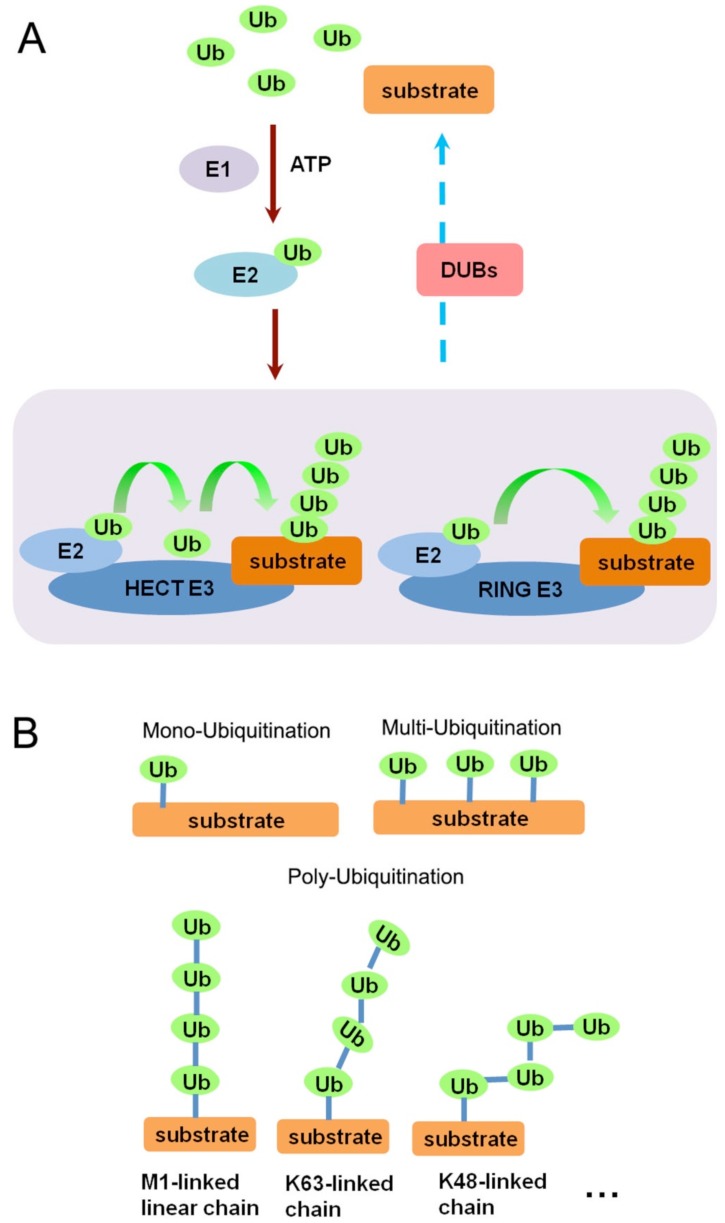
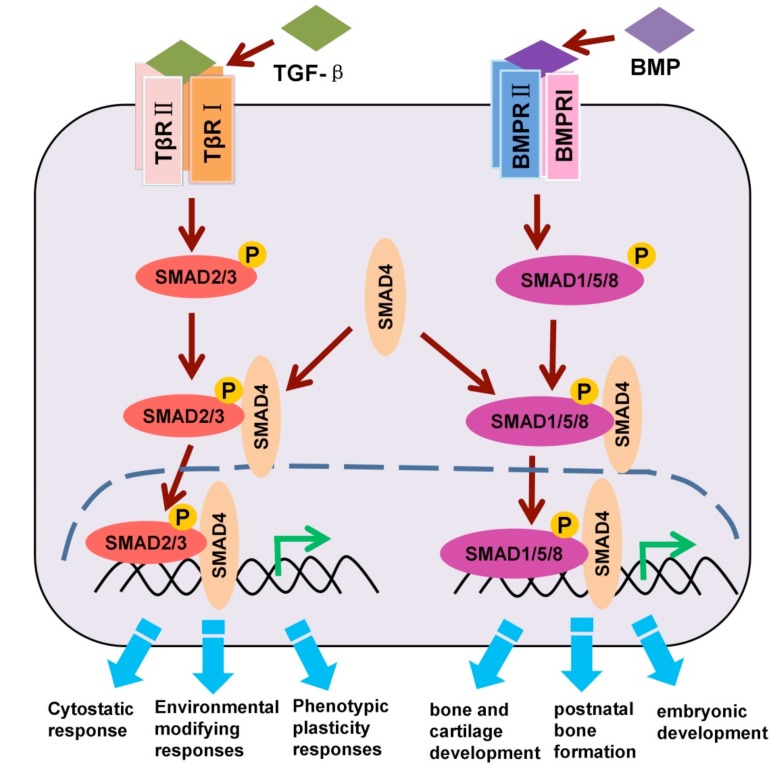
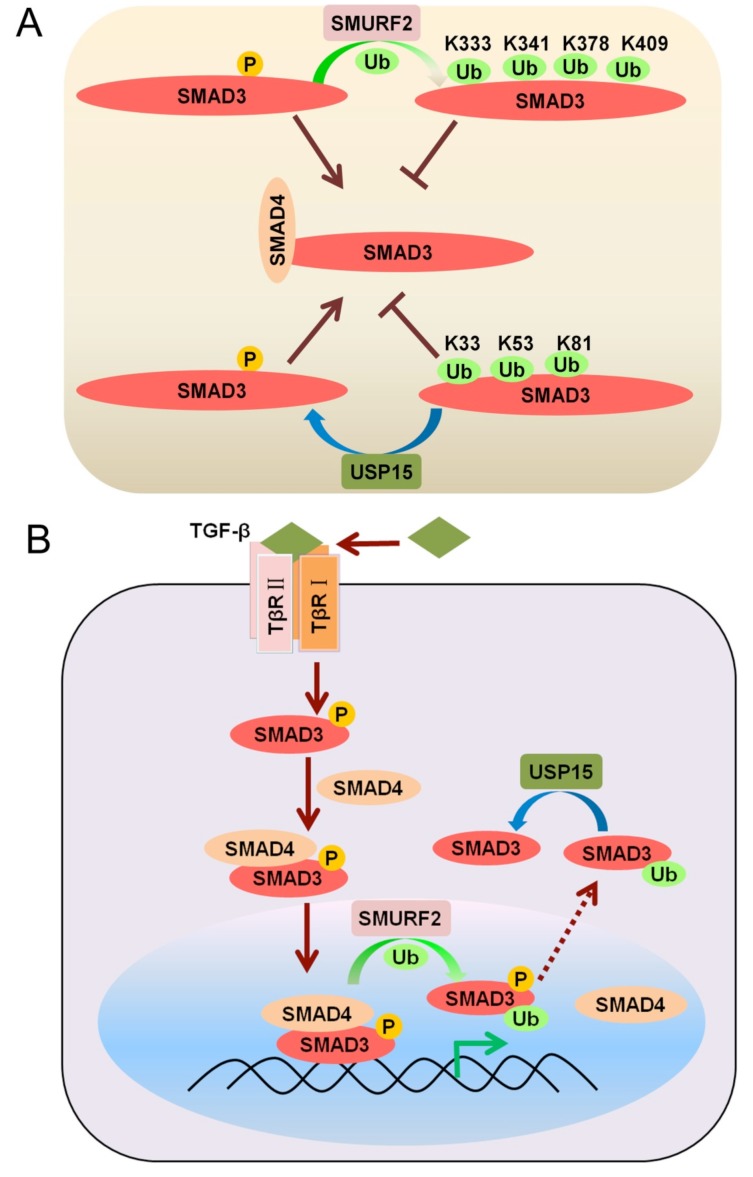
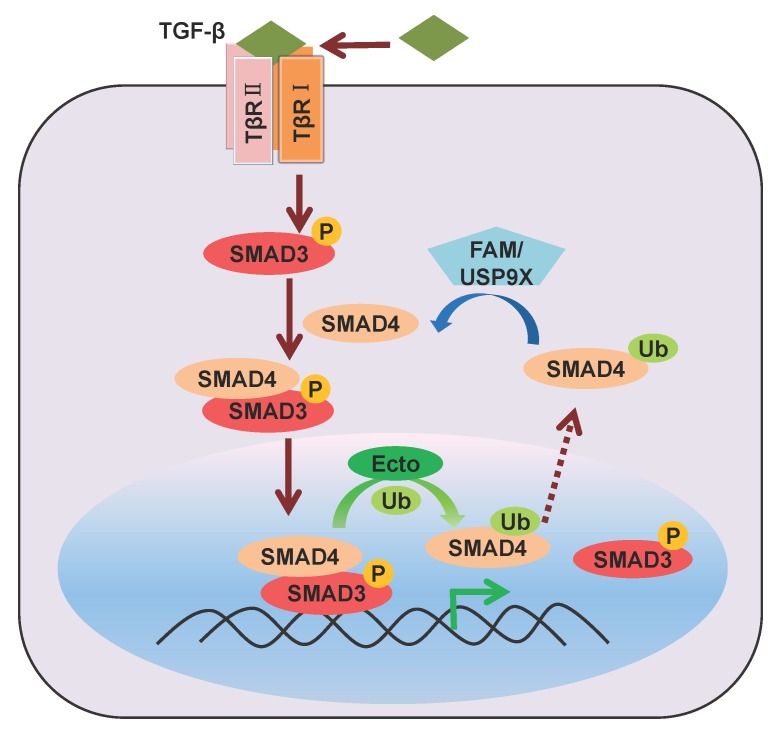
TGF-β(transforming growth factor-β) superfamily signaling mediators are important regulators of diverse physiological and pathological events. TGF-β signals are transduced by transmembrane type I and type II serine/threonine kinase receptors and their downstream effectors, the SMAD(drosophila mothers against decapentaplegic protein) proteins. Numerous studies have already demonstrated crucial regulatory roles for modification of TGF-β pathway components by poly-ubiquitination. Recently, several studies also uncovered mono-ubiquitination of SMADs as a mechanism for SMAD activation or inactivation. Mono-ubiquitination and subsequent deubiquitination of SMAD proteins accordingly play important roles in the control of TGF-β superfamily signaling. This review highlights the major pathways regulated by SMAD mono-ubiquitination.
Figures
References
-
- Moustakas A., Heldin C.H. The regulation of TGFbeta signal transduction. Development. 2009;136:3699–3714. - PubMed
Publication types
LinkOut - more resources
Full Text Sources
Other Literature Sources
