


Comparative study of outcome measures and analysis methods for traumatic brain injury trials
- PMID: 25317951
- PMCID: PMC4394163
- DOI: 10.1089/neu.2014.3495
Comparative study of outcome measures and analysis methods for traumatic brain injury trials
Abstract
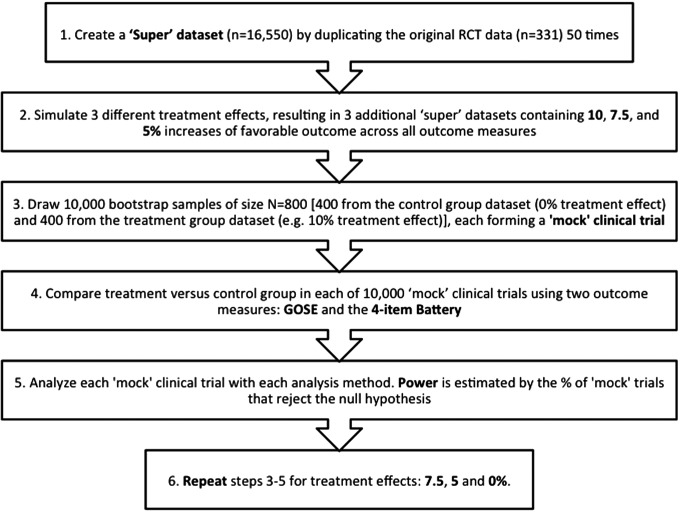
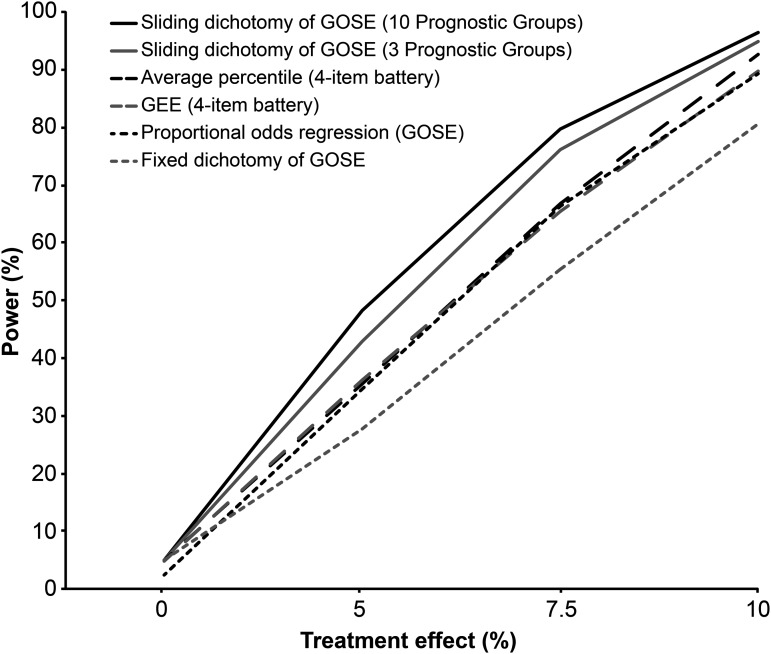
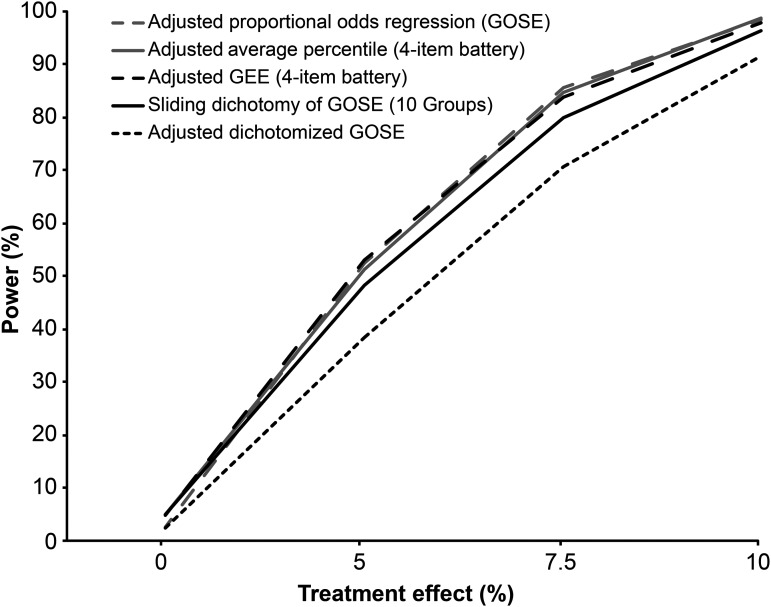
Batteries of functional and cognitive measures have been proposed as alternatives to the Extended Glasgow Outcome Scale (GOSE) as the primary outcome for traumatic brain injury (TBI) trials. We evaluated several approaches to analyzing GOSE and a battery of four functional and cognitive measures. Using data from a randomized trial, we created a "super" dataset of 16,550 subjects from patients with complete data (n=331) and then simulated multiple treatment effects across multiple outcome measures. Patients were sampled with replacement (bootstrapping) to generate 10,000 samples for each treatment effect (n=400 patients/group). The percentage of samples where the null hypothesis was rejected estimates the power. All analytic techniques had appropriate rates of type I error (≤5%). Accounting for baseline prognosis either by using sliding dichotomy for GOSE or using regression-based methods substantially increased the power over the corresponding analysis without accounting for prognosis. Analyzing GOSE using multivariate proportional odds regression or analyzing the four-outcome battery with regression-based adjustments had the highest power, assuming equal treatment effect across all components. Analyzing GOSE using a fixed dichotomy provided the lowest power for both unadjusted and regression-adjusted analyses. We assumed an equal treatment effect for all measures. This may not be true in an actual clinical trial. Accounting for baseline prognosis is critical to attaining high power in Phase III TBI trials. The choice of primary outcome for future trials should be guided by power, the domain of brain function that an intervention is likely to impact, and the feasibility of collecting outcome data.
Keywords: Glasgow Outcome Scale; outcome measures; research design; statistical data analysis; traumatic brain injury.
Figures
References
-
- Maas A.I., Stocchetti N., and Bullock R. (2008). Moderate and severe traumatic brain injury in adults. Lancet neurology 7, 728–741 - PubMed
-
- Faul M., Wald M.M., Xu L., and Coronado V.G. (2010). Traumatic brain injury in the United States: emergency department visits, hospitalizations, and deaths, 2002–2006. Atlanta (GA): Centers for Disease Control and Prevention, National Center for Injury Prevention and Control
-
- Langlois J.A., Rutland-Brown W., and Wald M.M. (2006). The epidemiology and impact of traumatic brain injury: a brief overview. J. Head Trauma Rehabil. 21, 375–378 - PubMed
-
- Finkelstein EA, C.P., and Miller TR. (2006). The Incidence and Economic Burden of Injuries in the United States. Oxford University Press: New York
Publication types
MeSH terms
Grants and funding
LinkOut - more resources
Full Text Sources
Other Literature Sources
