


PCSK9 is a critical regulator of the innate immune response and septic shock outcome
- PMID: 25320235
- PMCID: PMC4342147
- DOI: 10.1126/scitranslmed.3008782
PCSK9 is a critical regulator of the innate immune response and septic shock outcome
Abstract
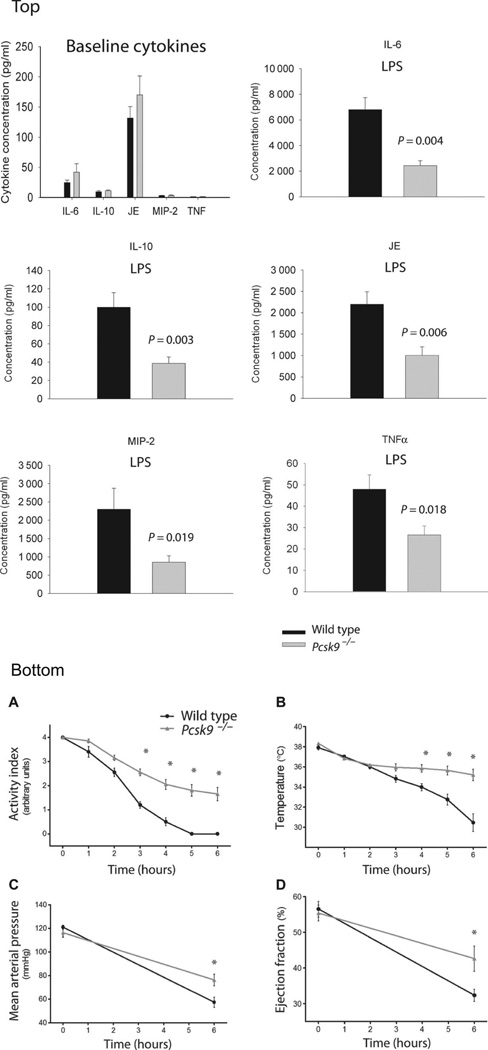
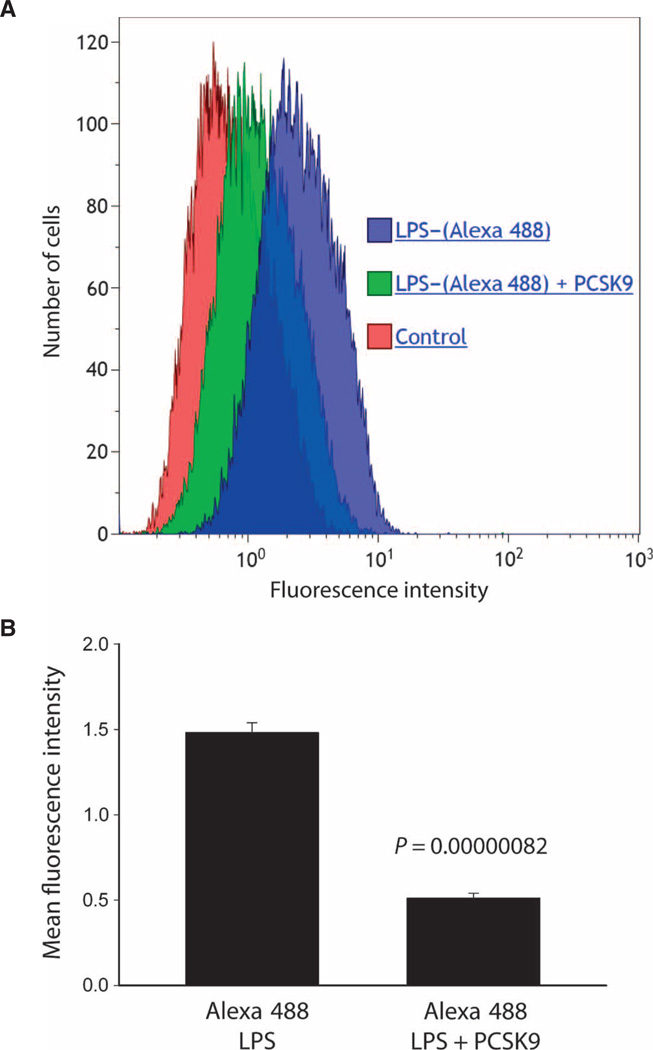
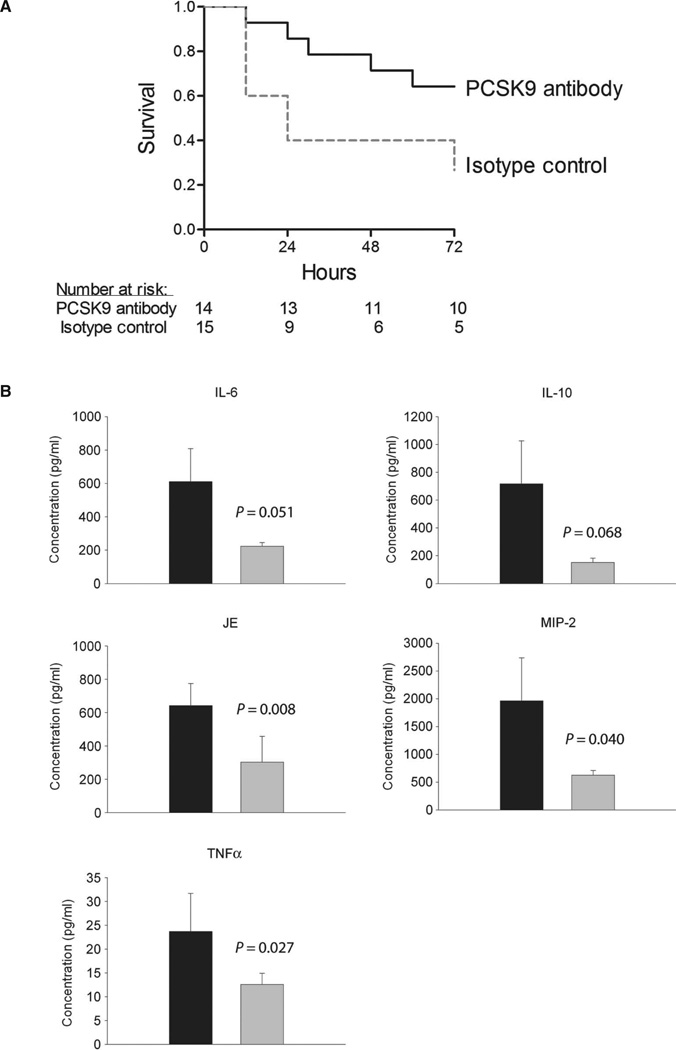
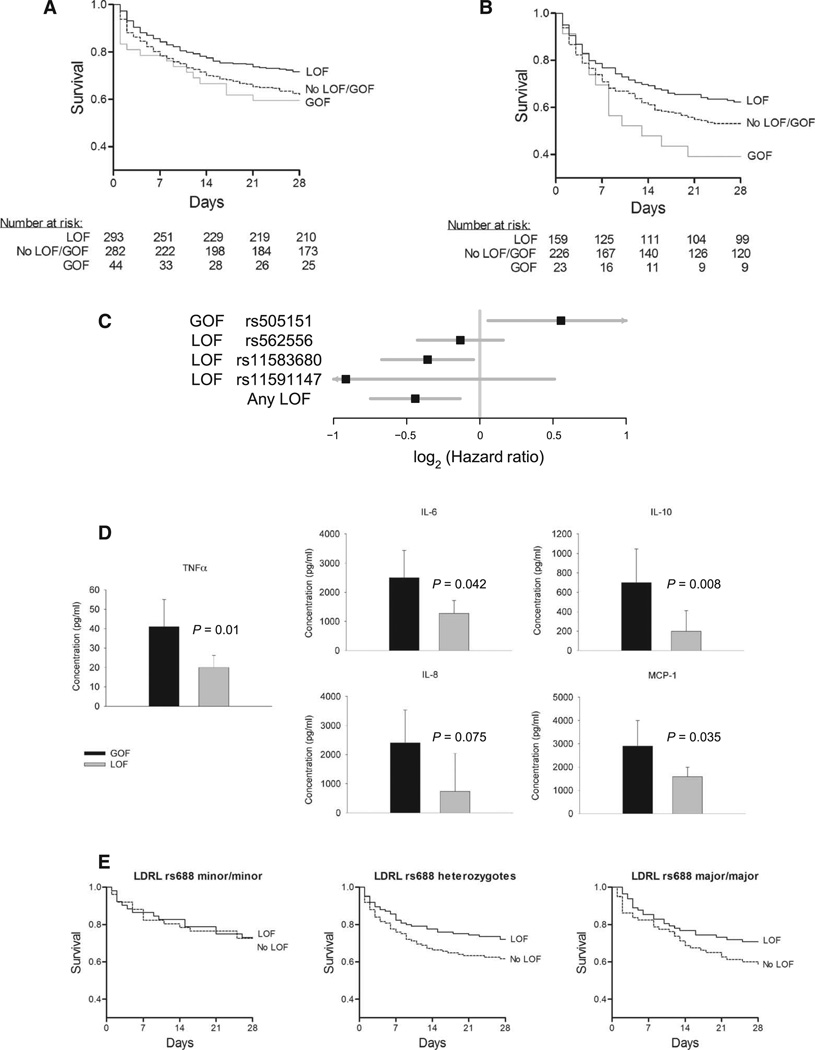
A decrease in the activity of proprotein convertase subtilisin/kexin type 9 (PCSK9) increases the amount of low-density lipoprotein (LDL) receptors on liver cells and, therefore, LDL clearance. The clearance of lipids from pathogens is related to endogenous lipid clearance; thus, PCSK9 may also regulate removal of pathogen lipids such as lipopolysaccharide (LPS). Compared to controls, Pcsk9 knockout mice displayed decreases in inflammatory cytokine production and in other physiological responses to LPS. In human liver cells, PCSK9 inhibited LPS uptake, a necessary step in systemic clearance and detoxification. Pharmacological inhibition of PCSK9 improved survival and inflammation in murine polymicrobial peritonitis. Human PCSK9 loss-of-function genetic variants were associated with improved survival in septic shock patients and a decrease in inflammatory cytokine response both in septic shock patients and in healthy volunteers after LPS administration. The PCSK9 effect was abrogated in LDL receptor (LDLR) knockout mice and in humans who are homozygous for an LDLR variant that is resistant to PCSK9. Together, our results show that reduced PCSK9 function is associated with increased pathogen lipid clearance via the LDLR, a decreased inflammatory response, and improved septic shock outcome.
Copyright © 2014, American Association for the Advancement of Science.
Figures
Comment in
-
Bridging lipid metabolism and innate host defense.Sci Transl Med. 2014 Oct 15;6(258):258fs41. doi: 10.1126/scitranslmed.3010501. Sci Transl Med. 2014. PMID: 25320231
-
Sepsis: PCSK9 blockade helps clear pathogenic lipids.Nat Rev Drug Discov. 2014 Dec;13(12):886. doi: 10.1038/nrd4492. Nat Rev Drug Discov. 2014. PMID: 25435211 No abstract available.
References
-
- Trinel PA, Plancke Y, Gerold P, Jouault T, Delplace F, Schwarz RT, Strecker G, Poulain D. The Candida albicans phospholipomannan is a family of glycolipids present in phosphoinositolmannosides with long linear chains of b-1,2-linked mannose residues. J. Biol. Chem. 1999;274:30520–30526. - PubMed
-
- Gautier T, Lagrost L. Plasma PLTP (phospholipid-transfer protein): An emerging role in ‘reverse lipopolysaccharide transport’ and innate immunity. Biochem. Soc. Trans. 2011;39:984–988. - PubMed
Publication types
MeSH terms
Substances
Grants and funding
LinkOut - more resources
Full Text Sources
Other Literature Sources
Medical
Molecular Biology Databases
Miscellaneous
