. 2015 Jan;89(1):71-82.
doi: 10.1128/JVI.02252-14. Epub 2014 Oct 15.

Venezuelan equine encephalitis virus variants lacking transcription inhibitory functions demonstrate highly attenuated phenotype

Affiliations

Venezuelan equine encephalitis virus variants lacking transcription inhibitory functions demonstrate highly attenuated phenotype

Svetlana Atasheva et al. J Virol. 2015 Jan.

Abstract

Alphaviruses represent a significant public health threat worldwide. They are transmitted by mosquitoes and cause a variety of human diseases ranging from severe meningoencephalitis to polyarthritis. To date, no efficient and safe vaccines have been developed against any alphavirus infection. However, in recent years, significant progress has been made in understanding the mechanism of alphavirus replication and virus-host interactions. These data have provided the possibility for the development of new rationally designed alphavirus vaccine candidates that combine efficient immunogenicity, high safety, and inability to revert to pathogenic phenotype. New attenuated variants of Venezuelan equine encephalitis virus (VEEV) designed in this study combine a variety of characteristics that independently contribute to a reduction in virulence. These constructs encode a noncytopathic VEEV capsid protein that is incapable of interfering with the innate immune response. The capsid-specific mutations strongly affect neurovirulence of the virus. In other constructs, they were combined with changes in control of capsid translation and an extensively mutated packaging signal. These modifications also affected the residual neurovirulence of the virus, but it remained immunogenic, and a single immunization protected mice against subsequent infection with epizootic VEEV. Similar approaches of attenuation can be applied to other encephalitogenic New World alphaviruses.

Importance: Venezuelan equine encephalitis virus (VEEV) is an important human and animal pathogen, which causes periodic outbreaks of highly debilitating disease. Despite a continuous public health threat, no safe and efficient vaccine candidates have been developed to date. In this study, we applied accumulated knowledge about the mechanism of VEEV replication, RNA packaging, and interaction with the host to design new VEEV vaccine candidates that demonstrate exceptionally high levels of safety due to a combination of extensive modifications in the viral genome. The introduced mutations did not affect RNA replication or structural protein synthesis but had deleterious effects on VEEV neuroinvasion and virulence. In spite of dramatically reduced virulence, the designed mutants remained highly immunogenic and protected mice against subsequent infection with epizootic VEEV. Similar methodologies can be applied for attenuation of other encephalitogenic New World alphaviruses.


Figures

FIG 1
FIG 1
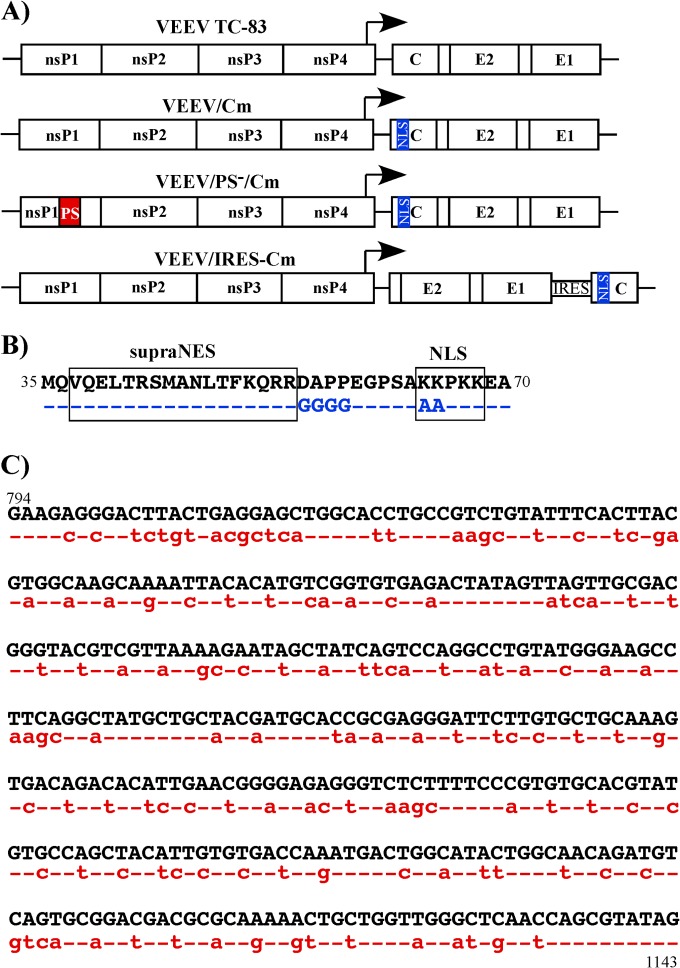
Schematic representation of recombinant VEEV genomes used in the present study (A) and mutations introduced into the NLS and supraNES-NLS-connecting peptide (B) and into the PS of VEEV. Capsid-specific mutations are indicated in blue, and PS-specific mutations are indicated in red. Dashed lines indicate identical nucleotides and amino acids.
FIG 2
FIG 2
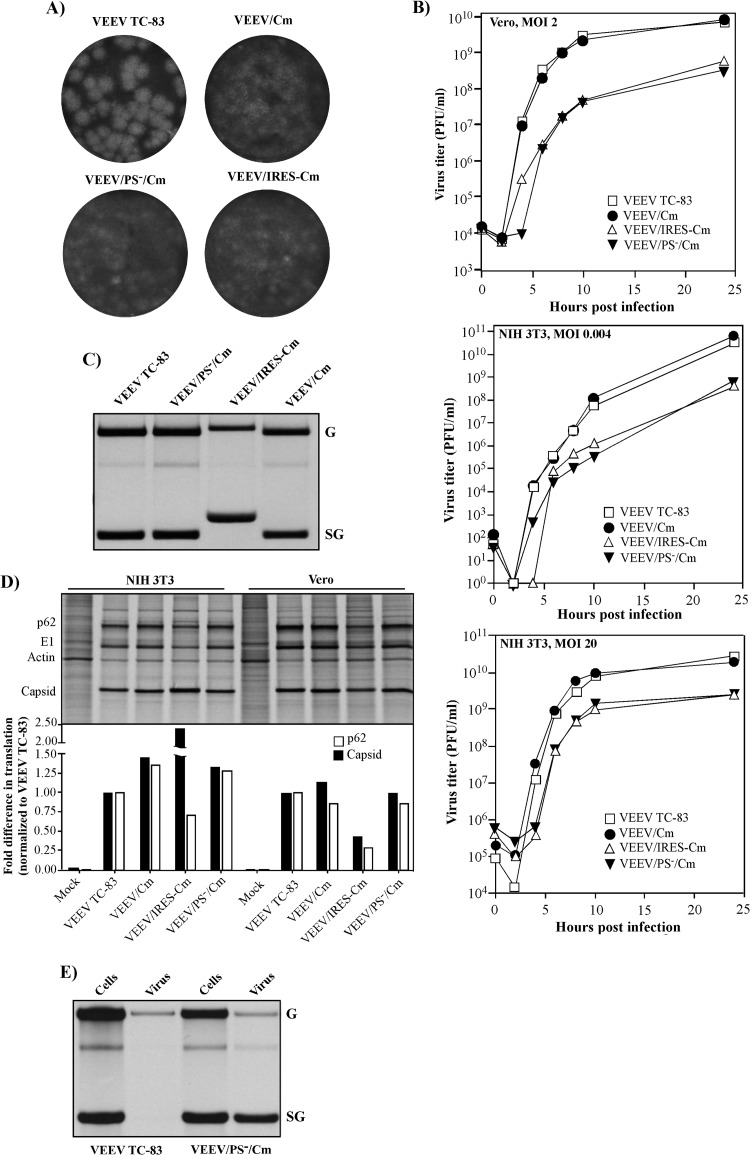
Introduced mutations differentially affect in vitro replication characteristics of VEEV TC-83. (A) Capsid-specific mutations made recombinant viruses incapable of forming plaques in Vero cells. The indicated variants were titrated on Vero cells as described in Materials and Methods, and cell monolayers were stained with Crystal violet at 2 days postinfection. (B) Vero and NIH 3T3 cells were infected at the indicated MOIs, and media were replaced at the indicated time points. Virus titers were determined by plaque assay on BHK-21 cells. (C) 5 × 10⁵ Vero cells in six-well Costar plates were infected at an MOI of 20 PFU/cell with the indicated viruses. RNAs were metabolically labeled with [3H]uridine in the presence of ActD between 3 and 7 h postinfection and analyzed by agarose gel electrophoresis in denaturing conditions (see Materials and Methods for details). (D) 5 × 10⁵ NIH 3T3 and Vero cells in six-well Costar plates were infected with the indicated viruses at an MOI of 20 PFU/cell. At 7 h postinfection, they were metabolically labeled with [35S]methionine for 30 min, and cell lysates were analyzed by SDS-PAGE. Quantitative analysis of radioactivity in capsid and p62 glycoprotein bands was performed on a Storm phosphorimager. The data were normalized to radioactivity detected in VEEV TC-83-specific bands. (E) 5 × 10⁵ BHK-21 cells in six-well Costar plates were infected at an MOI of 20 PFU/cell with the indicated viruses. RNAs were metabolically labeled with [3H]uridine in the presence of ActD between 14 and 20 h postinfection. The released viral particles were pelleted from the media by ultracentrifugation through 25% sucrose (see Materials and Methods for details), and RNAs were isolated from the virus pellet and cells and analyzed by agarose gel electrophoresis in denaturing conditions (see Materials and Methods for details).
FIG 3
FIG 3
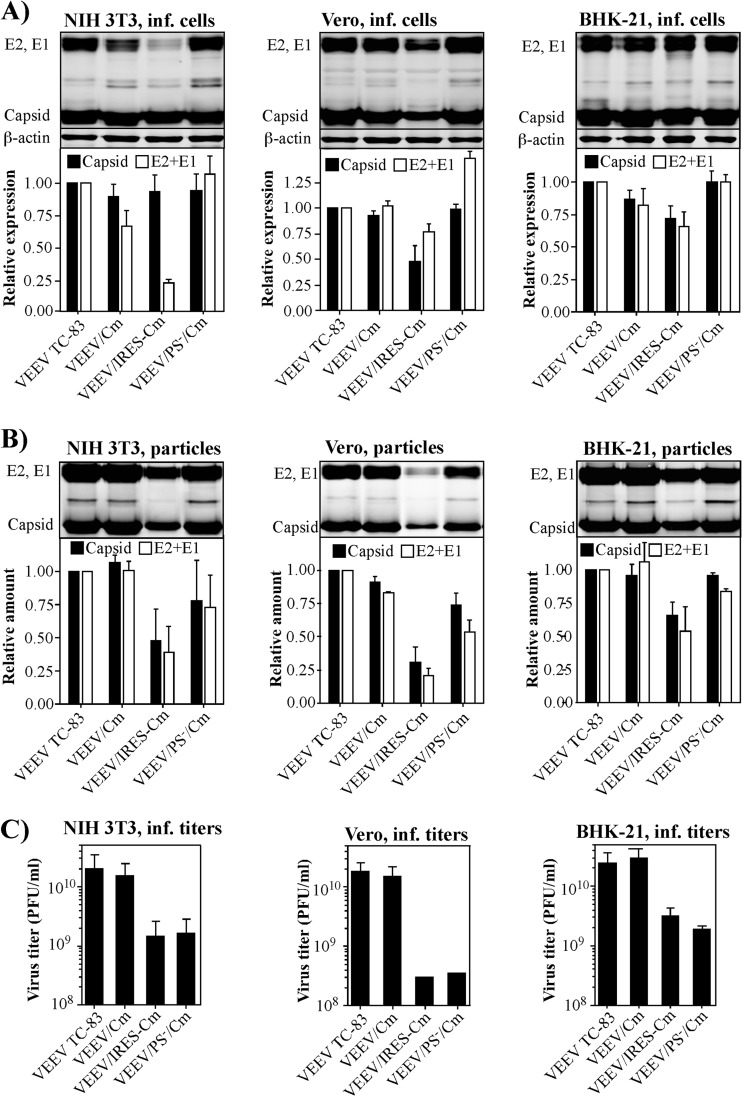
PS-specific mutations and IRES-mediated capsid expression differentially affect infectious titers and structural protein expression. Totals of 5 × 10⁵ NIH 3T3, Vero, and BHK-21 cells in six-well Costar plates were infected with the indicated viruses at an MOI of 20 PFU/cell. At 22 h postinfection, both cells and media were harvested. (A) Accumulation of VEEV structural proteins in the cells was evaluated by Western blotting with VEEV-specific Abs. Quantitative data were generated on a LI-COR imager. (B) Viral particles were pelleted from 0.8 ml of medium by ultracentrifugation (see Materials and Methods for details) and analyzed by Western blotting with VEEV-specific Abs. Quantitative data were generated on a LI-COR imager. Signals in the capsid and glycoprotein bands were determined in three independent experiments. The means and standard deviations were calculated. (C) Titers of the viruses in the same harvested media were determined by plaque assay on BHK-21 cells.
FIG 4
FIG 4
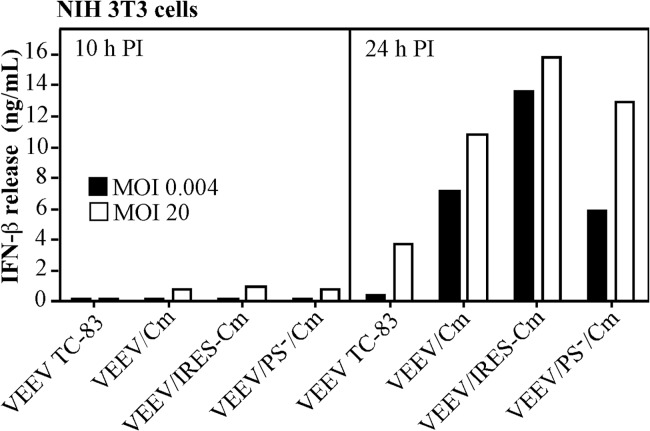
Recombinant viruses are more potent inducers of IFN-β than VEEV TC-83. A total of 5 × 10⁵ NIH 3T3 cells in six-well costar plates were infected with the indicated viruses at MOIs of 20 and 0.004 PFU/cell. Media were harvested at the indicated time points, and the concentrations of IFN-β were measured by ELISA as described in Materials and Methods.
FIG 5
FIG 5
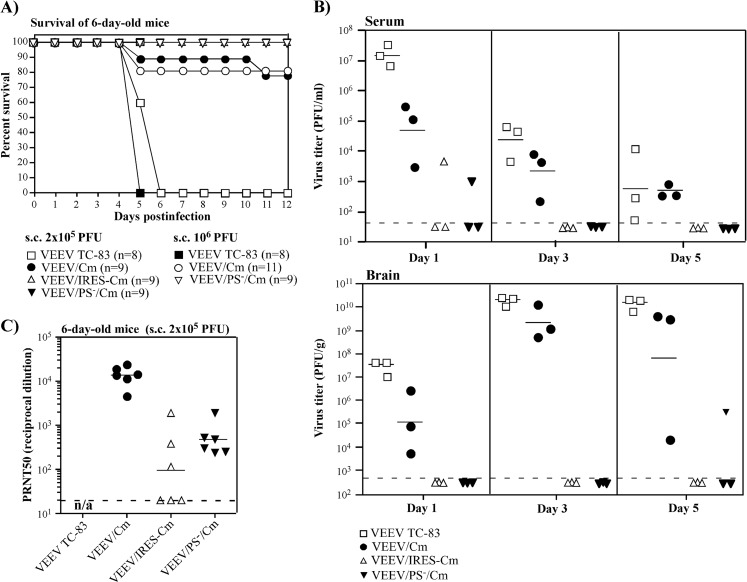
Extensive mutations in VEEV capsid protein and PS, and changes in the mode of capsid protein expression, have strong negative effects on residual virulence of VEEV TC-83. Six-day-old NIH Swiss mice were infected via the s.c. route by indicated viruses and monitored for 21 days for death or signs of the disease (A). No deaths were detected after day 12 postinfection. (B) Randomly selected mice were euthanized at days 1, 3, and 5 postinfection, and virus titers in the serum and brains were evaluated. (C) At day 21 postinfection, the titers of neutralizing Abs were evaluated as described in Materials and Methods. n/a, not applicable. Dashed lines indicate the limits of detection.
FIG 6
FIG 6
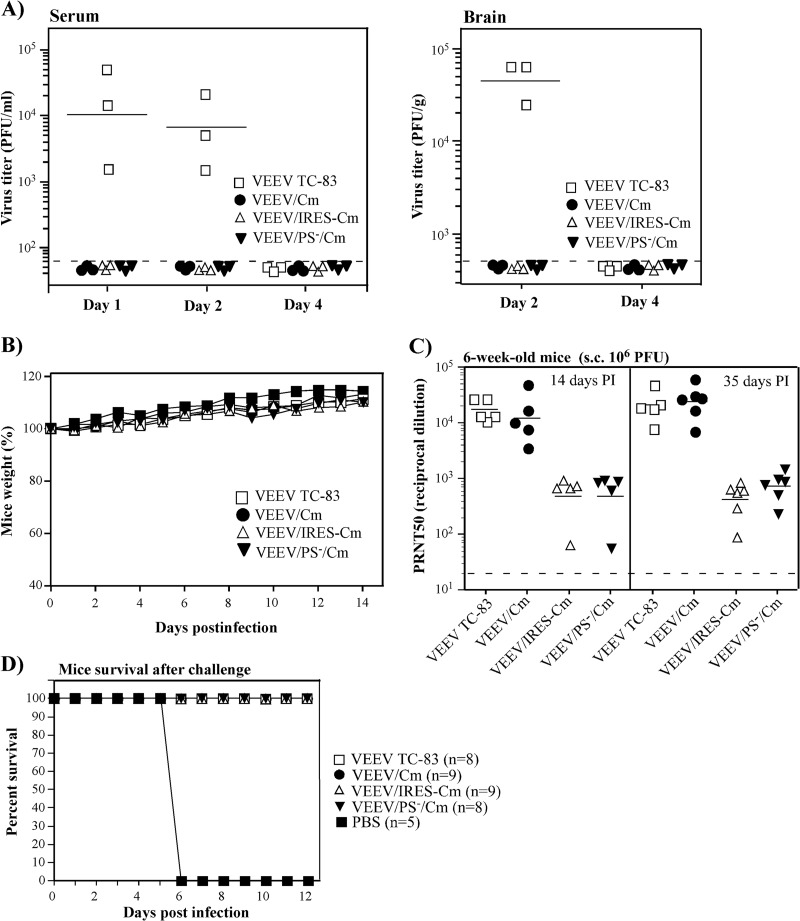
The designed mutants are more attenuated than VEEV TC-83 but remain immunogenic in 6-week-old NIH Swiss mice. Six-week-old NIH Swiss mice were infected via s.c. route with 106 PFU of the indicated viruses. (A) At days 1, 2, and 4 postinfection, randomly selected mice were euthanized, and virus titers in the brain and viremia levels were evaluated. (B) Mice were monitored daily in terms of weight change. (C) The titers of neutralizing, anti-VEEV TC-83 Abs were evaluated at days 14 and 35 postinfection (see Materials and Methods for details). At day 45 postinfection, mice were s.c. infected with 104 PFU of epizootic VEEV strain 3908. The mice were monitored for 21 days for signs of the disease and death. No death was detected after day 6 postinfection. Dashed lines indicate the limits of detection in these experiments.

References

    1. Strauss JH, Strauss EG. 1994. The alphaviruses: gene expression, replication, evolution. Microbiol Rev 58:491–562. - PMC - PubMed
    1. Weaver SC, Barrett AD. 2004. Transmission cycles, host range, evolution and emergence of arboviral disease. Nat Rev Microbiol 2:789–801. doi:10.1038/nrmicro1006. - DOI - PMC - PubMed
    1. Griffin DE. 2001. Alphaviruses, p 917–962. In Knipe DM, Howley PM (ed), Fields virology, 4th ed. Lippincott/Williams & Wilkins Co, New York, NY.
    1. Weaver SC, Frolov I. 2005. Togaviruses, p 1010–1024. In Mahy BWJ, Meulen VT (ed), Virology, vol 2 ASM Press, Salisbury, United Kingdom.
    1. Bronze MS, Huycke MM, Machado LJ, Voskuhl GW, Greenfield RA. 2002. Viral agents as biological weapons and agents of bioterrorism. Am J Med Sci 323:316–325. doi:10.1097/00000441-200206000-00004. - DOI - PubMed

Publication types

MeSH terms