


Purification and Characterization of a Fibrinolytic Enzyme from Bacillus pumilus 2.g Isolated from Gembus, an Indonesian Fermented Food
- PMID: 25320719
- PMCID: PMC4195627
- DOI: 10.3746/pnf.2014.19.3.213
Purification and Characterization of a Fibrinolytic Enzyme from Bacillus pumilus 2.g Isolated from Gembus, an Indonesian Fermented Food
Abstract
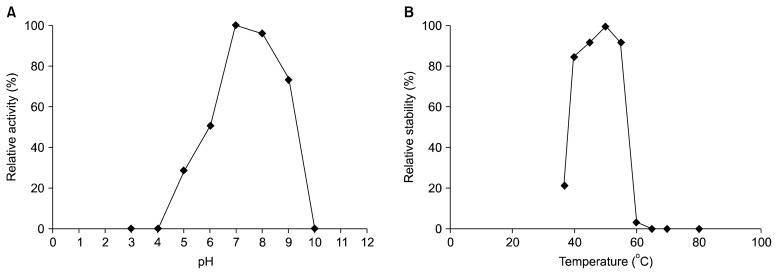
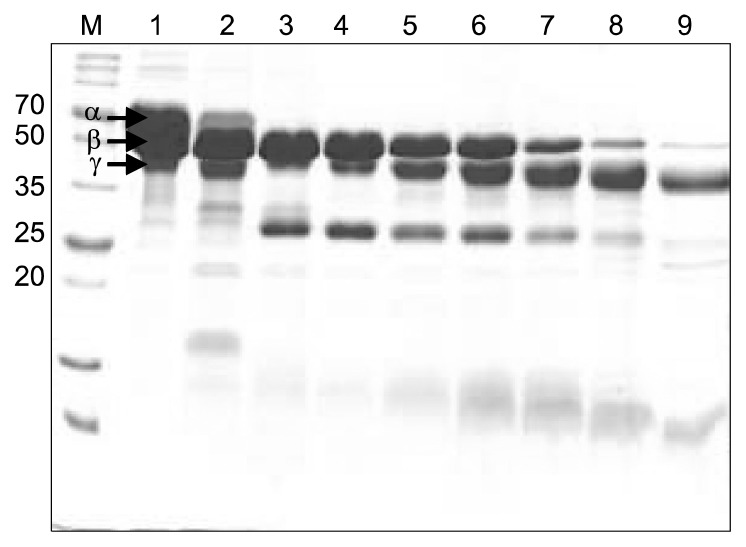
Bacillus pumilus 2.g isolated from gembus, an Indonesian fermented soybean cake, secretes several proteases that have strong fibrinolytic activities. A fibrinolytic enzyme with an apparent molecular weight of 20 kDa was purified from the culture supernatant of B. pumilus 2.g by sequential application of ammonium sulfate precipitation, ion-exchange chromatography, and hydrophobic chromatography. The partially purified enzyme was stable between pH 5 and pH 9 and temperature of less than 60°C. Fibrinolytic activity was increased by 5 mM MgCl2 and 5 mM CaCl2 but inhibited by 1 mM phenylmethylsulfonyl fluoride (PMSF), 1 mM sodium dodecyl sulfate (SDS), and 1 mM ethylenediaminetetraacetic acid (EDTA). The partially purified enzyme quickly degraded the α and β chains of fibrinogen but was unable to degrade the γ chain.
Keywords: Bacillus pumilus; fermented food; fibrinolytic enzyme; gembus.
Figures
References
-
- WHO. Global status report on noncommunicable diseases 2010. World Health Organization; Geneva, Switzerland: 2011. pp. 9–31.
-
- Voet D, Voet JG. Biochemistry. 2nd ed. John Wiley and Sons; NY, USA: 1990. pp. 1087–1095.
-
- Dobrovolsky AB, Titaeva EV. The fibrinolysis system: regulation of activity and physiologic functions of its main components. Biochemistry (Mosc) 2002;67:99–108. - PubMed
LinkOut - more resources
Full Text Sources
Other Literature Sources