


Hospitalization and survival in patients using epoprostenol for injection in the PROSPECT observational study
- PMID: 25320967
- PMCID: PMC4314821
- DOI: 10.1378/chest.14-1004
Hospitalization and survival in patients using epoprostenol for injection in the PROSPECT observational study
Abstract
Background: Few studies have prospectively reported outcomes in patients with pulmonary arterial hypertension (PAH) treated with epoprostenol in the modern-day era of oral therapy and combination treatments. The Registry to Prospectively Describe Use of Epoprostenol for Injection (Veletri, prolonged room temperature stable-epoprostenol [RTS-Epo]) in Patients with Pulmonary Arterial Hypertension (PROSPECT) was established to prospectively describe the course of PAH in patients prescribed RTS-Epo.
Methods: PROSPECT is a multicenter, US-based drug registry of primarily group 1 patients with PAH treated with RTS-Epo who were parenteral-naive or parenteral-transitioned at enrollment. Patients were followed until discontinuation of RTS-Epo, withdrawal, loss to follow-up, death, or end of study (maximum 1 year). One-year freedom from hospitalization (FH) and survival estimates were summarized by prostacyclin history (parenteral-naive or parenteral-transitioned), sex, and chronic renal insufficiency (CRI).
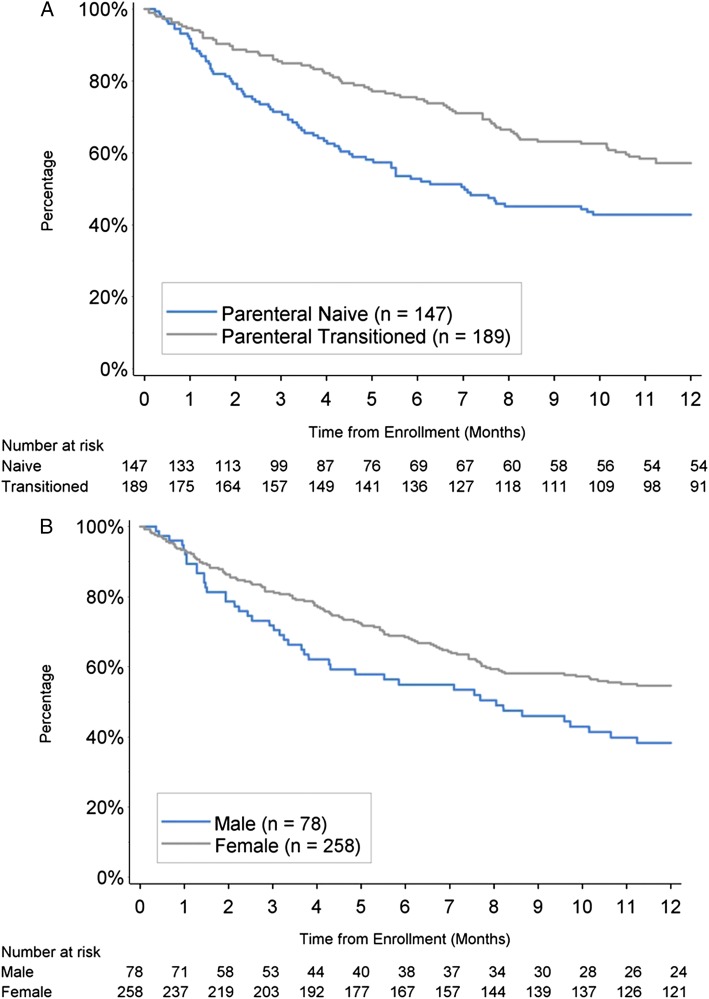
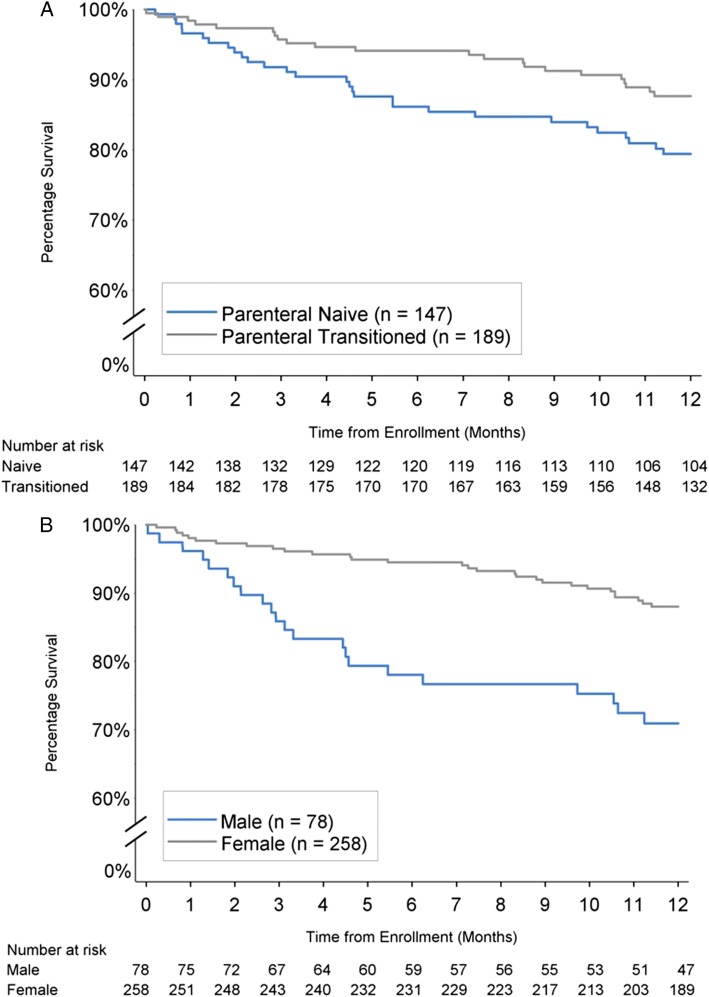
Results: A total of 336 patients were included. The overall 1-year FH estimate was 51.0% ± 2.8% and was lower in parenteral-naive patients than parenteral-transitioned patients (42.8% ± 4.3% vs 57.1% ± 3.7%, respectively; P = .002). FH estimates were lower in male patients than female patients (38.3% ± 5.9% vs 54.6% ± 3.2%, respectively; P < .015) and in patients with CRI than patients without CRI (17.0% ± 8.4% vs 53.7% ± 2.9%, respectively; P < .001). The overall 1-year survival estimate was 84.0% ± 2.1%. Survival was poorer in parenteral-naive patients, male patients, and patients with CRI.
Conclusions: Risk of hospitalization and mortality remain high in patients with PAH. In particular, patients who are parenteral-naive at initiation of RTS-Epo therapy, male patients, and patients with CRI require close monitoring and aggressive clinical management.
Figures
References
-
- Shapiro SM, Oudiz RJ, Cao T, et al. Primary pulmonary hypertension: improved long-term effects and survival with continuous intravenous epoprostenol infusion. J Am Coll Cardiol. 1997;30(2):343-349. - PubMed
-
- Rich S, Dantzker DR, Ayres SM, et al. Primary pulmonary hypertension. A national prospective study. Ann Intern Med. 1987;107(2):216-223. - PubMed
-
- Benza RL, Miller DP, Barst RJ, Badesch DB, Frost AE, McGoon MD. An evaluation of long-term survival from time of diagnosis in pulmonary arterial hypertension from the REVEAL Registry. Chest. 2012;142(2):448-456. - PubMed
-
- Frost AE, Badesch DB, Miller DP, Benza RL, Meltzer LA, McGoon MD. Evaluation of the predictive value of a clinical worsening definition using 2-year outcomes in patients with pulmonary arterial hypertension: a REVEAL Registry analysis. Chest. 2013;144(5):1521-1529. - PubMed
Publication types
MeSH terms
Substances
LinkOut - more resources
Full Text Sources
Other Literature Sources
Medical
Molecular Biology Databases
Research Materials
Miscellaneous
