


Explaining antiretroviral therapy adherence success among HIV-infected children in rural Uganda: a qualitative study
- PMID: 25323679
- PMCID: PMC4393764
- DOI: 10.1007/s10461-014-0924-7
Explaining antiretroviral therapy adherence success among HIV-infected children in rural Uganda: a qualitative study
Abstract
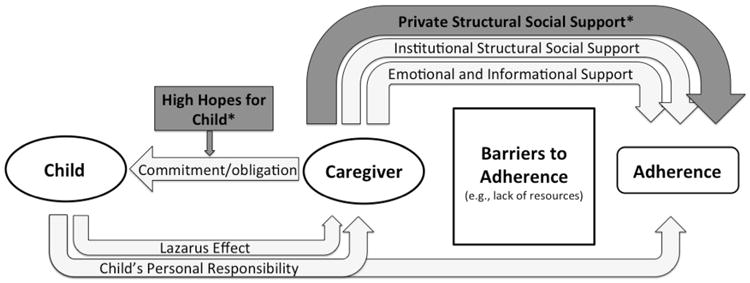
High adherence is critical for achieving clinical benefits of HIV antiretroviral therapy (ART) and particularly challenging for children. We conducted 35 qualitative interviews with caregivers of HIV-infected Ugandan children who were followed in a longitudinal study of real-time ART adherence monitoring; 18 participants had undetectable HIV RNA, while 17 had detectable virus. Interviews blinded to viral suppression status elicited information on adherence experiences, barriers and facilitators to adherence, and social support. Using an inductive content analytic approach, we identified 'lack of resources,' 'Lazarus effect,' 'caregiver's sense of obligation and commitment,' and 'child's personal responsibility' as categories of influence on adherence, and defined types of caregiver social support. Among children with viral suppression, high hopes for the child's future and ready access to private instrumental support appeared particularly important. These findings suggest clinical counseling should explore caregivers' views of their children's futures and ability to access support in overcoming adherence barriers.
Conflict of interest statement
Figures
References
-
- UNAIDS. Global Report: UNAIDS report on the global AIDS epidemic 2013. Geneva: UNAIDS; 2013.
-
- WHO. Global update on HIV treatment 2013: Results, impact and opportunities. 2013
-
- Barro M, Some J, Foulongne V, et al. Short-term virological efficacy, immune reconstitution, tolerance, and adherence of once-daily dosing of didanosine, lamivudine, and efavirenz in HIV-1-infected African children: ANRS 12103 Burkiname. J Acquir Immune Defic Syndr. 2011;57(Suppl 1):S44–9. - PubMed
Publication types
MeSH terms
Substances
Grants and funding
LinkOut - more resources
Full Text Sources
Other Literature Sources
Medical
Molecular Biology Databases
