


The clinical and trichoscopic features of syphilitic alopecia
- PMID: 25324910
- PMCID: PMC4195505
- DOI: 10.3315/jdcr.2014.1176
The clinical and trichoscopic features of syphilitic alopecia
Abstract
Background: Syphilitic alopecia is not common in patients with secondary syphilis. Though the clinical and histopathological findings of syphilitic alopecia have been described, the trichoscopy features are unknown yet.
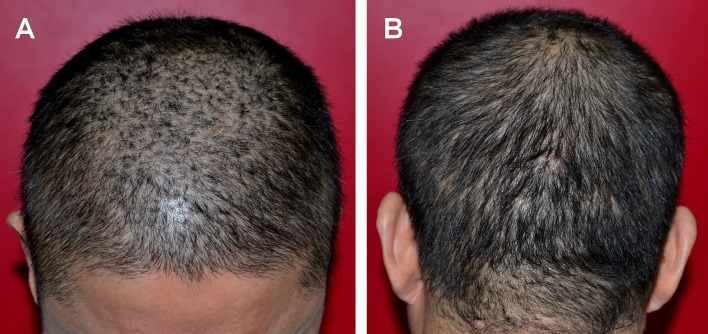
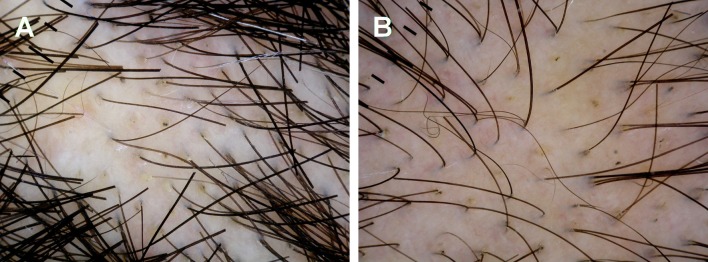
Main observation: A 42-year-old Chinese man was admitted to our clinic with a complaint of hair loss. The patient presented clinically with moth-eaten alopecia over the whole scalp without any previous discomfort or skin rashes. The serology for syphilis was positive. Trichoscopy showed black dots, focal atrichia, hypopigmentation of hair shaft and yellow dots.
Conclusions: On the basis of trichoscopy, along with serology testing syphilitic alopecia can be differentiated from other hair loss diseases with similar clinical presentation.
Keywords: alopecia; dermatoscopy; dermoscopy; hair loss; sexually transmitted diseases; syphilis; venereal diseases.
Figures
References
-
- Vafaie J, Weinberg JM, Smith B, Mizuguchi RS. Alopecia in association with sexually transmitted disease: a review. Cutis. 2005;76:361–366. - PubMed
-
- Hira SK, Patel JS, Bhat SG, Chilikima K, Mooney N. Clinical manifestations of secondary syphilis. Int J Dermatol. 1987;26:103–107. - PubMed
-
- Hernández-Bel P, Unamuno B, Sánchez-Carazo JL, Febrer I, Alegre V. Syphilitic alopecia: a report of 5 cases and a review of the literature. Actas Dermosifiliogr. 2013;104:512–517. - PubMed
-
- Cuozzo DW, Benson PM, Sperling LC, Skelton HG 3rd. Essential syphilitic alopecia revisited. J Am Acad Dermatol. 1995;32(5 Pt 2):840–843. - PubMed
-
- Friedli A, Chavaz P, Harms M. Alopecia syphilitica: report of two cases in Geneva. Dermatology. 2001;202:376–377. - PubMed
Publication types
LinkOut - more resources
Full Text Sources
Other Literature Sources