Mechanisms of radiation-induced normal tissue toxicity and implications for future clinical trials
- PMID: 25324981
- PMCID: PMC4194292
- DOI: 10.3857/roj.2014.32.3.103
Mechanisms of radiation-induced normal tissue toxicity and implications for future clinical trials
Abstract
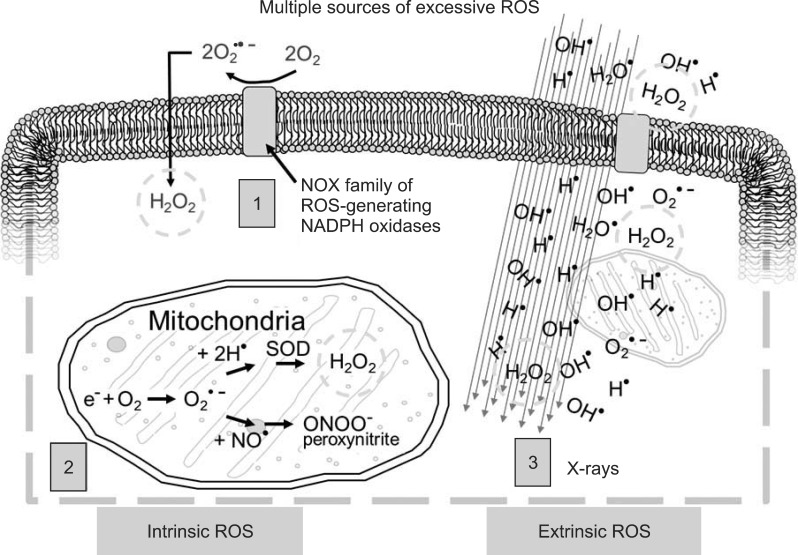
To summarize current knowledge regarding mechanisms of radiation-induced normal tissue injury and medical countermeasures available to reduce its severity. Advances in radiation delivery using megavoltage and intensity-modulated radiation therapy have permitted delivery of higher doses of radiation to well-defined tumor target tissues. Injury to critical normal tissues and organs, however, poses substantial risks in the curative treatment of cancers, especially when radiation is administered in combination with chemotherapy. The principal pathogenesis is initiated by depletion of tissue stem cells and progenitor cells and damage to vascular endothelial microvessels. Emerging concepts of radiation-induced normal tissue toxicity suggest that the recovery and repopulation of stromal stem cells remain chronically impaired by long-lived free radicals, reactive oxygen species, and pro-inflammatory cytokines/chemokines resulting in progressive damage after radiation exposure. Better understanding the mechanisms mediating interactions among excessive generation of reactive oxygen species, production of pro-inflammatory cytokines and activated macrophages, and role of bone marrow-derived progenitor and stem cells may provide novel insight on the pathogenesis of radiation-induced injury of tissues. Further understanding the molecular signaling pathways of cytokines and chemokines would reveal novel targets for protecting or mitigating radiation injury of tissues and organs.
Keywords: Mitigators; Protectors; Radiation normal tissue injury.
Conflict of interest statement
No potential conflict of interest relevant to this article was reported.
Figures

References
-
- Otsuka S, Coderre JA, Micca PL, et al. Depletion of neural precursor cells after local brain irradiation is due to radiation dose to the parenchyma, not the vasculature. Radiat Res. 2006;165:582–591. - PubMed
-
- Schuller BW, Rogers AB, Cormier KS, et al. No significant endothelial apoptosis in the radiation-induced gastrointestinal syndrome. Int J Radiat Oncol Biol Phys. 2007;68:205–210. - PubMed
-
- Rhee SG, Chae HZ, Kim K. Peroxiredoxins: a historical overview and speculative preview of novel mechanisms and emerging concepts in cell signaling. Free Radic Biol Med. 2005;38:1543–1552. - PubMed
-
- Ehrhart EJ, Segarini P, Tsang ML, Carroll AG, Barcellos-Hoff MH. Latent transforming growth factor beta1 activation in situ: quantitative and functional evidence after low-dose gamma-irradiation. FASEB J. 1997;11:991–1002. - PubMed
Publication types
Grants and funding
LinkOut - more resources
Full Text Sources
Other Literature Sources
Molecular Biology Databases