


Postsynaptic inhibition of hypoglossal motoneurons produces atonia of the genioglossal muscle during rapid eye movement sleep
- PMID: 25325470
- PMCID: PMC4262947
- DOI: 10.5665/sleep.4340
Postsynaptic inhibition of hypoglossal motoneurons produces atonia of the genioglossal muscle during rapid eye movement sleep
Abstract
Study objectives: Hypoglossal motoneurons were recorded intracellularly to determine whether postsynaptic inhibition or disfacilitation was responsible for atonia of the lingual muscles during rapid eye movement (REM) sleep.
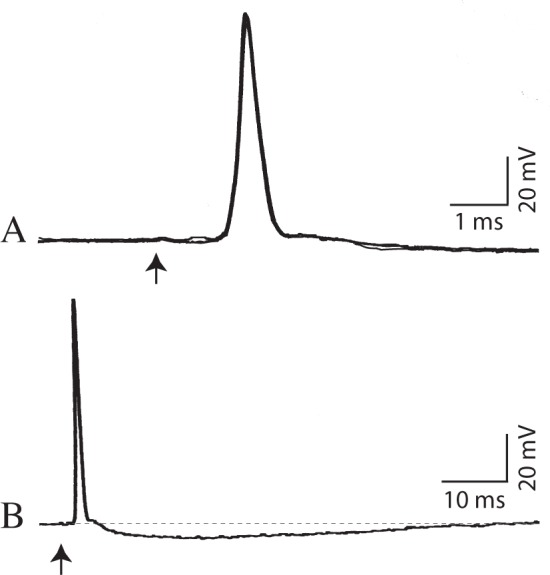
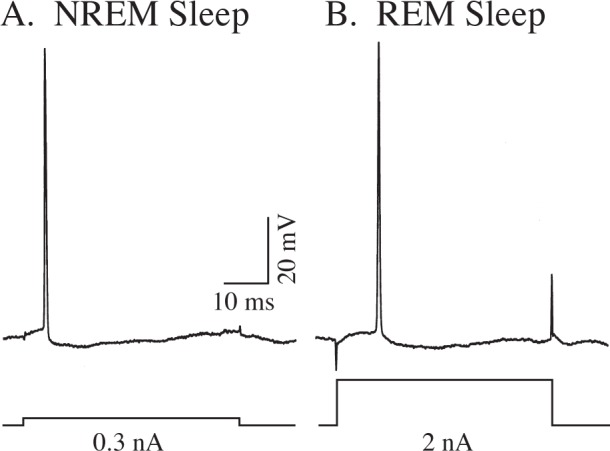
Design: Intracellular records were obtained of the action potentials and subthreshold membrane potential activity of antidromically identified hypoglossal motoneurons in cats during wakefulness, nonrapid eye movement (NREM) sleep, and REM sleep. A cuff electrode was placed around the hypoglossal nerve to antidromically activate hypoglossal motoneurons. The state-dependent changes in membrane potential, spontaneous discharge, postsynaptic potentials, and rheobase of hypoglossal motoneurons were determined.
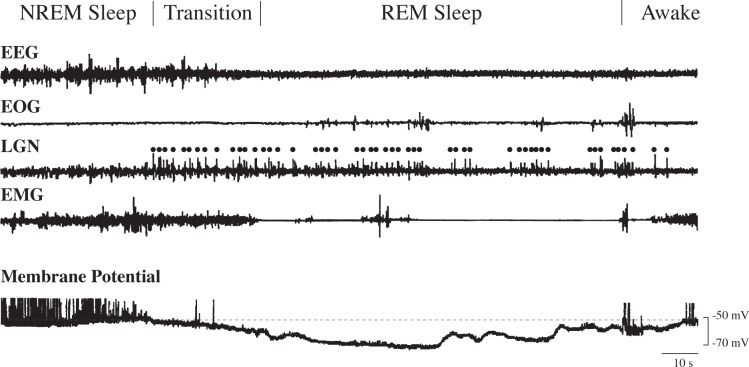
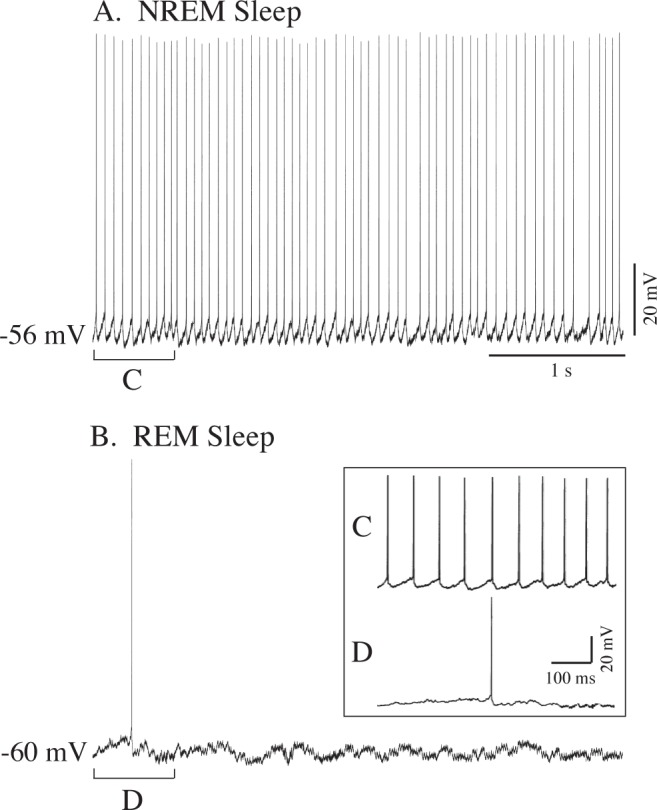
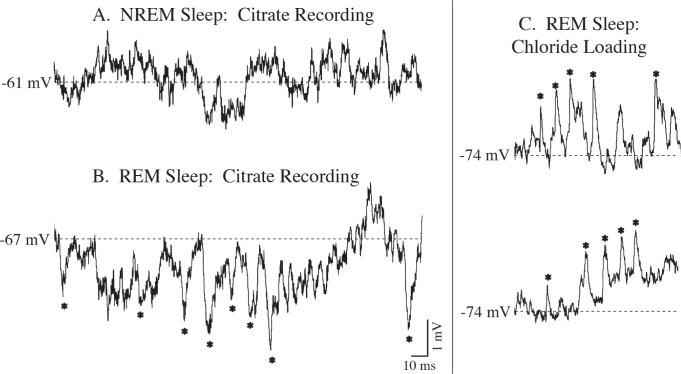
Analyses and results: During quiet wakefulness and NREM sleep, hypoglossal motoneurons exhibited spontaneous repetitive discharge. In the transition from NREM sleep to REM sleep, repetitive discharge ceased and the membrane potential began to hyperpolarize; maximal hyperpolarization (10.5 mV) persisted throughout REM sleep. During REM sleep there was a significant increase in rheobase, which was accompanied by barrages of large-amplitude inhibitory postsynaptic potentials (IPSPs), which were reversed following the intracellular injection of chloride ions. The latter result indicates that they were mediated by glycine; IPSPs were not present during wakefulness or NREM sleep.
Conclusions: We conclude that hypoglossal motoneurons are postsynaptically inhibited during naturally occurring REM sleep; no evidence of disfacilitation was observed. The data also indicate that glycine receptor-mediated postsynaptic inhibition of hypoglossal motoneurons is crucial in promoting atonia of the lingual muscles during REM sleep.
Keywords: IPSP; OSA; REM sleep; atonia; hypoglossal; motoneuron; postsynaptic inhibition.
© 2014 Associated Professional Sleep Societies, LLC.
Figures
References
-
- Chase MH. Motor control during sleep and wakefulness: clarifying controversies and resolving paradoxes. Sleep Med Rev. 2013;17:299–312. - PubMed
-
- Funk GD, Zwicker JD, Selvaratnam R, Robinson DM. Noradrenergic modulation of hypoglossal motoneuron excitability: developmental and putative state-dependent mechanisms. Arch Ital Biol. 2011;149:426–53. - PubMed
-
- Horner RL. Neural control of the upper airway: integrative physiological mechanisms and relevance for sleep disordered breathing. Compr Physiol. 2012;2:479–535. - PubMed
-
- White DP, Younes MK. Obstructive sleep apnea. Compr Physiol. 2012;2:2541–94. - PubMed
-
- Sauerland EK, Harper RM. The human tongue during sleep: electromyographic activity of the genioglossus muscle. Exp Neurol. 1976;51:160–70. - PubMed
Publication types
MeSH terms
Substances
Grants and funding
LinkOut - more resources
Full Text Sources
Other Literature Sources
Miscellaneous
