


Adipose tissue monomethyl branched-chain fatty acids and insulin sensitivity: Effects of obesity and weight loss
- PMID: 25328153
- PMCID: PMC4310778
- DOI: 10.1002/oby.20923
Adipose tissue monomethyl branched-chain fatty acids and insulin sensitivity: Effects of obesity and weight loss
Abstract
Objectives: An increase in circulating branched-chain amino acids (BCAA) is associated with insulin resistance. Adipose tissue is a potentially important site for BCAA metabolism. It was evaluated whether monomethyl branched-chain fatty acids (mmBCFA) in adipose tissue, which are likely derived from BCAA catabolism, are associated with insulin sensitivity.
Methods: Insulin-stimulated glucose disposal was determined by using the hyperinsulinemic-euglycemic clamp procedure with stable isotope glucose tracer infusion in nine lean and nine obese subjects, and in a separate group of nine obese subjects before and 1 year after Roux-en-Y gastric bypass (RYGB) surgery (38% weight loss). Adipose tissue mmBCFA content was measured in tissue biopsies taken in the basal state.
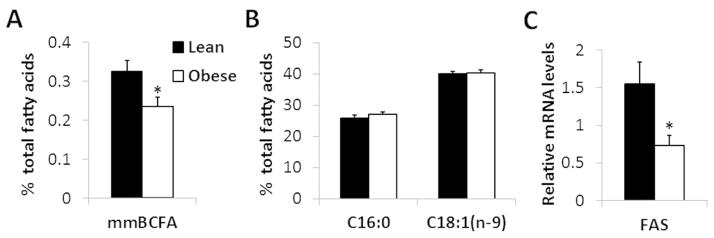
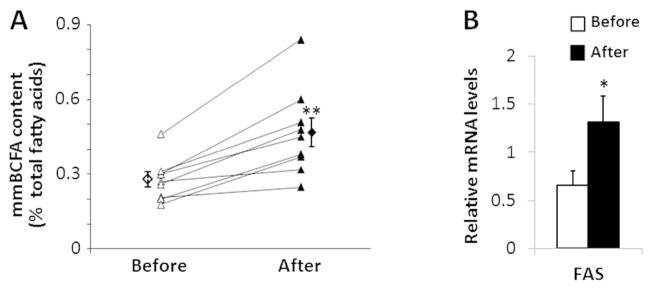
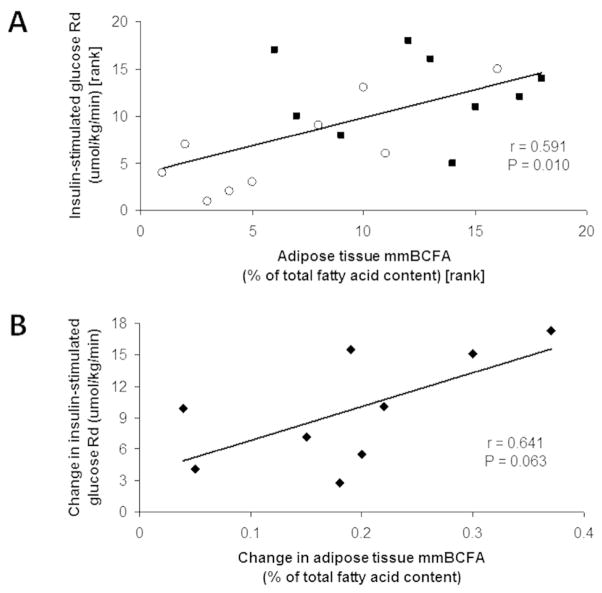
Results: Total adipose tissue mmBCFA content was ∼30% lower in obese than lean subjects (P=0.02) and increased by ∼65% after weight loss in the RYGB group (P=0.01). Adipose tissue mmBCFA content correlated positively with skeletal muscle insulin sensitivity (R(2) =35%, P=0.01, n=18).
Conclusions: These results demonstrate a novel association between adipose tissue mmBCFA content and obesity-related insulin resistance. Additional studies are needed to determine whether the association between adipose tissue mmBCFA and muscle insulin sensitivity is causal or a simple association.
© 2014 The Obesity Society.
Conflict of interest statement
No potential conflicts of interest to disclose.
Figures
References
-
- Fenske W, Athanasiou T, Harling L, Drechsler C, Darzi A, Ashrafian H. Obesity-related cardiorenal disease: the benefits of bariatric surgery. Nat Rev Nephrol. 2013;9:539–551. - PubMed
Publication types
MeSH terms
Substances
Grants and funding
LinkOut - more resources
Full Text Sources
Other Literature Sources
Medical
Research Materials
