Review
. 2014 Oct 16;8(10):e3224.
doi: 10.1371/journal.pntd.0003224. eCollection 2014 Oct.

Iron necessity: the secret of Wolbachia's success?

Affiliations
Review

Iron necessity: the secret of Wolbachia's success?

Alessandra Christina Gill et al. PLoS Negl Trop Dis. .

Abstract

The bacterium Wolbachia (order Rickettsiales) is probably the world's most successful vertically-transmitted symbiont, distributed among a staggering 40% of terrestrial arthropod species. Wolbachia has great potential in vector control due to its ability to manipulate its hosts' reproduction and to impede the replication and dissemination of arboviruses and other pathogens within haematophagous arthropods. In addition, the unexpected presence of Wolbachia in filarial nematodes of medical and veterinary importance has provided an opportunity to target the adult worms of Wuchereria bancrofti, Onchocerca volvulus, and Dirofilaria immitis with safe drugs such as doxycycline. A striking feature of Wolbachia is its phenotypic plasticity between (and sometimes within) hosts, which may be underpinned by its ability to integrate itself into several key processes within eukaryotic cells: oxidative stress, autophagy, and apoptosis. Importantly, despite significant differences in the genomes of arthropod and filarial Wolbachia strains, these nexuses appear to lie on a continuum in different hosts. Here, we consider how iron metabolism may represent a fundamental aspect of host homeostasis that is impacted by Wolbachia infection, connecting disparate pathways ranging from the provision of haem and ATP to programmed cell death, aging, and the recycling of intracellular resources. Depending on how Wolbachia and host cells interact across networks that depend on iron, the gradient between parasitism and mutualism may shift dynamically in some systems, or alternatively, stabilise on one or the other end of the spectrum.


Conflict of interest statement

The authors have declared that no competing interests exist.

Figures
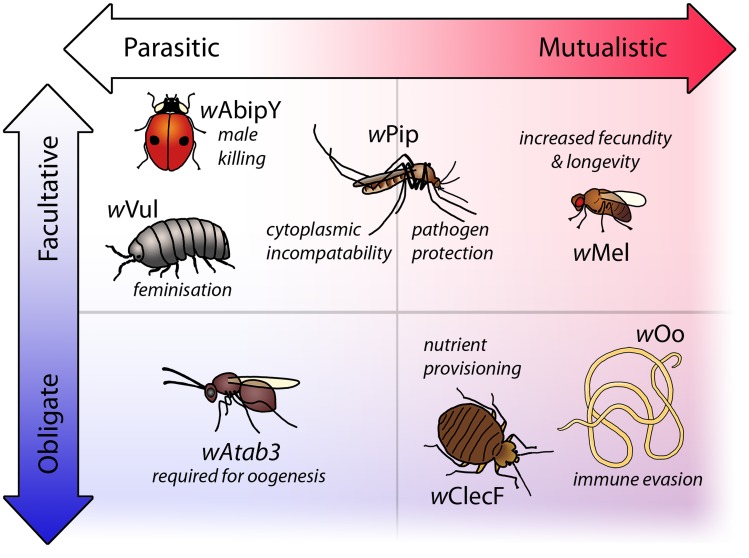
Figure 1
Figure 1. Selected examples of phenotypes resulting from natural Wolbachia symbioses.
Wolbachia produces a large spectrum of phenotypes in their hosts ranging from parasitic to mutualistic traits existing as either facultative relationships or associations that have evolved to become obligate. Reproductive parasitism by Wolbachia is well recognised. For example, in the ladybird Adalia bipunctata, infection results in death of infected males during development to the benefit of female siblings (male killing) ; in the woodlouse Armadillidium vulgare, infection causes development of infected genetic males into females (feminisation) ; and in the mosquito Culex pipiens, Wolbachia strain wPip produces cytoplasmic incompatibility (CI), in which crosses between infected males and uninfected females result in embryonic death. Wolbachia symbioses may also provide benefits to the host, such as increases in fecundity and longevity in Drosophila melanogaster . In some species, mutualistic traits coexist with reproductive phenotypes, such as in Culex pipiens, where the CI-inducing strain wPip also provides protection from mortality associated with Plasmodium relictum . In some host species, all individuals are infected and this association is often mutualistic, as in the bedbug Cimex lectularius in which Wolbachia supplies essential B vitamins , or in the filarial parasite Onchocerca ochengi, where the presence of the bacteria is associated with the vertebrate host mounting an ineffective immune response . However, in the parasitic wasp Asobara tabida, strain wAtab3 is essential for oogenesis, making the relationship obligatory without any known benefits to the host .
Figure 2
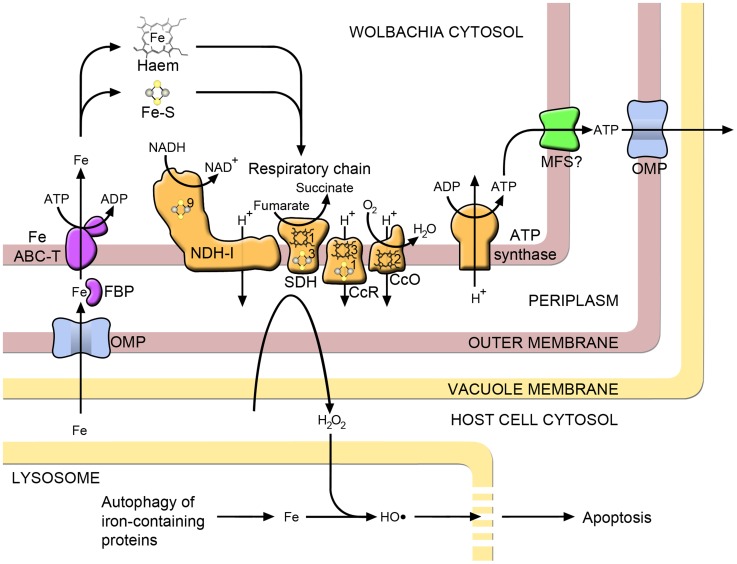
Figure 2. Iron metabolism and related pathways in Wolbachia.
Iron uptake through the Wolbachia outer membrane may occur through a nonspecific outer membrane porin (OMP), from where it is transported across the periplasm by ferric binding protein (FBP), part of an iron ATP-binding cassette transporter system (Fe ABC-T) that moves iron into the bacterial cytosol. A major destination for iron within the bacterial cell is respiratory chain proteins, which contain iron in the form of iron–sulphur clusters (Fe-S) and haem: NADH dehydrogenase I (NDH-I), succinate dehydrogenase (SDH), cytochrome C reductase (CcR) and cytochrome C oxidase (CcO). The numbers of each of these cofactors per monomer are indicated on the relevant proteins. Wolbachia may export ATP generated via the electron transport chain to the host cytoplasm, possibly through a major facilitator superfamily transporter (MFS) in the inner membrane. Electron leakage from the respiratory chain generates hydrogen peroxide (H2O2). Most of this is removed by antioxidants, but some diffuses into the lysosomal compartment, where it reacts with iron to produce hydroxyl radicals. This highly reactive molecule damages the lysosomal membrane and, if sufficiently severe, apoptosis of the host cell results.
Figure 3
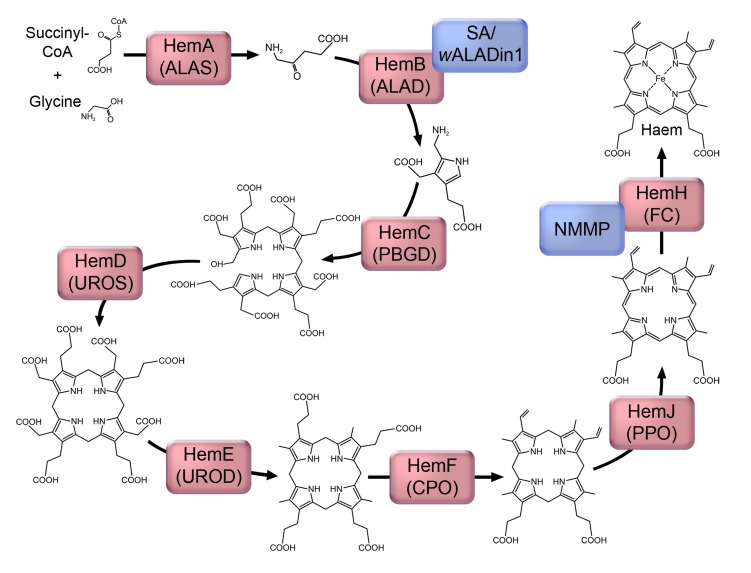
Figure 3. The proposed haem synthesis pathway in Wolbachia, showing structural intermediates.
Enzymes are represented by red boxes, which contain the protein name in Wolbachia and the abbreviated enzyme name: ALAS, 5-aminolevulinate synthase; ALAD, 5-aminolevulinate dehydratase; PBGB, porphobilinogen deaminase; UROS, uroporphyrinogen III synthase; UROD, uroporphyrinogen III decarboxylase; CPO, coproporphyrinogen III oxidase; PPO, protoporphyrinogen IX oxidase; FC, ferrochelatase. Inhibitors of the pathway are represented by blue boxes, for which abbreviations used are as in the text.

References

    1. Zug R, Hammerstein P (2012) Still a host of hosts for Wolbachia: analysis of recent data suggests that 40% of terrestrial arthropod species are infected. PLoS ONE 7: e38544. - PMC - PubMed
    1. Werren JH, Baldo L, Clark ME (2008) Wolbachia: Master manipulators of invertebrate biology. Nat Rev Microbiol 6: 741–751. - PubMed
    1. Engelstädter J, Hurst GD (2009) The ecology and evolution of microbes that manipulate host reproduction. Annu Rev Ecol Syst 40: 127–149.
    1. Langworthy NG, Renz A, Mackenstedt U, Henkle-Duhrsen K, Bronsvoort MBD, et al. (2000) Macrofilaricidal activity of tetracycline against the filarial nematode Onchocerca ochengi: elimination of Wolbachia precedes worm death and suggests a dependent relationship. Proc Biol Sci 267: 1063–1069. - PMC - PubMed
    1. Hoerauf A, Nissen-Pähle K, Schmetz C, Henkle-Dührsen K, Blaxter ML, et al. (1999) Tetracycline therapy targets intracellular bacteria in the filarial nematode Litomosoides sigmodontis and results in filarial infertility. J Clin Invest 103: 11–18. - PMC - PubMed

Publication types