Controlled Clinical Trial
. 2014 Oct 17;9(10):e109896.
doi: 10.1371/journal.pone.0109896. eCollection 2014.

Supplementation with N-3 long-chain polyunsaturated fatty acids or olive oil in men and women with renal disease induces differential changes in the DNA methylation of FADS2 and ELOVL5 in peripheral blood mononuclear cells

Affiliations
Controlled Clinical Trial

Supplementation with N-3 long-chain polyunsaturated fatty acids or olive oil in men and women with renal disease induces differential changes in the DNA methylation of FADS2 and ELOVL5 in peripheral blood mononuclear cells

Samuel P Hoile et al. PLoS One. .

Abstract

Background: Studies in animal models and in cultured cells have shown that fatty acids can induce alterations in the DNA methylation of specific genes. There have been no studies of the effects of fatty acid supplementation on the epigenetic regulation of genes in adult humans.

Methods and results: We investigated the effect of supplementing renal patients with 4 g daily of either n-3 long-chain polyunsaturated fatty acids (n-3 LCPUFA) or olive oil (OO) for 8 weeks on the methylation status of individual CpG loci in the 5' regulatory region of genes involved in PUFA biosynthesis in peripheral blood mononuclear cells from men and women (aged 53 to 63 years). OO and n-3 LCPUFA each altered (>10% difference in methylation) 2/22 fatty acid desaturase (FADS)-2 CpGs, while n-3 LCPUFA, but not OO, altered (>10%) 1/12 ELOVL5 CpGs in men. OO altered (>6%) 8/22 FADS2 CpGs and (>3%) 3/12 elongase (ELOVL)-5 CpGs, while n-3 LCPUFA altered (>5%) 3/22 FADS2 CpGs and 2/12 (>3%) ELOVL5 CpGs in women. FADS1 or ELOVL2 methylation was unchanged. The n-3 PUFA supplementation findings were replicated in blood DNA from healthy adults (aged 23 to 30 years). The methylation status of the altered CpGs in FADS2 and ELOVL5 was associated negatively with the level of their transcripts.

Conclusions: These findings show that modest fatty acid supplementation can induce altered methylation of specific CpG loci in adult humans, contingent on the nature of the supplement and on sex. This has implications for understanding the effect of fatty acids on PUFA metabolism and cell function.


Conflict of interest statement

Competing Interests: The authors have declared that no competing interests exist.

Figures

Figure 1
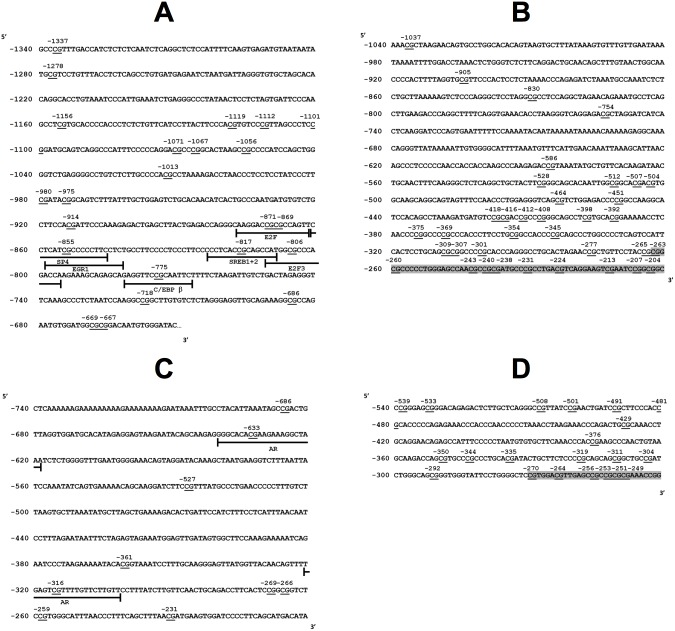
Figure 1. Sequences of the 5′ regions of (A) FADS2, (B) FADS1, (C) ELOVL5 and (D) ELOVL2 that were analysed by pyrosequencing.
Individual CpG loci are indicated by their position relative to the transcription start site (bp) and are underlined. Sequences corresponding to CpG islands are indicated grey shading.
Figure 2
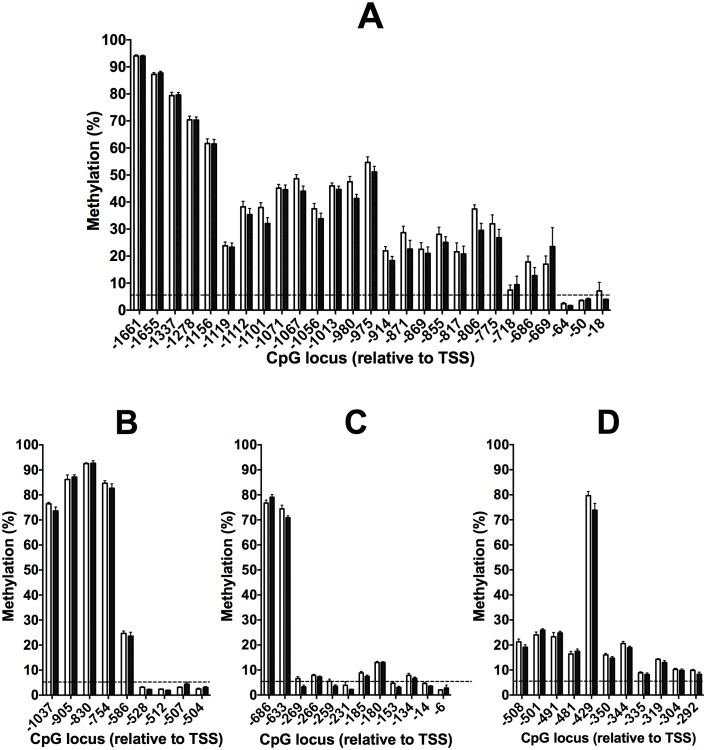
Figure 2. Values are mean ± SEM methylation of individual CpG loci at baseline in the 5′ regulatory regions of (A) FADS2, (B) FADS1, (C) ELOVL5 and (D) ELOVL2 in PBMCs from male (open bars) and female (closed bars) subjects in the Study 1 cohort.
Numbers of subjects are listed in Table 1. Locations of individual CpG dinucleotides are relative to the transcription start site (TSS). Dotted horizontal line indicates the analytical limit of the assay.
Figure 3
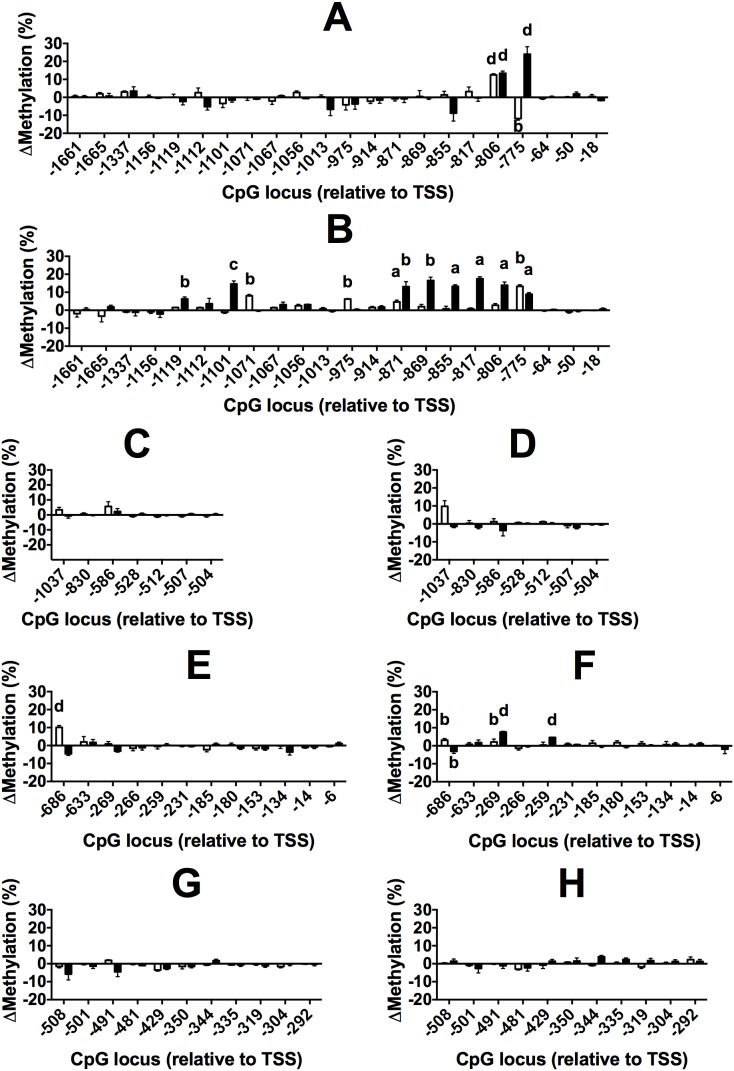
Figure 3. Values are mean ± SEM difference in methylation from baseline of individual CpG loci in the 5′ regulatory regions of (A, B) FADS2, (C, D) FADS1, (E, F) ELOVL5 and (G, H) ELOVL2 in PBMCs from male (A, C, E, G) and female (B, D, F, H) subjects in the Study 1 cohort who received n-3 LCPUFA (open bars) or OO (closed bars) supplements.
Numbers of subjects are listed in Table 1. Locations of individual CpG dinucleotides are relative to the transcription start site (TSS). *Means that were significantly different by Student’s paired t test between baseline and end of intervention samples are indicated by aP<0.05, bP<0.01, cP<0.001, dP<0.0001.
Figure 4
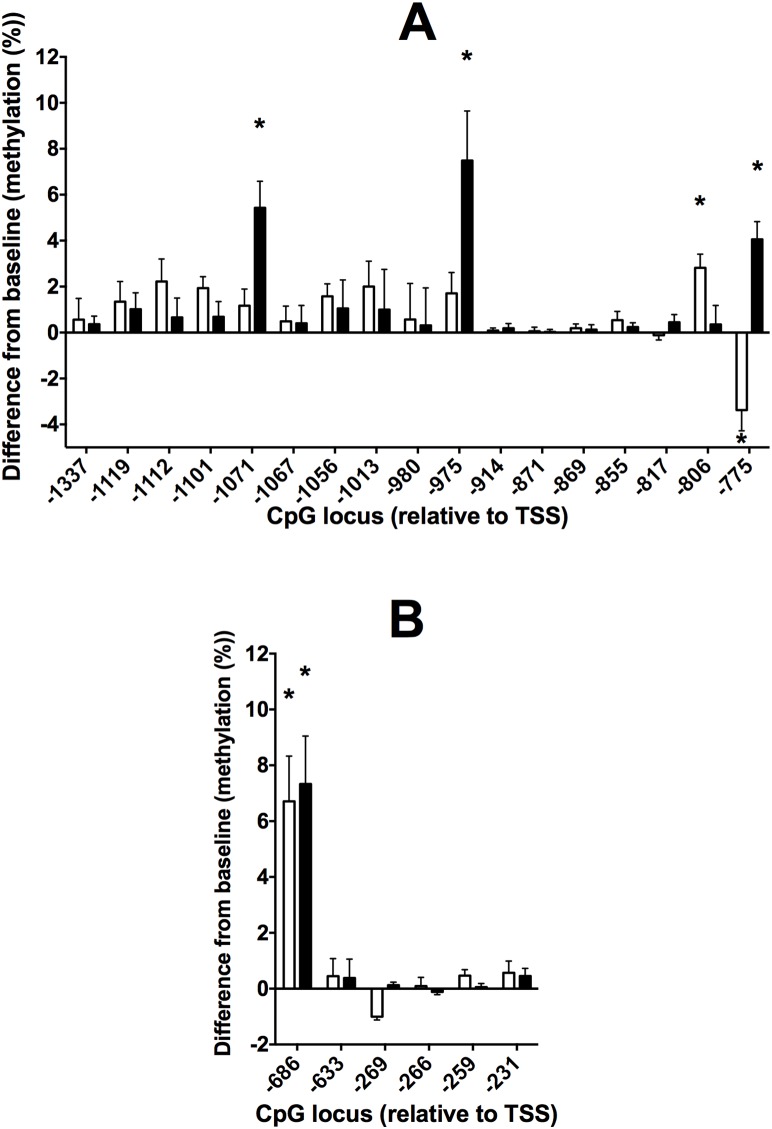
Figure 4. Values are mean ± SEM difference in the methylation of individual CpG loci from baseline in the 5′ regulatory regions of (A) FADS2 and (B) ELOVL5 in PBMCs from male (open bars) and female (closed bars) in the Study 1 cohort who consumed a n-3 LCPUFA supplement.
Numbers of subjects are listed in Table 1. Locations of individual CpG dinucleotides are relative to the transcription start site (TSS). *Means that were significantly different (P<0.05) by Student’s paired t test between baseline and end of intervention samples.
Figure 5
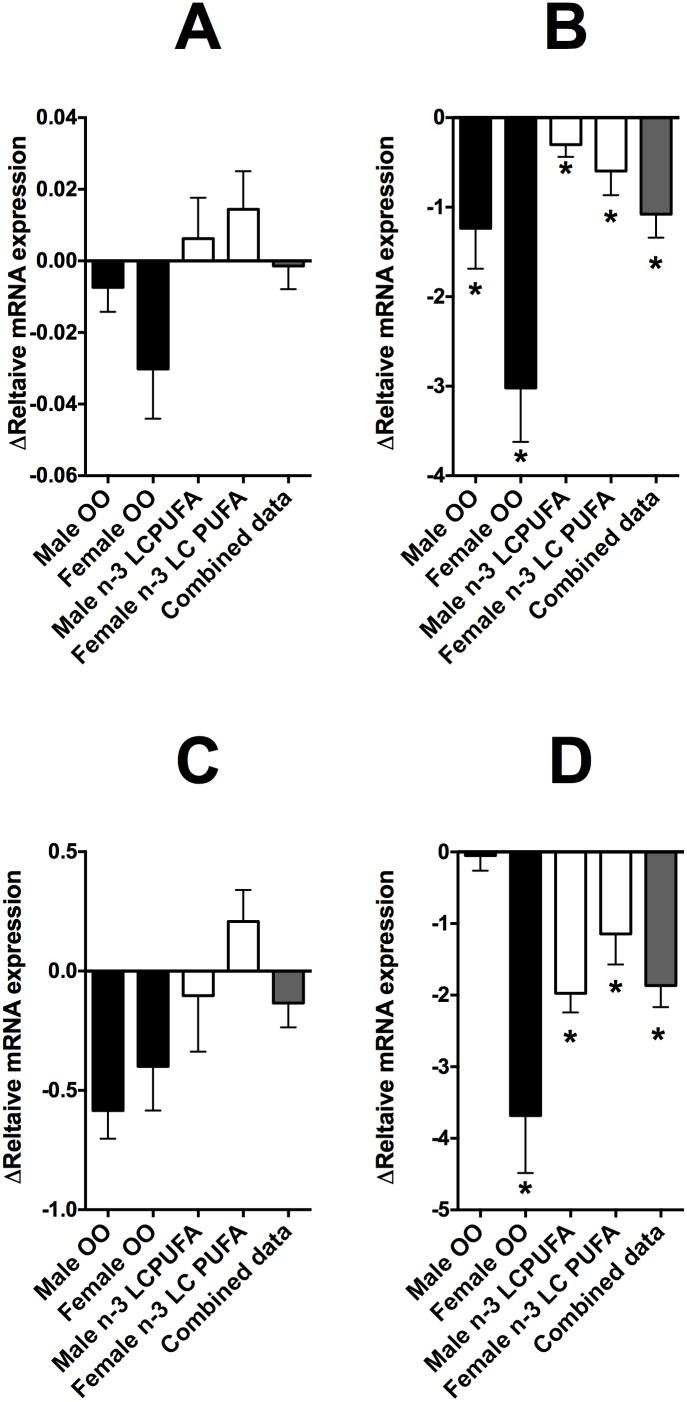
Figure 5. Change in relative mRNA expression of (A) FADS1, (B) FADS2, (C) ELOVL2 and (D) ELOVL5 in peripheral blood mononuclear cells from Study 1.
*Means at the end of the end of the study that were significantly different (P<0.05) compared to baseline assessed by Student’s paired t test. Combined data refers to the overall change in mRNA expression irrespective of sex or supplement (these data were used to test the statistical association with the methylation status of the respective genes).
Figure 6
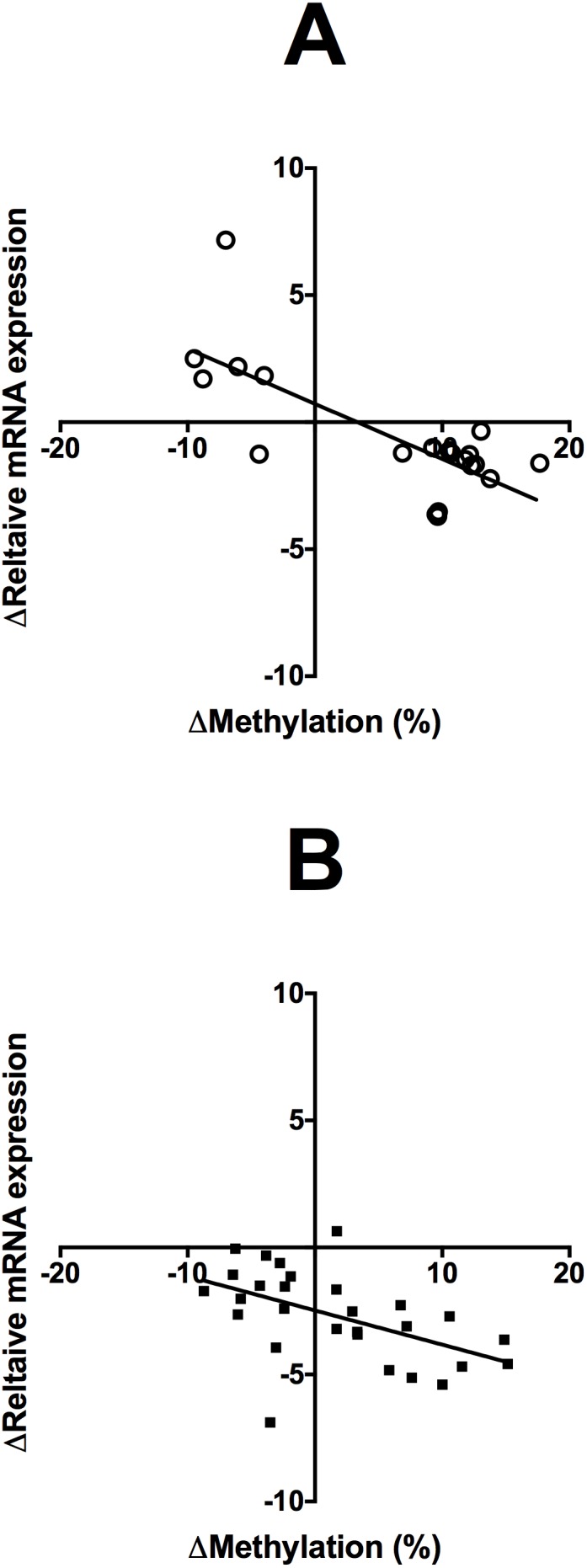
Figure 6. Change in relative mRNA expression compared to change in the methylation status of (A) FADS2 CpG −775 and (B) ELOVL5 CpG −686 irrespective of subject sex or supplementation group in peripheral blood mononuclear cells from Study 1.
The corresponding correlation efficients are shown in Table 6.

References

    1. Bird A (2002) DNA methylation patterns and epigenetic memory. Genes Dev 16: 6–21. - PubMed
    1. Goldberg AD, Allis CD, Bernstein E (2007) Epigenetics: a landscape takes shape. Cell 128: 635–638. - PubMed
    1. Szyf M (2007) The dynamic epigenome and its implications in toxicology. Toxicol Sci 100: 7–23. - PubMed
    1. Burdge GC, Lillycrop KA, Jackson AA (2009) Nutrition in early life, and risk of cancer and metabolic disease: alternative endings in an epigenetic tale? Br J Nutr 101: 619–630. - PMC - PubMed
    1. Burdge GC, Lillycrop KA (2010) Nutrition, epigenetics, and developmental plasticity: implications for understanding human disease. Ann Rev Nutr 30: 315–339. - PubMed

Publication types

MeSH terms