


Improved methodical approach for quantitative BRET analysis of G Protein Coupled Receptor dimerization
- PMID: 25329164
- PMCID: PMC4201472
- DOI: 10.1371/journal.pone.0109503
Improved methodical approach for quantitative BRET analysis of G Protein Coupled Receptor dimerization
Erratum in
-
Correction: Improved Methodical Approach for Quantitative BRET Analysis of G Protein Coupled Receptor Dimerization.PLoS One. 2016 May 31;11(5):e0156824. doi: 10.1371/journal.pone.0156824. eCollection 2016. PLoS One. 2016. PMID: 27243812 Free PMC article.
Abstract
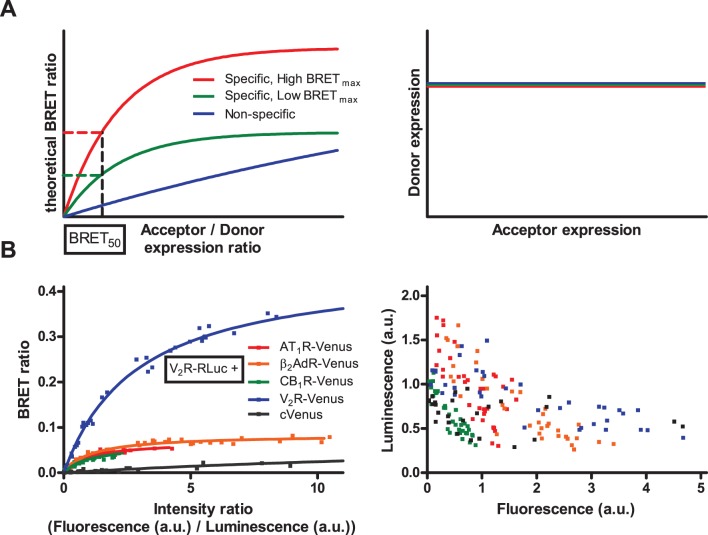
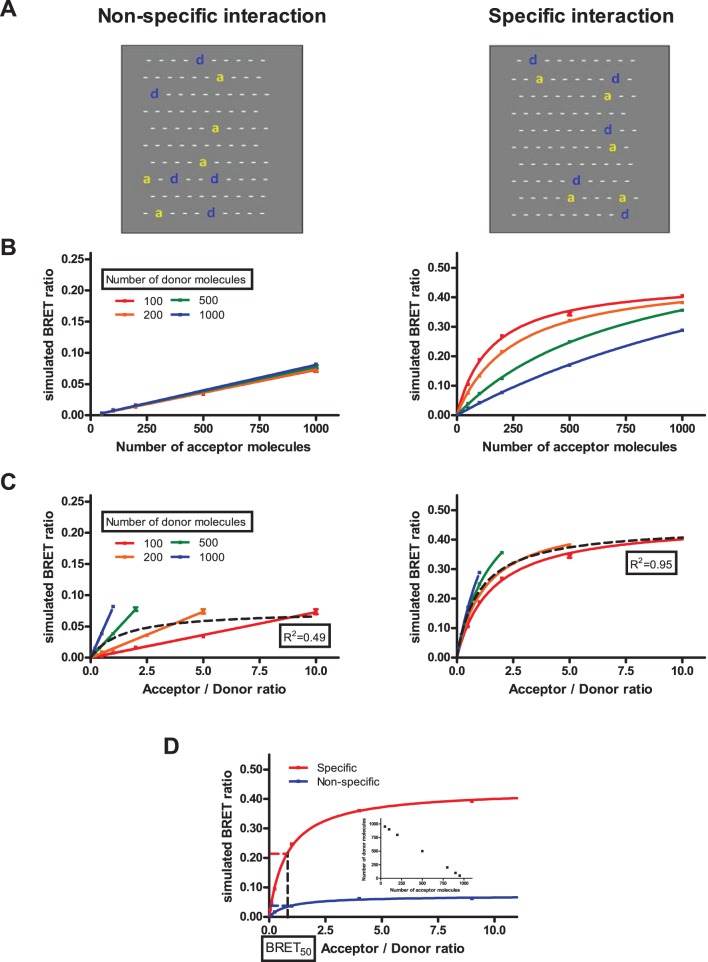
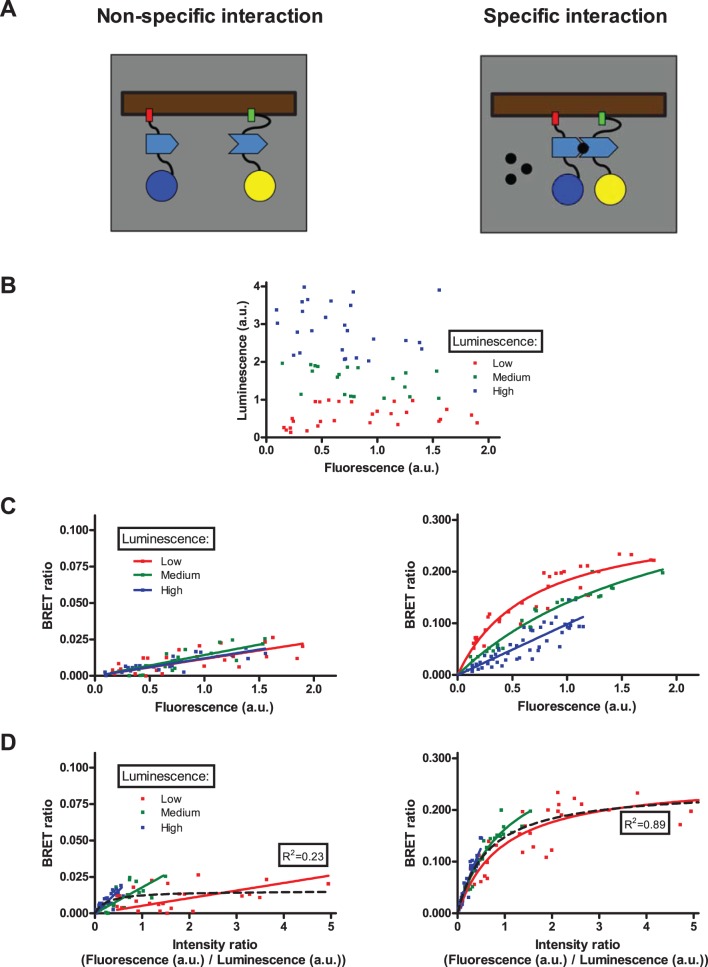
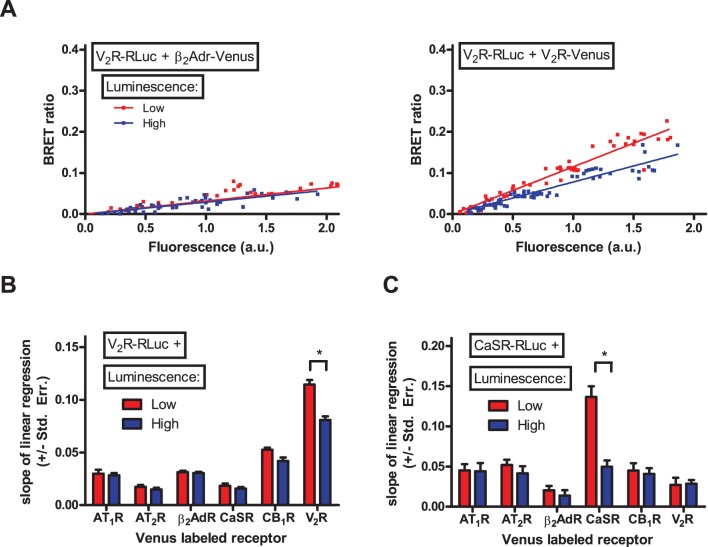
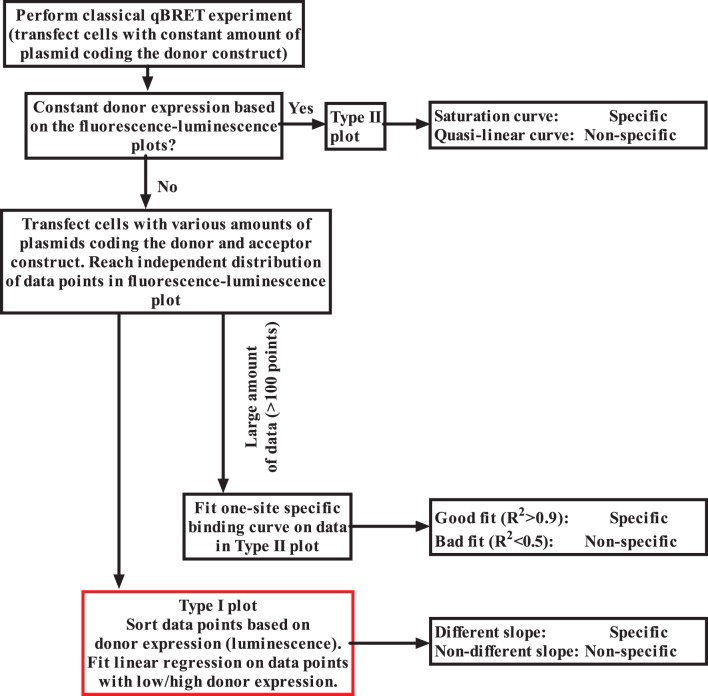
G Protein Coupled Receptors (GPCR) can form dimers or higher ordered oligomers, the process of which can remarkably influence the physiological and pharmacological function of these receptors. Quantitative Bioluminescence Resonance Energy Transfer (qBRET) measurements are the gold standards to prove the direct physical interaction between the protomers of presumed GPCR dimers. For the correct interpretation of these experiments, the expression of the energy donor Renilla luciferase labeled receptor has to be maintained constant, which is hard to achieve in expression systems. To analyze the effects of non-constant donor expression on qBRET curves, we performed Monte Carlo simulations. Our results show that the decrease of donor expression can lead to saturation qBRET curves even if the interaction between donor and acceptor labeled receptors is non-specific leading to false interpretation of the dimerization state. We suggest here a new approach to the analysis of qBRET data, when the BRET ratio is plotted as a function of the acceptor labeled receptor expression at various donor receptor expression levels. With this method, we were able to distinguish between dimerization and non-specific interaction when the results of classical qBRET experiments were ambiguous. The simulation results were confirmed experimentally using rapamycin inducible heterodimerization system. We used this new method to investigate the dimerization of various GPCRs, and our data have confirmed the homodimerization of V2 vasopressin and CaSR calcium sensing receptors, whereas our data argue against the heterodimerization of these receptors with other studied GPCRs, including type I and II angiotensin, β2 adrenergic and CB1 cannabinoid receptors.
Conflict of interest statement
Figures
References
-
- Szidonya L, Cserzo M, Hunyady L (2008) Dimerization and oligomerization of G-protein-coupled receptors: debated structures with established and emerging functions. J Endocrinol 196(3): 435–453. - PubMed
-
- Kaupmann K, Malitschek B, Schuler V, Heid J, Froestl W, et al. (1998) GABA(B)-receptor subtypes assemble into functional heteromeric complexes. Nature 396(6712): 683–687. - PubMed
Publication types
MeSH terms
Substances
LinkOut - more resources
Full Text Sources
Other Literature Sources
